Recipes · Method
Sachertorte, and the Apricot Layer That Holds It Together
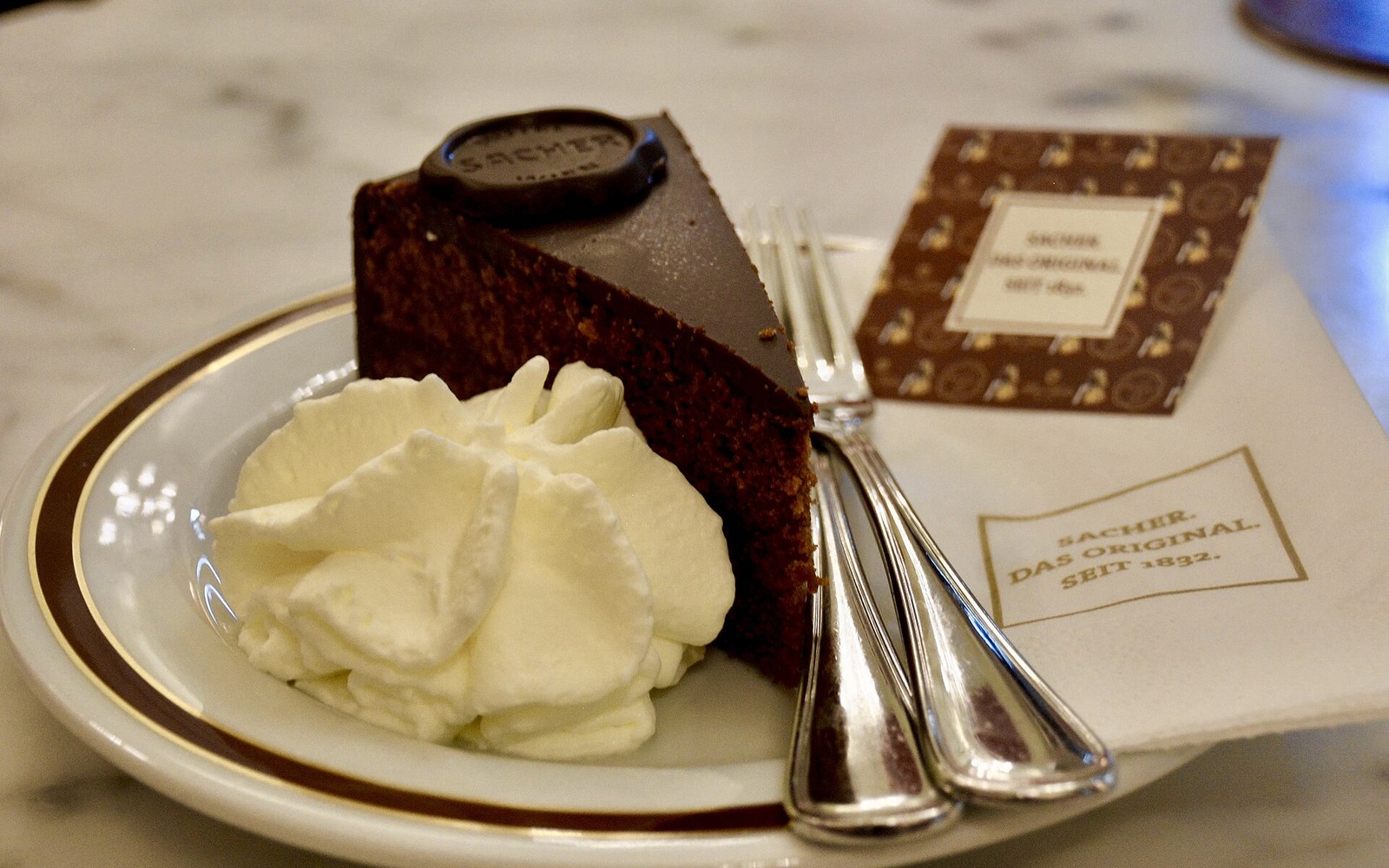 Plate 05
The glaze reads as one unbroken face because the apricot layer underneath sealed the crumb before it was poured.
Photo: Sachertorte in Vienna · Wikimedia Commons
The Hotel Sacher's cake has a legal history as precise as its recipe, and the apricot layer is doing more work than it looks like.
The Dispute, Briefly Settled
Franz Sacher created a chocolate torte for Prince Metternich in Vienna in 1832. His son Eduard later worked at the Konditorei Demel, where he refined the recipe, before the Hotel Sacher opened under his own name in 1876. From that point, two institutions — the Hotel Sacher and Demel — each sold a cake called Sachertorte, each claiming priority, and each serving a version that differed in one technically significant way: where the apricot jam was placed. The Hotel Sacher split the sponge horizontally and spread jam between the two layers before coating the exterior. Demel applied jam only to the outside, beneath the glaze. The lawsuit that followed ran from 1954 to 1963, when an Austrian court awarded the Hotel Sacher the right to call its cake the "Original Sachertorte," a designation it still prints on the triangular wax seal pressed into every slice. Demel retained the right to sell its version as "Eduard Sacher Torte." The distinction was not merely commercial vanity: the court was, in effect, ruling on whether the interior layer of jam was structurally part of the cake's definition.
It is, and not only for legal reasons.
Why the Apricot Layer Is Structural
The apricot jam between the sponge and the chocolate glaze performs three functions simultaneously. First, it seals the surface. Sachertorte's chocolate sponge is dense and relatively dry — deliberately so, since moisture in the crumb would compromise the glaze — and unglazed crumbs would be pulled loose by a poured coating, leaving a rough, matte finish. Jam smooths and seals the exterior, giving the glaze a continuous, non-absorbent surface to flow across. Second, the pectin in the jam sets firmly enough to act as a buffer between the yielding sponge and the rigid chocolate coat. Without it, slicing would cause the glaze to crack and shear away in sheets. Third, it provides the flavour contrast that makes the cake work: apricot's acidity cuts the richness of the chocolate and the marzipan-adjacent sweetness of the sponge.
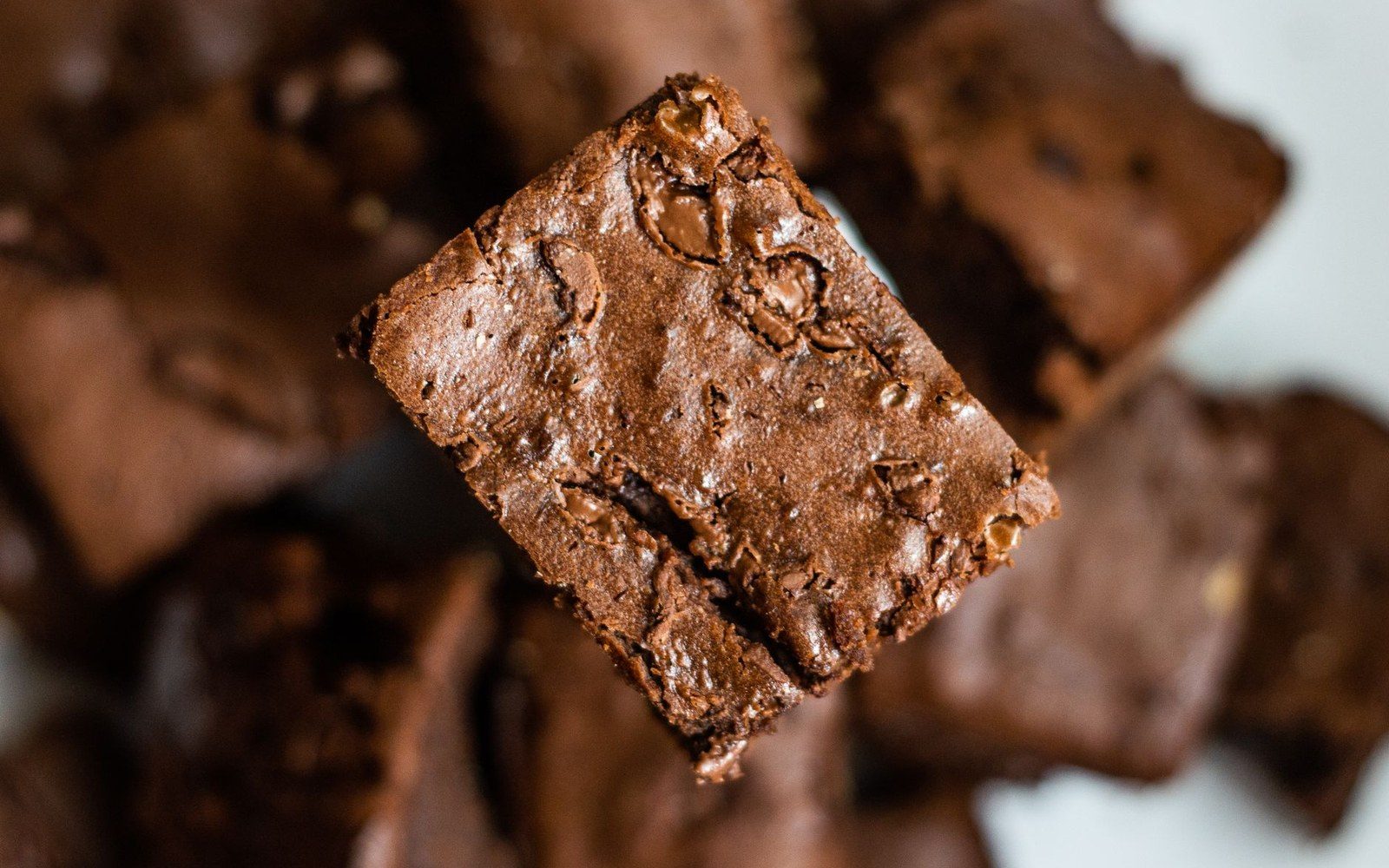
Cut cold, with a long knife wiped between cuts. Warm brownies tear, and the crust that makes the edge is barely a millimetre thick.
Photo: Raúl T / Pexels
For all three functions, the jam must be heated, sieved, and applied hot. Work it through a fine sieve to remove any skin or fruit pieces — both would create bumps under the glaze — then heat it to just below boiling so it flows and penetrates the crumb slightly before setting. Use a tart, high-pectin variety: a sweet, low-set jam will remain tacky and will not form a clean layer. Applied to a fully cooled cake, brushed in two thin coats, it dries within twenty minutes at room temperature to a surface that is almost glossy before the chocolate arrives.
The Full Recipe
For the sponge (22 cm tin)
Melt 150 g dark chocolate, around 70% cocoa solids, in a bowl set over simmering water. Cool to 35 °C. Beat 150 g unsalted butter with 120 g icing sugar until pale; beat in 6 egg yolks one at a time, then the melted chocolate. In a separate bowl, whisk 6 egg whites with 120 g caster sugar to a firm, glossy meringue. Sift 150 g plain flour. Fold the meringue into the chocolate base in three additions, alternating with the flour — fold, not stir, and stop as soon as the last streak of white disappears. Transfer to a buttered and lightly floured tin. Bake at 175 °C (fan 160 °C) for 50 to 55 minutes. The cake is done when a skewer comes out with only a few moist crumbs, not wet batter. Cool in the tin for ten minutes, then invert onto a rack. Leave overnight if possible — the crumb firms and the surface seals.
For the apricot layer
Warm 300 g apricot jam with a tablespoon of water over low heat, stirring until fully liquid. Pass through a fine-mesh sieve. Increase the heat briefly to bring it to just below boiling, then remove from heat. Set the cooled sponge on a rack over a tray. Brush the top and sides with a first coat, working quickly. Allow to dry for ten minutes, then apply a second coat. Let the surface set completely before glazing.
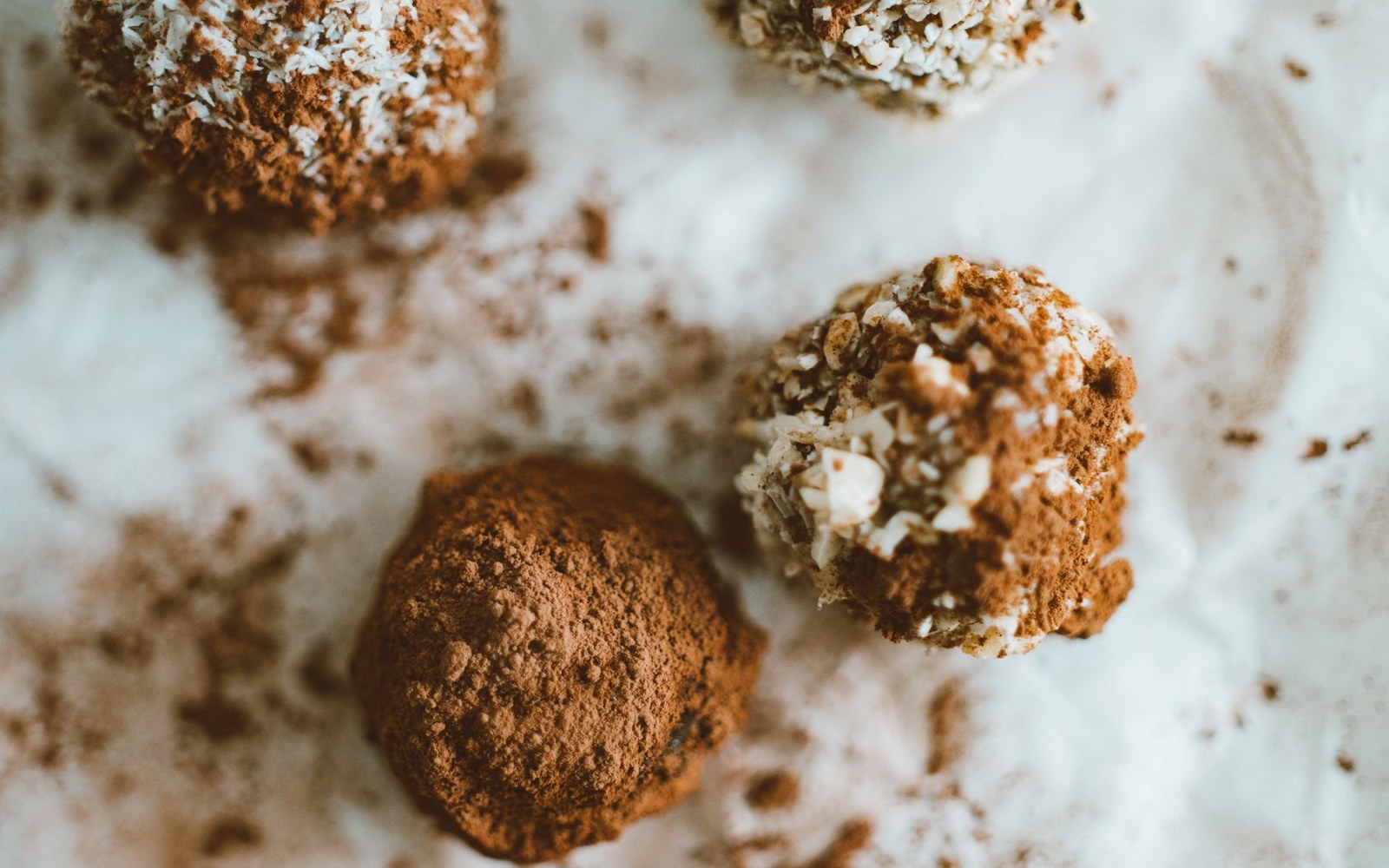
Rolled from a 2:1 ganache. Cocoa powder is the finish that needs no tempered shell — and it hides nothing.
Photo: ROMAN ODINTSOV / Pexels
For the chocolate glaze
This is the element closest to what professionals call a mirror glaze — though Sachertorte's traditional version achieves its gloss differently, through a cooked sugar syrup rather than gelatine. Combine 200 g dark chocolate (again 70%) with 200 g caster sugar and 125 ml water in a saucepan. Stir over medium heat until the sugar dissolves, then bring to 105 °C — use a thermometer; this is not approximate. Remove from heat, add a further 30 g finely chopped chocolate, and stir gently until smooth. Do not whisk; air bubbles destroy the mirror finish. Cool to around 32–34 °C, stirring occasionally. At this temperature it is thick enough to coat without running completely off, but still fluid enough to self-level.
Pour the glaze over the centre of the apricot-sealed cake in a single continuous pour. Use an offset spatula to nudge it to the edges if needed, but the fewer strokes the better — each pass risks losing the gloss. Let the glaze set at cool room temperature, not the refrigerator; chilling can cause sugar bloom if condensation forms on the surface. Once set — at minimum an hour — transfer to a serving plate. The Hotel Sacher serves its version with unsweetened whipped cream on the side, a deliberate counterweight to the cake's intensity, and this is not an affectation worth skipping.
A Note on Cocoa Solids
The 2024–25 cocoa price crisis has made 70% bars substantially more expensive at retail, and some supermarket own-brands have quietly shifted their "dark" products to lower cocoa-solid percentages or increased cocoa-butter equivalent content to offset cost. For a Sachertorte glaze, which depends on sufficient cocoa-butter crystallisation for its set and shine, verify the cocoa-solid declaration on the packaging. A bar labelled 70% from a known couverture supplier — Valrhona, Callebaut, or a named single-origin bar — is worth the premium here. The glaze is the face of the cake; it is not where to economise.
More from Recipes