Recipes · Method
How to Roll a Truffle Without Losing Half of It
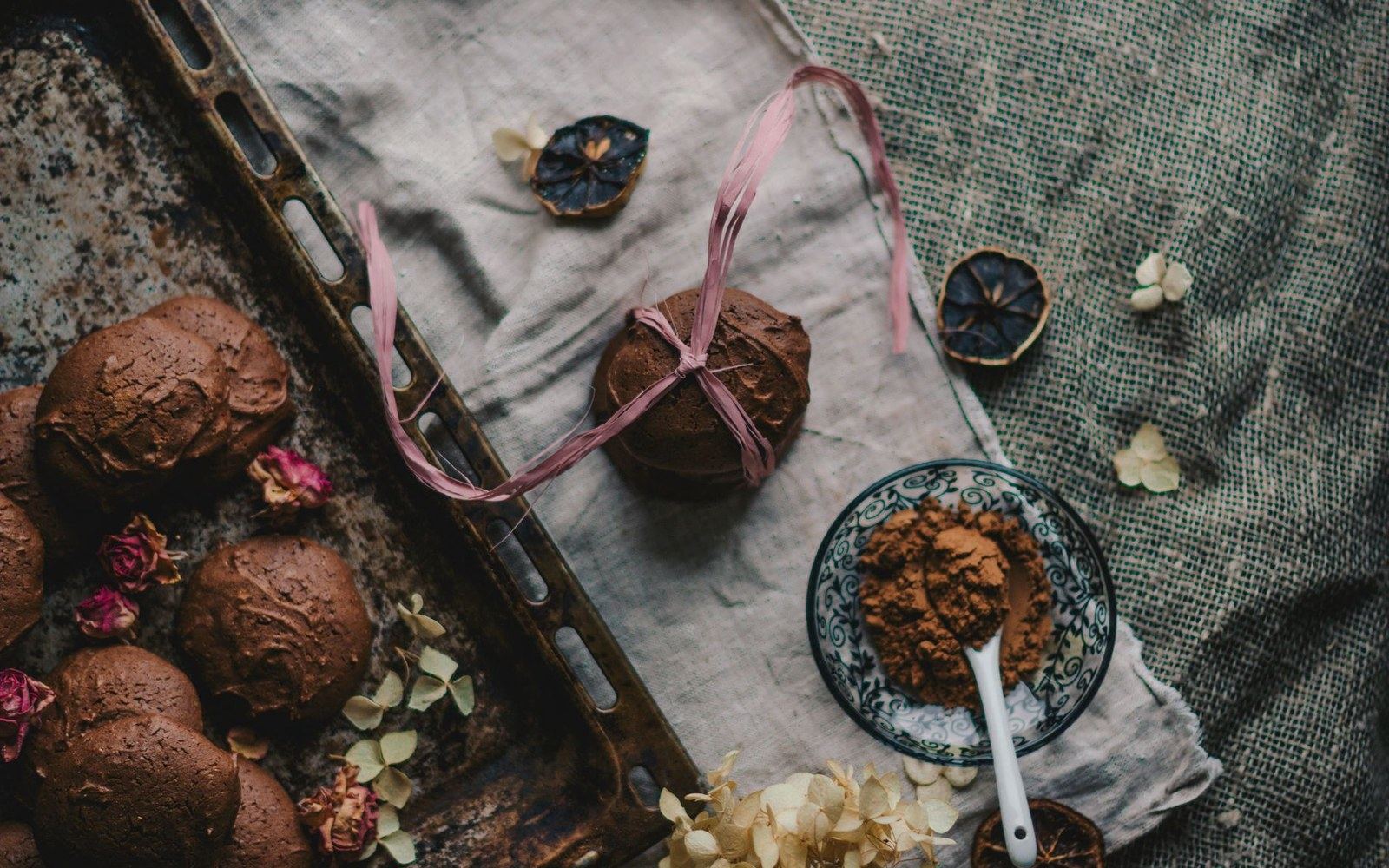 Plate 03
Rolled and dusted in one pass, cold from the fridge. A warm palm is what turns a round truffle into a smear.
Photo: Marta Dzedyshko / Pexels
Two finishes, one chilled ganache, and the reason your hands are the enemy
The centre: ganache that sets firm enough to roll
A truffle begins with ganache at a 2:1 ratio — two parts chocolate to one part cream by weight. That ratio produces a mass that is firm at room temperature yet soft enough on the palate to read as a truffle rather than a chocolate candy. Use a couverture with at least 31 percent cocoa butter; the extra fat is what gives the ganache its body once cooled. Bring the cream just to a simmer, pour it over finely chopped chocolate in a bowl, wait ninety seconds, then stir from the centre outward in slow circles until the mixture becomes a single glossy liquid. A stick blender run for twenty seconds finishes the ganache emulsion and prevents graininess later.
Pour the warm ganache into a shallow, cling-film-lined tray to a depth of roughly two centimetres. Let it cool to room temperature, then refrigerate for a minimum of two hours — three is more reliable. The target is a mass that holds its shape when scooped but yields cleanly when you press a fingernail in. Too soft and it smears on your palms; too cold and it cracks when you compress it into a ball.
Rolling: the cold-hands problem and how to solve it
Body heat is the enemy of every truffle session. The centre must be portioned and shaped fast, with cold hands and a cold work surface. Run cold water over your hands, dry them thoroughly, and work in a cool kitchen — anywhere above 22 °C and the ganache begins to smear before the ball is formed. Scoop with a melon baller or a small ice-cream scoop, which gives more consistent portions than a spoon and leaves a cleaner release.
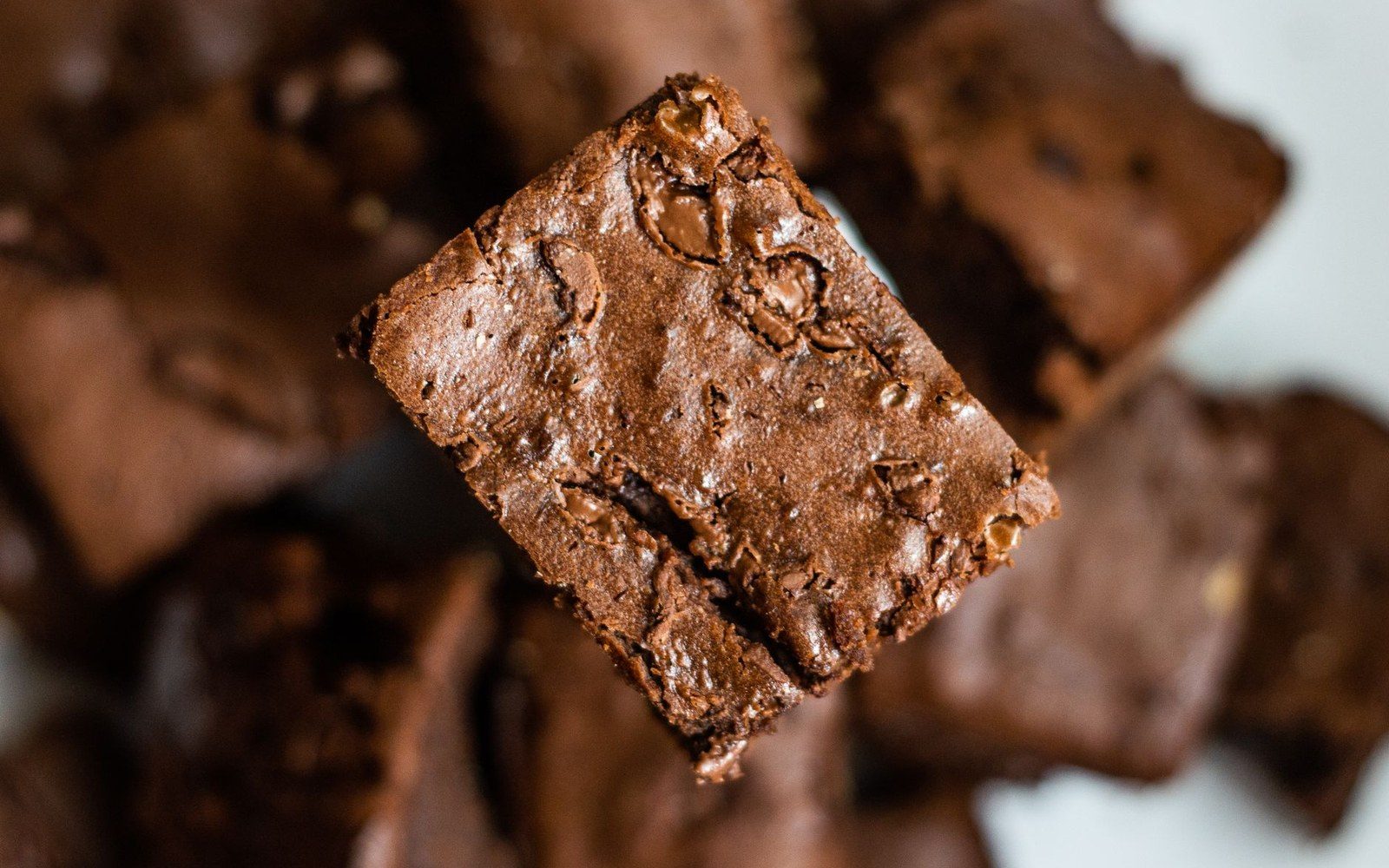
Cut cold, with a long knife wiped between cuts. Warm brownies tear, and the crust that makes the edge is barely a millimetre thick.
Photo: Raúl T / Pexels
Roll each portion between your palms with the lightest pressure and the fewest rotations necessary to form a sphere. Four or five rotations is the ceiling; anything beyond that and you are adding heat, not improving the shape. Set each ball on a parchment-lined tray as you go, not back in the tray with the slab. Once all portions are rolled, return the tray to the refrigerator for at least thirty minutes before finishing — this is not optional. A cold, firm centre is what makes either finish possible.
Finish one: cocoa powder
Cocoa powder is the faster finish and the more forgiving of the two. Use a Dutch-process cocoa for a deeper, less bitter coating; natural cocoa reads sharper and slightly acidic, which can be a deliberate choice. Sift a generous layer into a wide, shallow bowl.
Drop three or four chilled centres in at once, then shake the bowl in a circular motion so the cocoa rolls up and around each ball without your hands contacting them. Lift each truffle out with a fork, tap off the excess, and set it on parchment. The cocoa seals the surface and insulates the ganache long enough to serve at room temperature. Keep finished truffles refrigerated and bring them out twenty minutes before serving — cold ganache muffles flavour.
Finish two: tempered chocolate shell
A tempered shell requires more equipment and discipline but produces a truffle that cracks audibly and keeps for longer at room temperature. The chocolate must be in proper temper — Form V crystals throughout — or the shell will bloom grey within hours of setting.
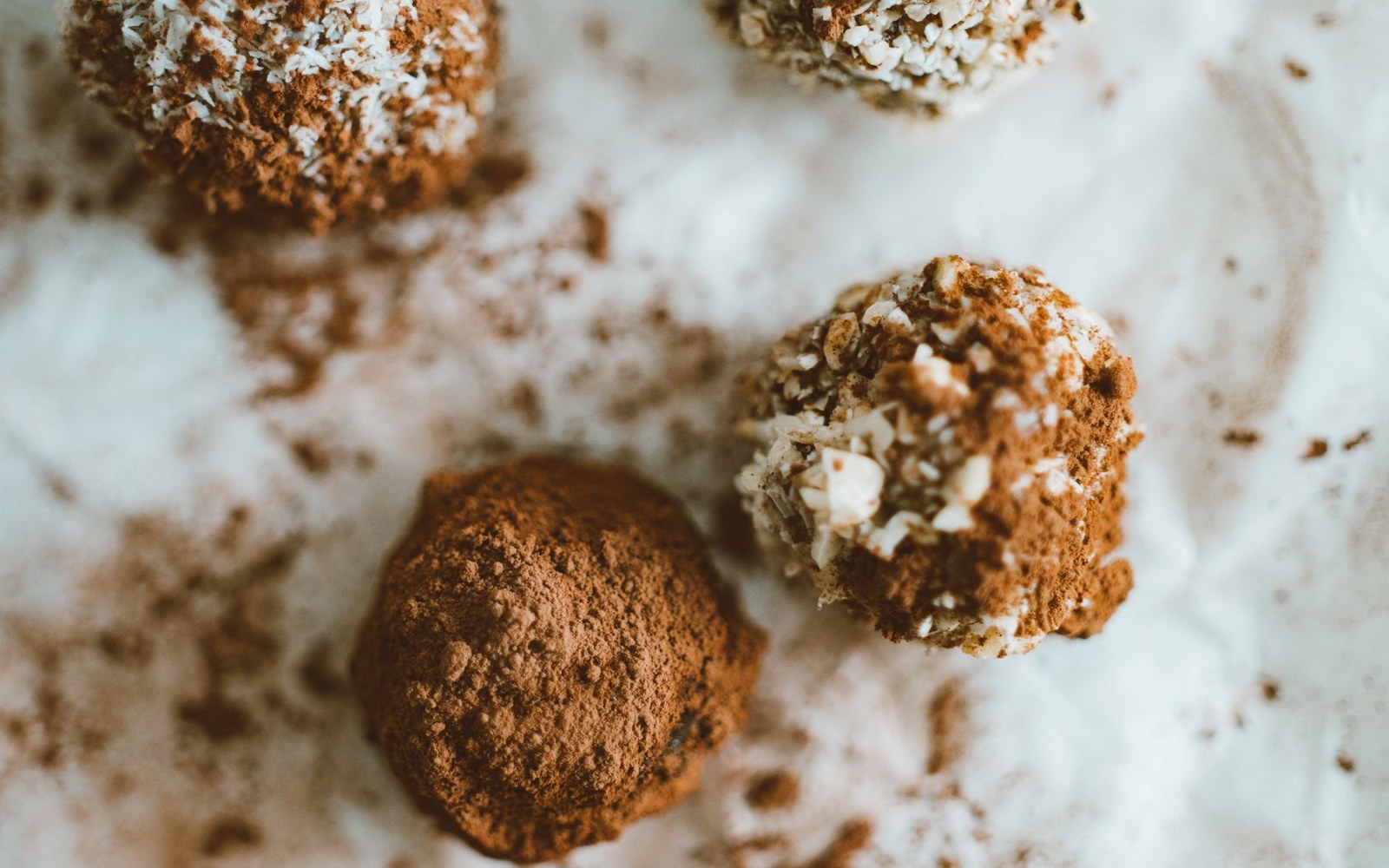
Rolled from a 2:1 ganache. Cocoa powder is the finish that needs no tempered shell — and it hides nothing.
Photo: ROMAN ODINTSOV / Pexels
Melt and temper your couverture by the seeding method: bring two-thirds of the chocolate to 50 °C, remove from heat, add the remaining third in small pieces, and stir until the mass drops to 31–32 °C for dark chocolate. Drop one cold centre into the tempered chocolate, turn it quickly with a dipping fork, lift it out in a single clean motion, and tap the fork on the bowl's edge twice to shed the excess. Set the truffle on parchment. A properly tempered shell sets in two to three minutes at room temperature and does not require refrigeration to firm up.
The shell cracks during dipping for one reason almost every time: the centre was too cold, so it expanded as it warmed back toward room temperature and split the thin shell that had already set around it. Chill the centres to firm them, then let them stand briefly out of the refrigerator so they are cool rather than fridge-cold when they meet the chocolate. That pause is the step that determines whether the shell holds.
More from Recipes