Recipes · Method
Ganache Is Three Recipes Wearing One Name
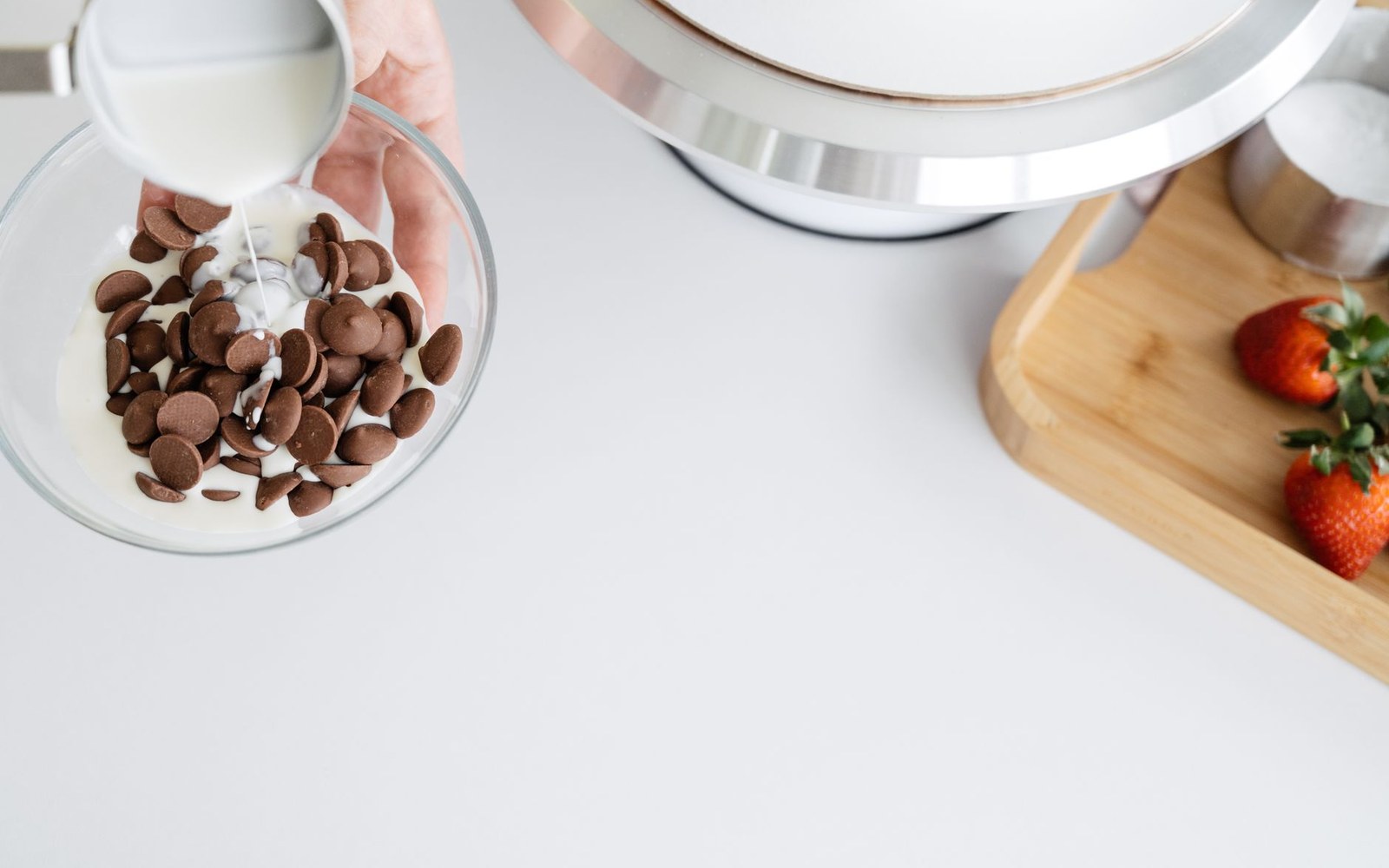 Plate 01
The pour is where the ratio is decided. Nothing after this point changes what the finished ganache will be.
Photo: SHVETS production / Pexels
The ratio is the recipe. Change it and you do not have a variation — you have a different substance entirely.
What the Ratio Actually Does
Ganache is a stable mixture of cream and chocolate in which fat and water phases are held together by the lecithin in chocolate and the proteins in cream. That emulsion can exist across a wide range of cream-to-chocolate ratios, and the ratio determines almost everything: how the finished ganache sets, how it behaves at room temperature, whether it can be piped, poured, rolled, or eaten with a spoon. Temperature and flavourings are decisions that come after. The ratio is the structural decision, and it is the only one that cannot be adjusted at the end.
Three ratios cover almost all domestic and professional applications: 1:1 (equal weights of cream and chocolate), 2:1 (double the cream), and 1:2 (double the chocolate). The ingredients are the same in all three. The substance is not.
The Three Ratios
1:1 — the truffle centre and the tart filling
Equal weights of cream and dark chocolate (around 60–70% cocoa solids) produce a ganache that is fluid when warm, sets to a sliceable firmness at room temperature, and becomes genuinely solid in the refrigerator. This is the ratio that yields a tart filling that holds a clean edge when cut, a truffle centre that firms enough to roll, and a general-purpose filling that handles well without being stiff.
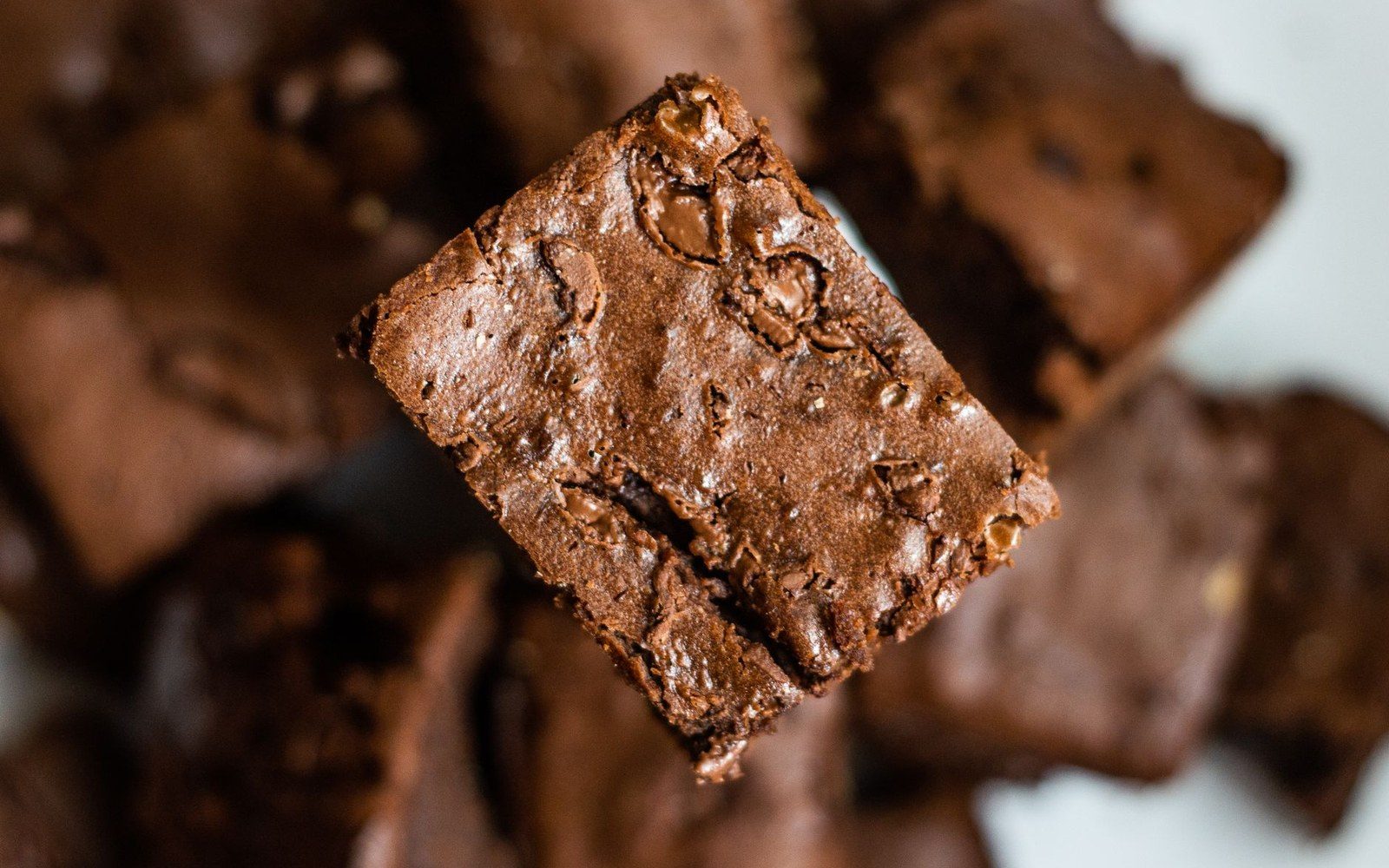
Cut cold, with a long knife wiped between cuts. Warm brownies tear, and the crust that makes the edge is barely a millimetre thick.
Photo: Raúl T / Pexels
Method: bring the cream just to a simmer — small bubbles at the rim, not a rolling boil, which scorches the cream and strips volatile aromatics from the chocolate. Pour it over the chopped chocolate in a bowl. Let it sit without touching for one minute so the heat penetrates. Then stir from the centre outward in tight circles, widening gradually; this emulsification sequence keeps the fat and water phases moving together rather than separating. When the mixture is glossy, uniform and slightly warm to the touch, it is done. Add butter at this point if the recipe calls for it — unsalted, cut into small cubes, at room temperature — and stir it in the same way. Butter raises the fat content, extends shelf life modestly, and produces a deeper gloss.
For a tart, pour straight into the shell at this stage and let it set undisturbed at room temperature. For truffles, refrigerate the bowl until firm enough to scoop — two hours minimum, four is safer — then roll in cocoa powder or tempered chocolate.
2:1 — the sauce and the glaze
Double the cream relative to the chocolate and the ganache stays pourable at room temperature and barely thickens in the refrigerator. This is the ratio for a chocolate sauce that coats a spoon, a glaze that flows smoothly over a chilled cake, and a base for mousse where aerated egg whites or whipped cream will be folded in afterward.
The method is identical to the 1:1 approach, but the result demands different handling. Because the water content is proportionally higher, shelf life is shorter and the risk of microbial spoilage rises — this matters if the ganache is being made for truffles or confections that sit at room temperature. Used within three to four days and kept refrigerated, it is not a concern. A 2:1 ganache made with milk chocolate instead of dark will be softer and looser still, because milk chocolate has less cocoa mass and so sets less firmly, which means the higher cream proportion has an even greater effect. White chocolate behaves differently again — its cocoa butter content and lack of cocoa mass mean the ratios shift; a 1:2 cream-to-white-chocolate ratio is closer to a workable 1:1 dark result.
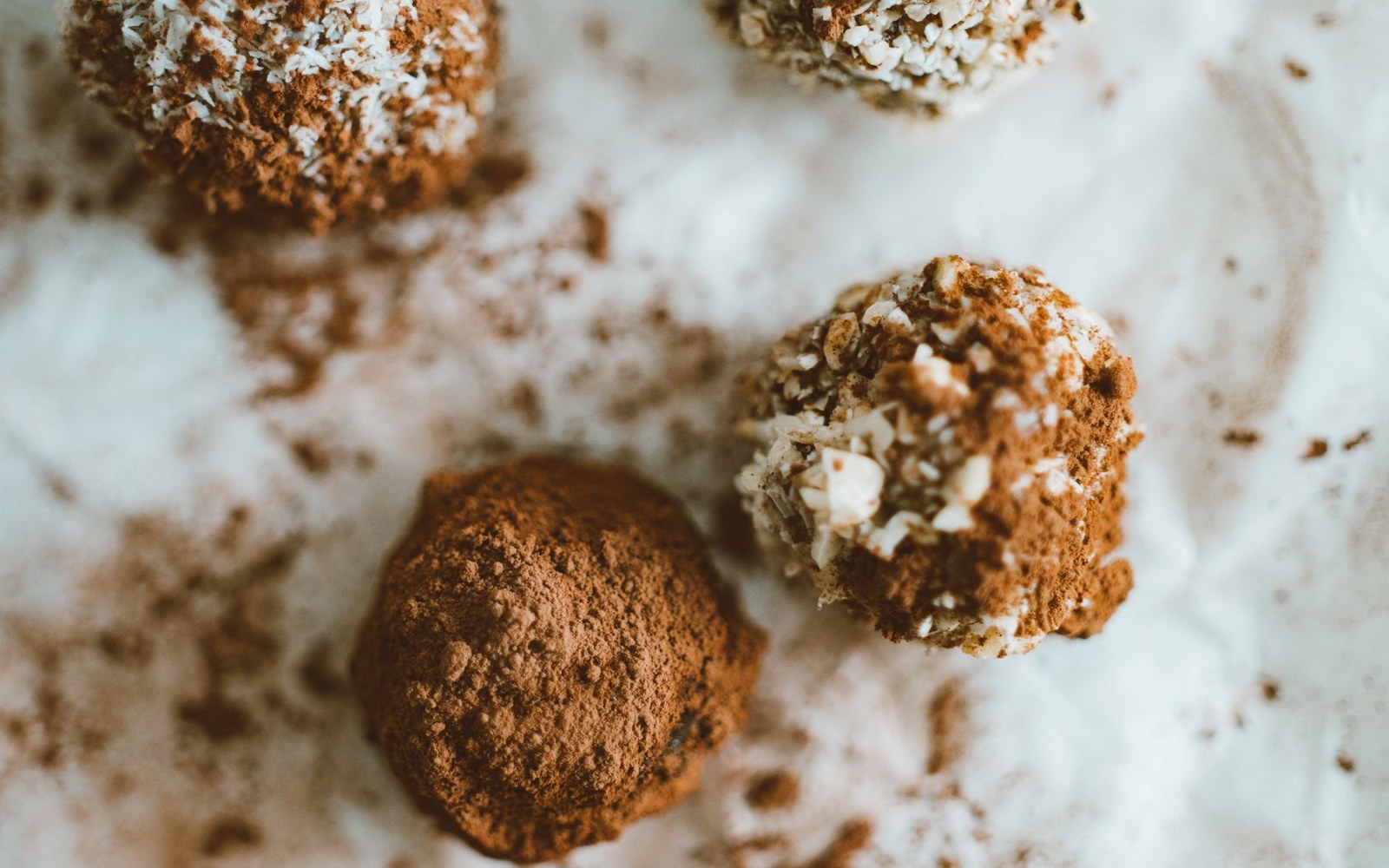
Rolled from a 1:1 ganache. Cocoa powder is the finish that needs no tempered shell — and it hides nothing.
Photo: ROMAN ODINTSOV / Pexels
As a cake glaze, pour the 2:1 ganache over a chilled cake set on a wire rack over a tray. The temperature difference between the cold cake and the warm ganache encourages it to grip and set into a thin, even coat. If it runs too fast, let the ganache cool a few more minutes before pouring.
1:2 — the coating chocolate and the rolled truffle shell
Double the chocolate and the ganache sets hard at room temperature and firm-to-brittle when cold. This is the ratio for a piped decoration that holds its shape, a dense filling for moulded bonbons, or a coating applied with a dipping fork. Professional chocolatiers working at the Barry Callebaut or Valrhona couverture level use ratios in this region for enrobed centres that need to survive handling and retail shelf time.
At this ratio, the emulsion is more demanding to form cleanly, because the chocolate content is high relative to the liquid available to disperse the fat. Use a food processor or an immersion blender rather than a spoon. Add the hot cream to the chocolate rather than the reverse — or melt the chocolate first and pour the cream in gradually while blending — and let the emulsion build before adding any butter. The result, when warm, should be smooth enough to pour into a piping bag. Let it cool at room temperature to a pipeable consistency: firm enough to hold a ribbon, fluid enough not to crack the bag.
When the Emulsion Breaks
A broken ganache — loose, greasy and split-looking — is not wasted. The fat and water phases have separated, usually because the cream was too hot and drove off water too fast, or because the mixture was stirred too vigorously before the emulsion had formed. Warm it gently over a bain-marie (a bowl over a saucepan of barely simmering water) while stirring from the centre. If it refuses to come back together, add a tablespoon of warm cream and work it in using an immersion blender held at the bottom of the bowl, which re-establishes the emulsion by forcing the phases back through each other under pressure.
A ganache that has seized slightly after the addition of a liqueur or other liquid is a different problem: the water has dropped below the threshold needed to keep the fat dispersed. Add more liquid — cream, a neutral spirit, warm water — a teaspoon at a time, blending between each addition, until the texture smooths out. Never try to heat a seized ganache dry; more heat without more liquid makes it worse.
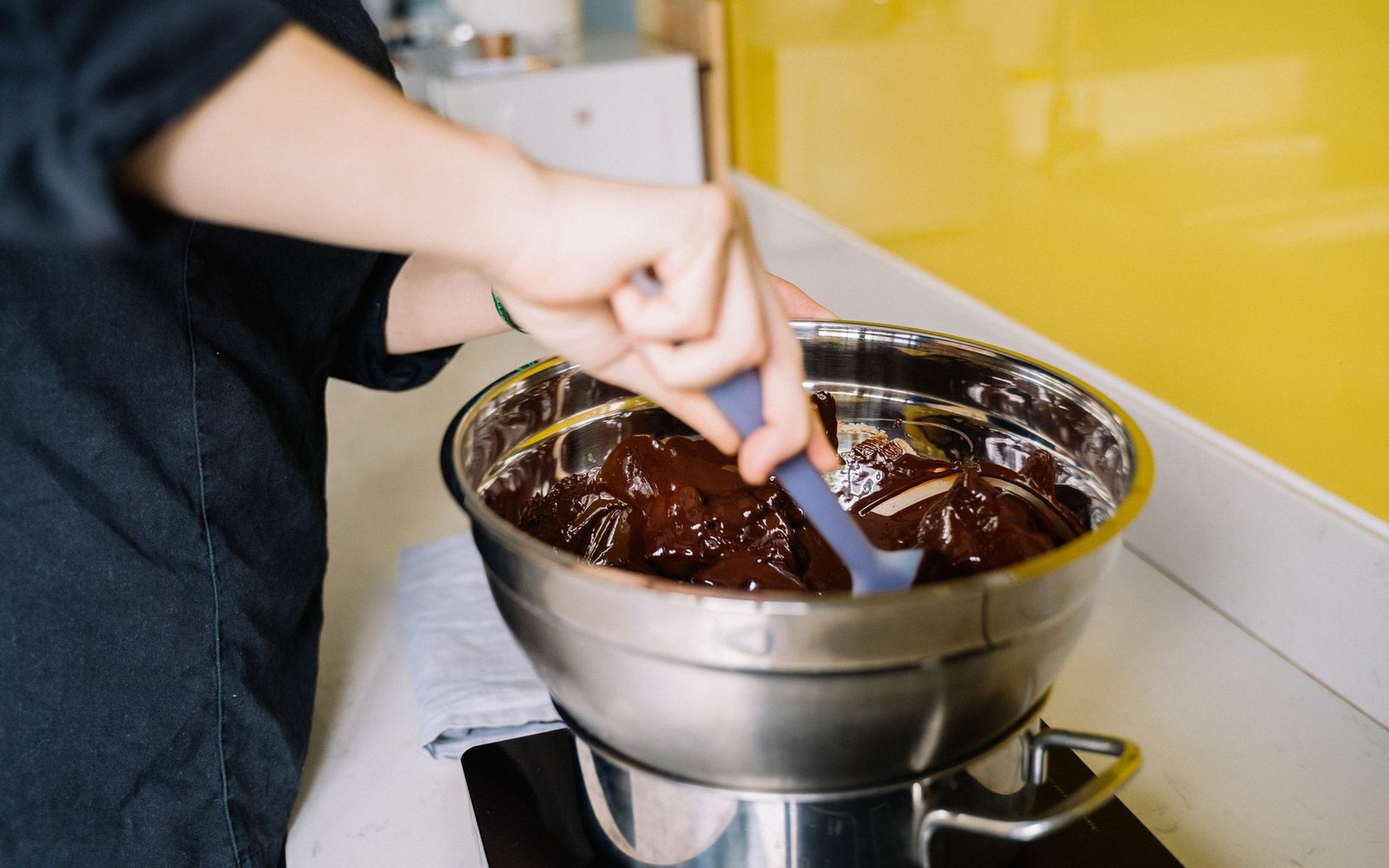
A spatula trail that holds its shape is what a formed emulsion looks like. If it slumps and runs greasy, the phases have separated.
Photo: Anna Tarazevich / Pexels
If the ganache has gone grainy and dull after setting and being rewarmed, the cocoa butter has likely recrystallised unevenly. This is the ganache equivalent of fat bloom: the crystals have grown into an unstable form. The fix is the same — gentle heat to melt everything back to liquid, then allow it to cool slowly and undisturbed.
The Principle
The three ratios produce three usably different materials from the same two ingredients. Master the emulsion method — hot cream, still bowl, circles outward — and the ratio does the rest. Every flavouring, every infused cream, every added spirit, every finishing butter is applied on top of a structure that the ratio already determined. That is why ganache is really three recipes wearing one name.
More from Recipes