Recipes · Method
Molten Cake: Chilled Moulds, 220 °C, Nine Minutes
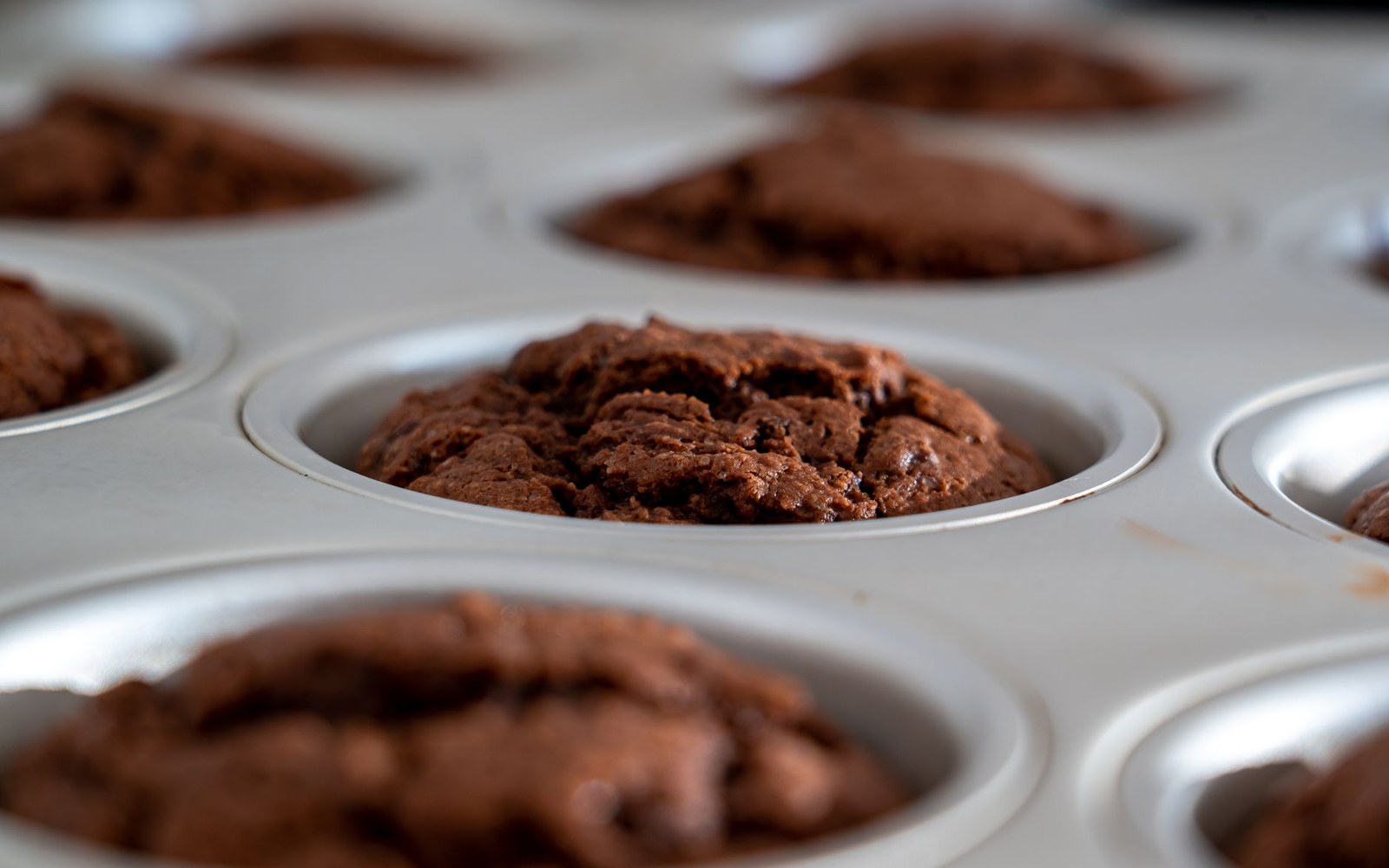 Plate 06
Out of the oven while the middle still moves. It carries on setting in the tin, which is why nine minutes is not a suggestion.
Photo: Castorly Stock / Pexels
The variables that cause failure are exactly two: mould temperature and oven time. Control both and the liquid centre is reliable.
The Recipe, and Why It Works
Butter six 150 ml ramekins thoroughly, dust with cocoa powder, then refrigerate them for at least an hour before filling. The cold ramekin does two things: it sets the outer layer of batter the moment it makes contact, giving the finished cake a defined shell before the oven even starts; and it buys an extra margin of time before the centre heats through. Use couverture with a minimum 64% cocoa solids — the flavour concentration is high enough to carry through the egg and butter, and the cocoa-butter content ensures a fluid melt rather than a starchy paste.
Melt 200 g dark couverture with 150 g unsalted butter over a bain-marie, stirring until smooth. In a separate bowl, whisk 4 whole eggs with 4 yolks and 160 g caster sugar until the mixture is pale and thick — two to three minutes of real effort. Fold the chocolate into the egg mixture, then sift in 60 g plain flour and fold again until just combined. Spoon into the chilled ramekins and return them to the refrigerator. They will keep there for up to 24 hours, which makes them genuinely useful for entertaining.
When ready to bake, heat the oven to 220 °C fan — not 200 °C, not 230 °C. Place the ramekins on a baking tray and set a timer for exactly nine minutes. At nine minutes the exterior is set and pulls cleanly from the sides; the centre registers well below the 70–75 °C threshold at which eggs coagulate fully, a principle well-documented in food science ↗, meaning it stays liquid. At ten minutes the window closes and the centre begins to firm. Remove, rest for forty-five seconds — not longer — then run a knife around the edge and invert immediately onto a warm plate.
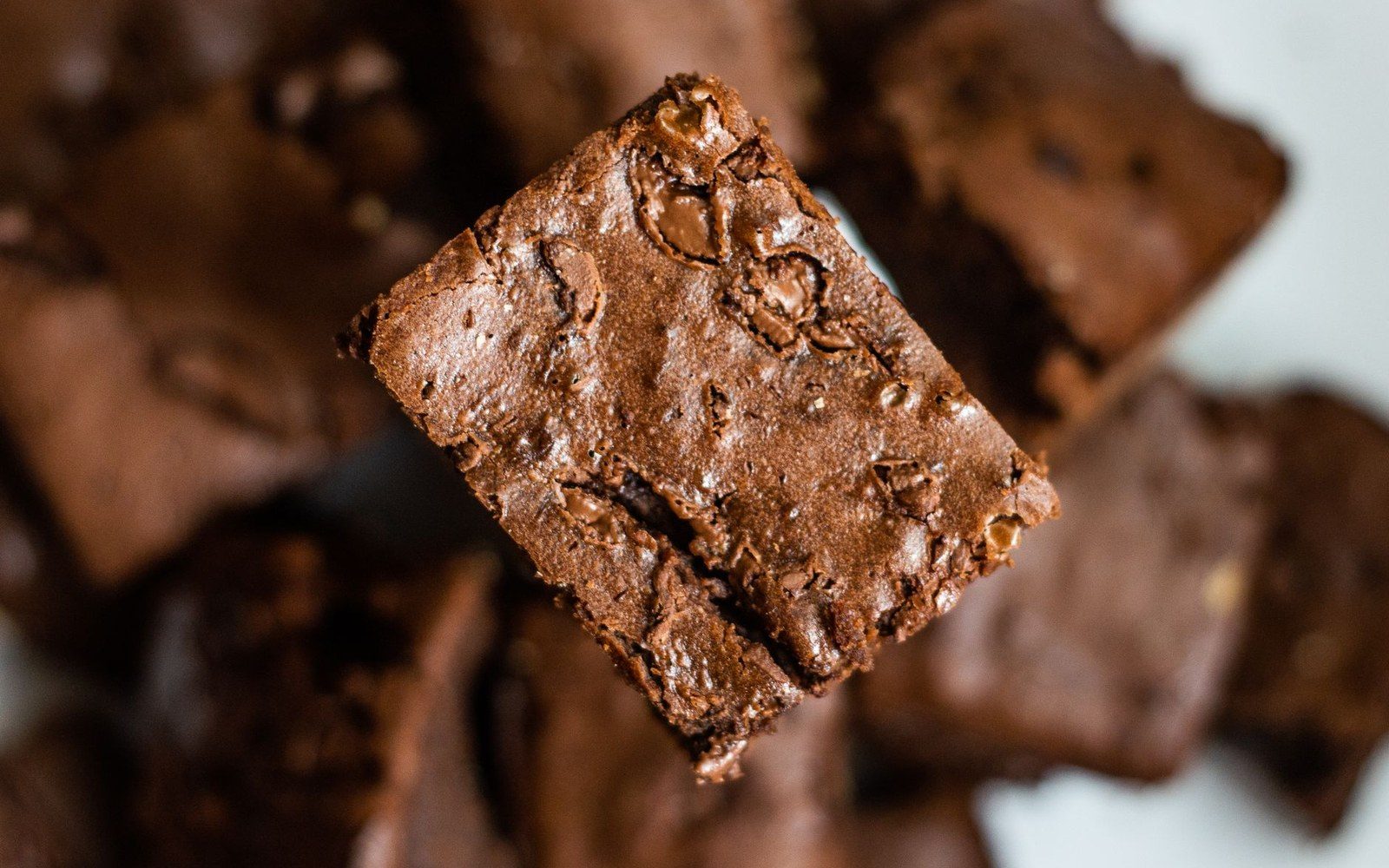
Cut cold, with a long knife wiped between cuts. Warm brownies tear, and the crust that makes the edge is barely a millimetre thick.
Photo: Raúl T / Pexels
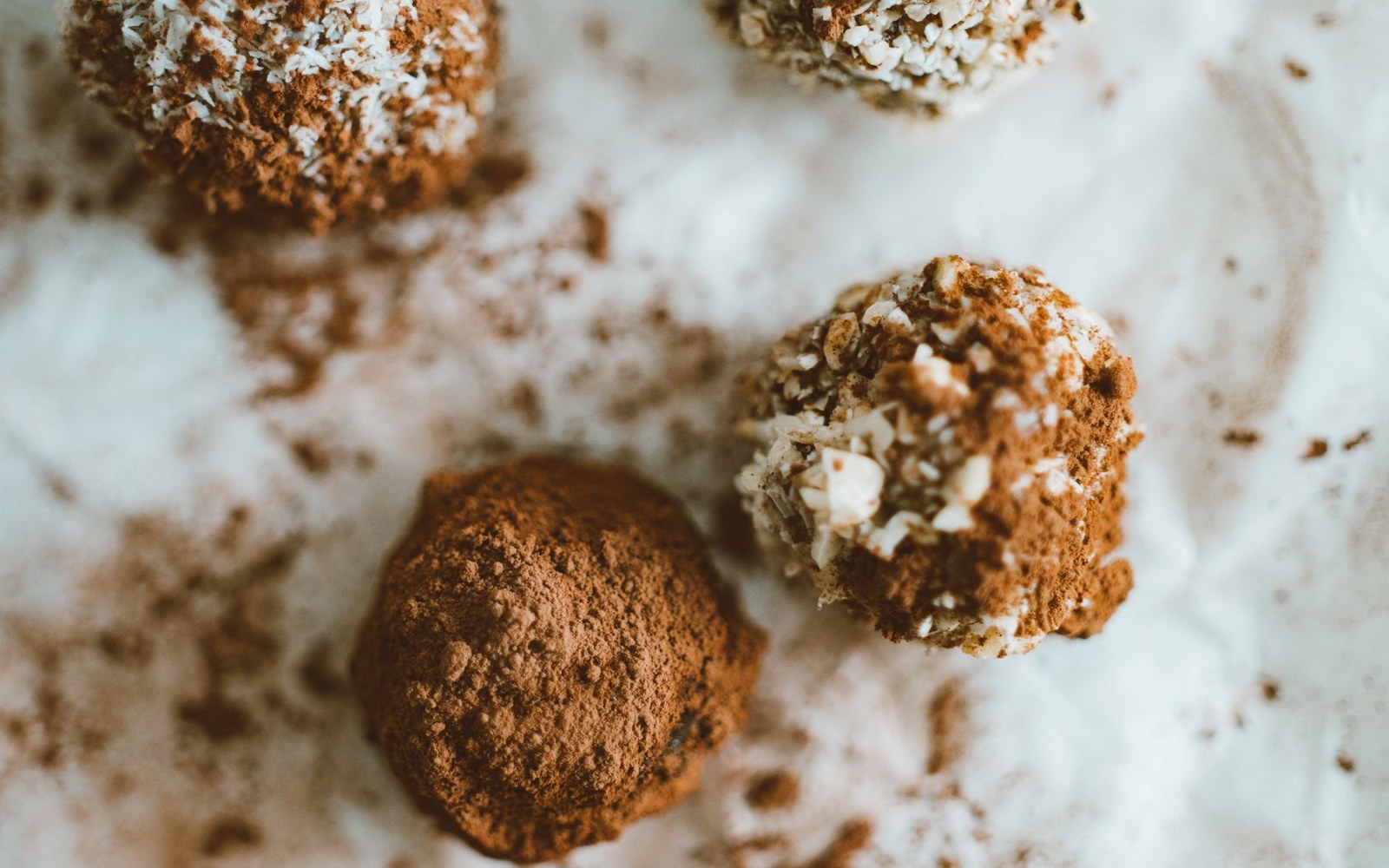
Rolled from a 2:1 ganache. Cocoa powder is the finish that needs no tempered shell — and it hides nothing.
Photo: ROMAN ODINTSOV / Pexels
The science in brief: the thin layer of batter touching the cold ramekin wall solidifies on contact and forms a casing. The oven then drives heat inward from that outer shell. Because heat travels through batter slowly and the centre mass is still cold from the refrigerator, the interior never reaches setting temperature in nine minutes. The egg proteins at the edge denature and hold; those at the centre do not. This is a controlled temperature gradient, not a near-miss.
If the centre runs too thin, extend by one minute next time. If it is fully set, reduce by one. Oven variation is measurable with an oven thermometer ↗ and worth checking once — the recipe then becomes repeatable without guesswork.
More from Recipes