At the Bench · Technique
Why Ganache Keeps and Why It Splits
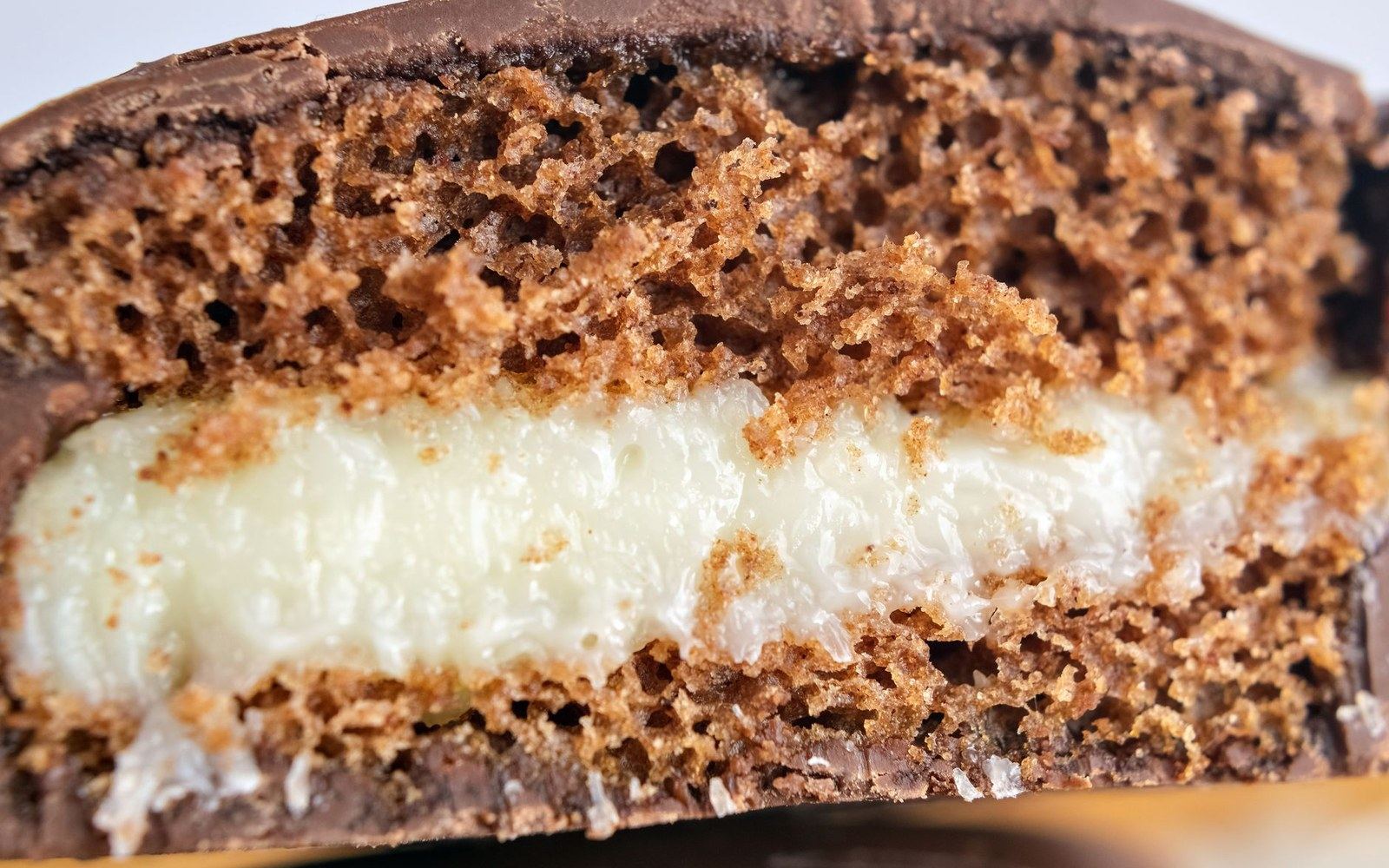 Plate 15
Water and fat sitting in separate layers keep for days; held in one emulsion they keep for weeks and taste of more.
Photo: Gustavo Peres / Pexels
The emulsion underneath the glossy surface
Ganache looks simple — cream and chocolate stirred together — but what forms in the bowl is a ganache emulsion: a stable dispersion of tiny water droplets suspended in a continuous fat phase, held together by lecithin from the chocolate and proteins from the cream. Disturb the balance between those phases, and the whole thing breaks. Understand it, and the ganache stays smooth and sliceable for days.
The fat phase is mostly cocoa butter, which is itself polymorphic. As a freshly made ganache cools, the cocoa-butter fraction begins to crystallise. Done slowly and evenly, it sets into a network of stable Form V crystals — the same polymorph that gives a well-tempered bar its snap — and the result is a ganache with a clean, silky texture that holds its shape at room temperature. Done too fast (a blast of cold air, a fridge set near freezing), the cocoa butter rushes into unstable crystal forms, producing a greasy, grainy surface and a filling that weeps fat within hours. Temperature stability during setting is not a finishing detail; it determines the texture of every truffle and tart you cut the next day.
Water activity, fat crystallisation, and what actually limits shelf life
Water activity (Aw) — the proportion of free, unbound water in a food — governs shelf life at the microbial level. A ganache at a standard 1:1 cream-to-chocolate ratio typically carries a water activity somewhere between 0.85 and 0.92, which is high enough to support mould and bacterial growth within days. Professional chocolatiers drive that number down by inverting sugar (which binds free water more effectively than sucrose), adding glucose syrup, or increasing the chocolate-to-cream ratio to 2:1 — a denser, less aqueous mass. The ICCO ↗ has no view on ganache shelf life, but food safety authorities in most jurisdictions treat confectionery with a water activity above 0.85 as perishable. A truffle centre made at 2:1 and finished in good couverture chocolate can reach three to four weeks at cellar temperature (around 16 °C); the same centre at 1:1 is closer to ten days.
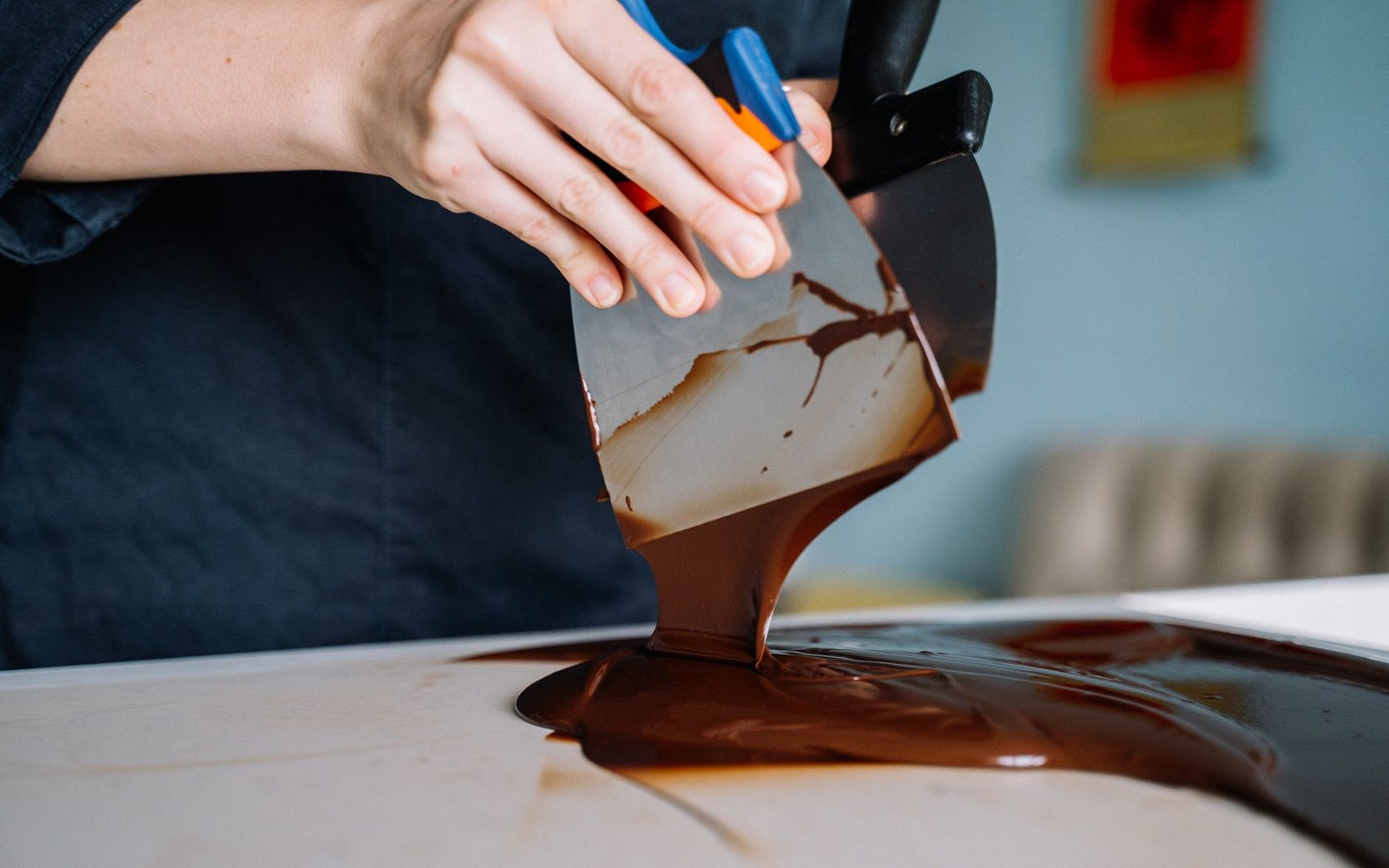
Tabling: the mass is worked across cold marble until it thickens, then returned to the bowl to bring the whole batch into temper.
Photo: Anna Tarazevich / Pexels
At the molecular level, the stable ganache looks like this: water droplets — drawn from the cream's water fraction — are individually coated by emulsifying agents, primarily the phospholipids in the soy lecithin added to most couverture, along with casein and whey proteins from the cream. These interfacial films keep the droplets separate and the two phases from merging. In the unstable ganache, those films have either been disrupted or never properly formed.
Two conditions cause a split. The first is temperature shock. Pouring hot cream over chocolate and then immediately refrigerating the bowl before the emulsion has fully formed gives the fat phase no time to absorb and surround the water droplets; the phases separate, and the result is a greasy pool with grainy solids. The fix is always to let the ganache form at room temperature, then cool it gradually. The second is over-agitation at the wrong moment. Stirring vigorously once the fat has begun to crystallise shears the interfacial films and forces fat crystals to aggregate rather than form the even network the recipe needs. A gentle circular stir from the centre outward — the method that creates a stable, tight emulsion — respects the forming structure; a balloon whisk at the wrong stage destroys it.
Tabling: the mass is worked across cold marble until it thickens, then returned to the bowl to bring the whole batch into temper.
Photo: Anna Tarazevich / Pexels
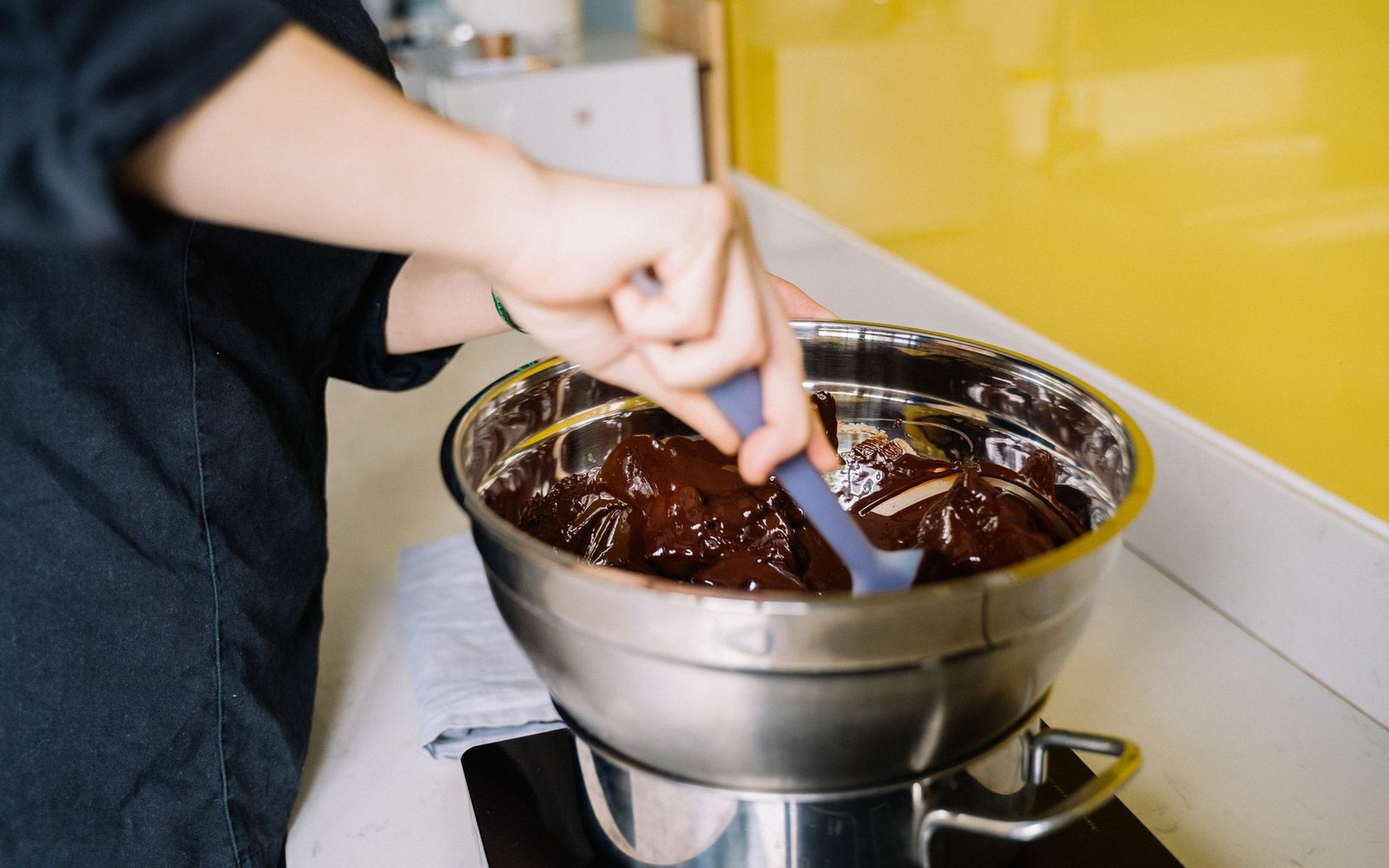
A spatula trail that holds its shape is what a formed emulsion looks like. If it slumps and runs greasy, the phases have separated.
Photo: Anna Tarazevich / Pexels
A split ganache is not always a lost cause. Adding a small quantity of warm cream — a tablespoon at a time — and stirring from the centre can re-establish the emulsion if the fat has not fully set. If it has, the only reliable rescue is gentle remelting to around 35 °C and starting the emulsification from scratch, adding the liquid incrementally. What will not work is adding cold liquid to a split warm ganache, which introduces exactly the kind of shock that food science literature on emulsion failure identifies as a major cause of phase separation.
The underlying rule across every ganache, whatever its ratio or flavouring: water and fat do not want to coexist. Making them do so — and keeping them there — is the whole technique.
More from At the Bench