At the Bench · Technique
Couverture and Compound: What the Cocoa-Butter Minimum Actually Means
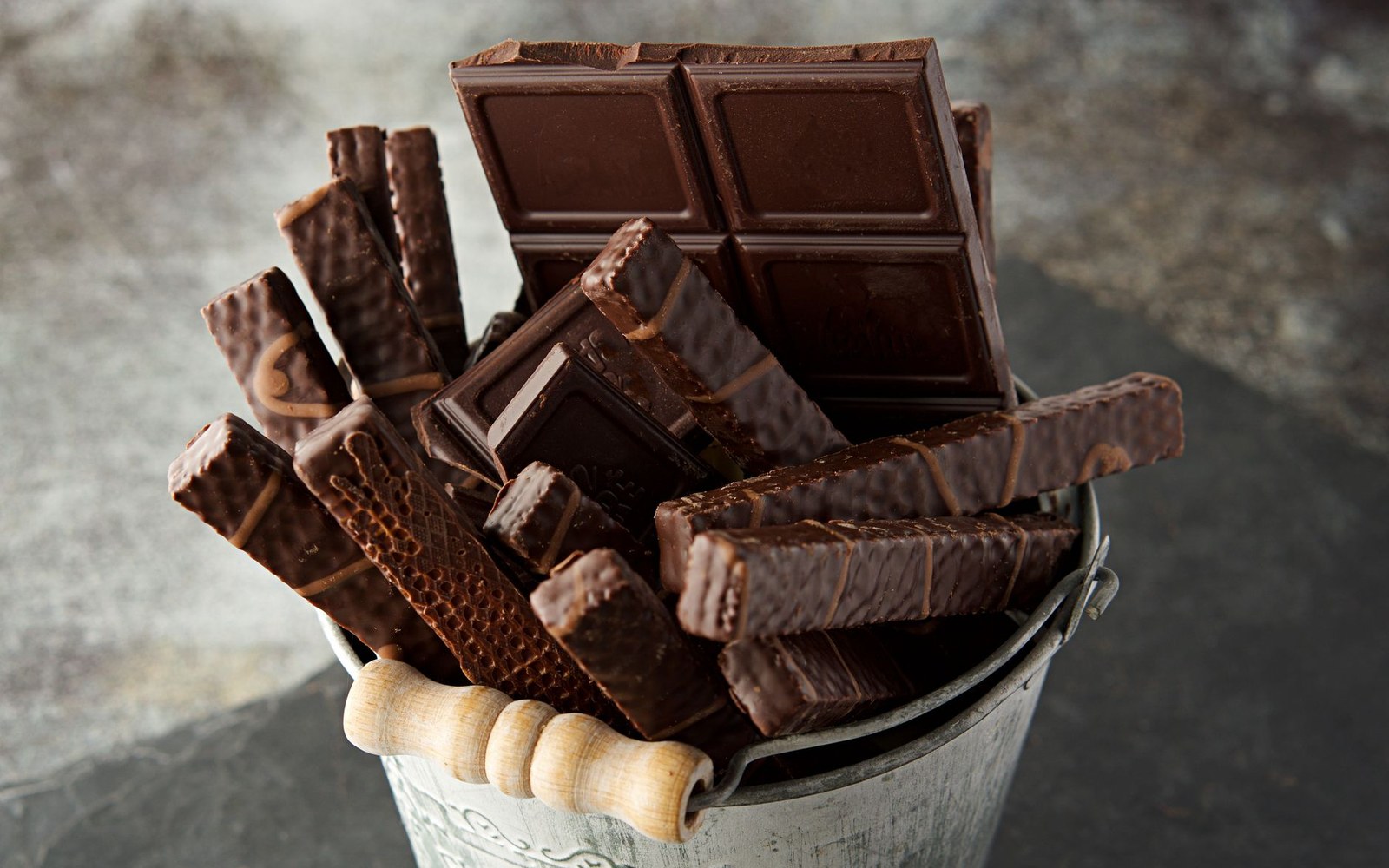 Plate 17
Some of this needs tempering before it will set with a snap and some of it does not — the difference is which fat is in it.
Photo: Sylwester Ficek / Pexels
The label says chocolate. What's inside determines whether you need a thermometer.
What Makes Couverture Couverture
The word couverture comes from the French for "covering," and the legal definition backs it up: in the EU, couverture must contain a minimum of 31 percent cocoa butter, which is high enough to produce the fluent, mobile melt that coats a truffle or floods a mould without pooling thick at the base. The Codex Alimentarius standard sets the same floor, 31 percent cocoa butter, for couverture chocolate. Makers like Valrhona and Barry Callebaut publish exact cocoa-butter percentages on their professional packaging because professional kitchens need to know: a 35 percent couverture will coat thinner and set faster than one sitting closer to the minimum.
That cocoa butter is what obliges the tempering step. Cocoa butter can crystallise in six distinct polymorphic forms, and only Form V — the stable one — produces the gloss, the snap, and the clean melt point just below body temperature that separates a properly finished bar from something dull and greasy. Tempering — whether by the seeding method or by tabling on a cold marble slab — forces the mass to crystallise in Form V rather than in whichever form it happens to land in as it cools. Skip it and you will pull a batch of fat-bloomed, streaky discs from the mould regardless of how expensive the chocolate was.
Working with couverture also means working with price. Cocoa-butter futures are tied directly to the raw cocoa bean market, which passed $10,000 per tonne on ICE Futures in 2024 ↗ for the first time on record, driven by two consecutive poor harvests in Côte d'Ivoire and Ghana, the countries that together supply roughly 60 percent of the world's cocoa. That spike travels downstream: couverture prices for professional blocks and callets have risen sharply since 2023, and the premium over compound has widened.
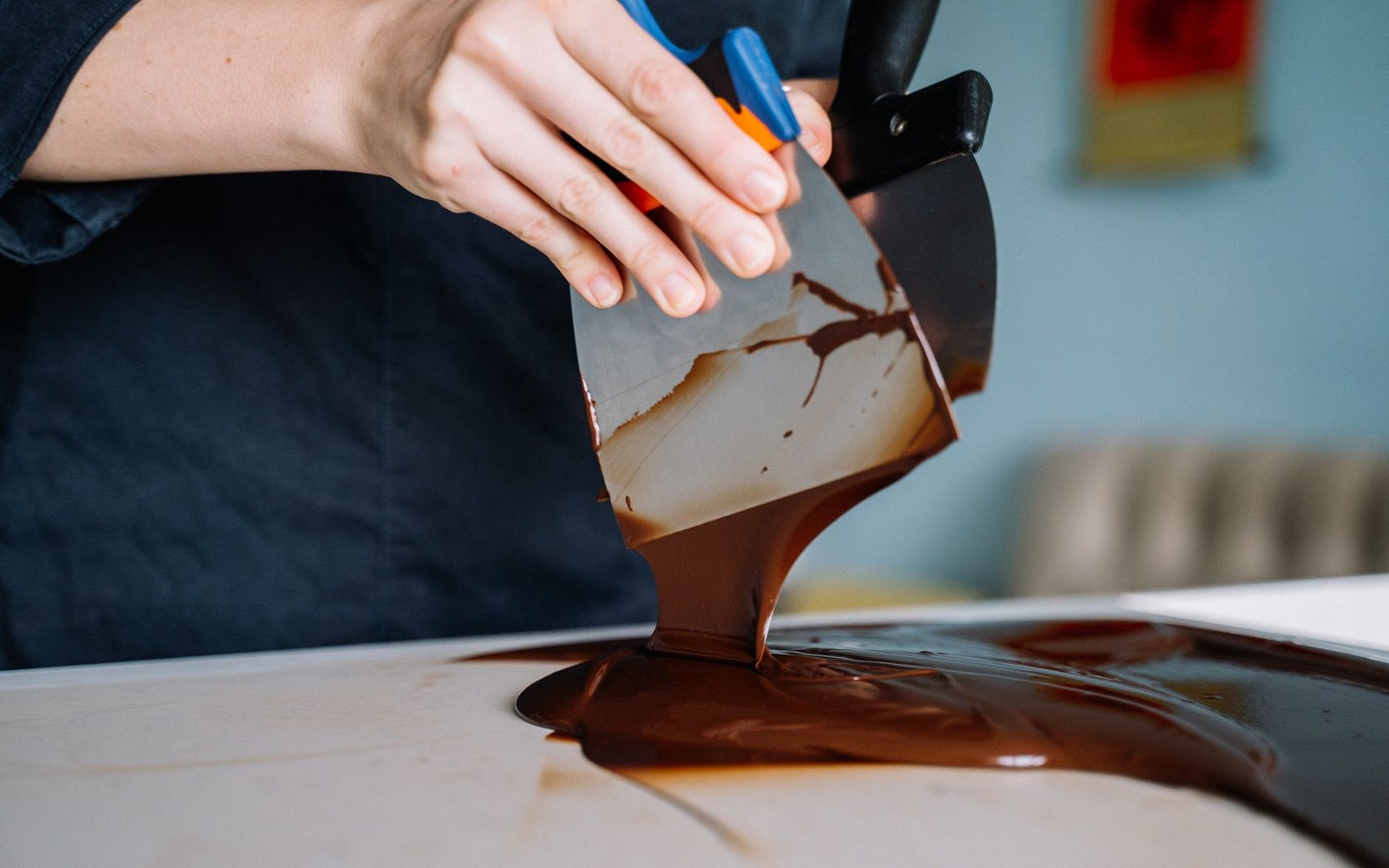
Tabling: the mass is worked across cold marble until it thickens, then returned to the bowl to bring the whole batch into temper.
Photo: Anna Tarazevich / Pexels
What Compound Actually Is
Compound coating replaces cocoa butter with vegetable fats — most commonly palm kernel oil or partially hydrogenated alternatives — which melt and set within a narrower temperature range and, crucially, do not require tempering. The coating sets by simple cooling, which makes it fast, forgiving, and cheap to operate at scale. Compound is not legally chocolate in the EU or the United States; it may be labelled "chocolate-flavoured coating" or "compound chocolate" depending on jurisdiction.
The middle ground is the cocoa-butter equivalent, or CBE: a vegetable fat — typically a blend of shea, illipe or palm fractions — with a crystal structure close enough to cocoa butter that it behaves similarly during melting and setting. EU regulations permit up to 5 percent CBE in chocolate sold as chocolate ↗, provided it is declared on the label. This is the substitution mechanism that manufacturers have leaned on during the current price crisis, and it is why some bars taste subtly different from how they tasted three years ago — even when the brand name has not changed.
Where Compound Makes Sense
For the home cook, the choice is simpler than it sounds. Couverture is the right material wherever texture and finish are the point — enrobed truffles, moulded bonbons, a mirror-glaze ganache tart, anything where the snap and gloss will be noticed. Valrhona's Guanaja 70 percent and Callebaut's 811 callets are the standard benchmarks for a reason: they behave consistently, their cocoa-butter content is documented, and the results of tempering them correctly are reproducible.
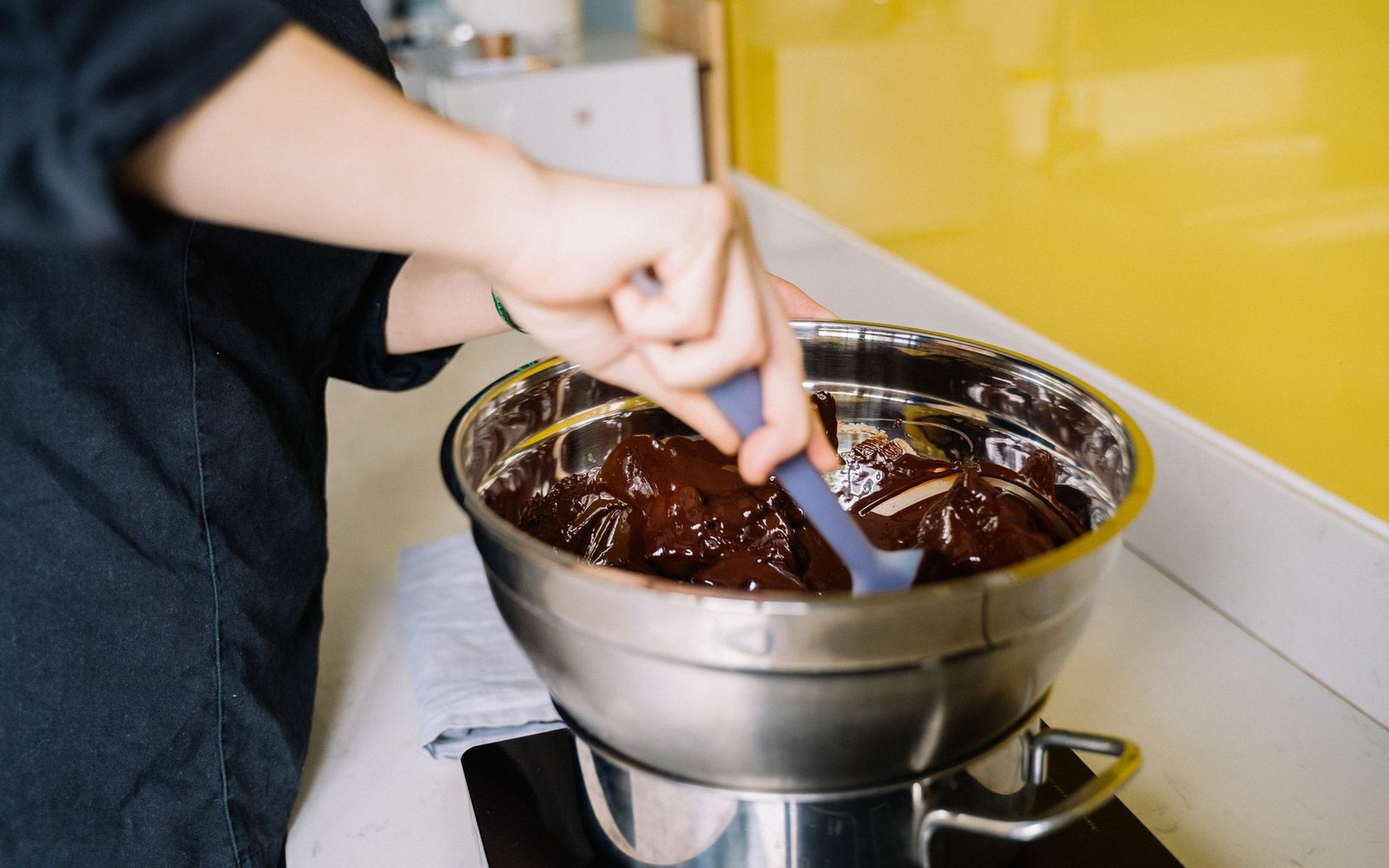
A spatula trail that holds its shape is what a formed emulsion looks like. If it slumps and runs greasy, the phases have separated.
Photo: Anna Tarazevich / Pexels
Compound has its place. For drizzling over a tray of flapjacks, for a school bake sale where nothing needs to snap cleanly, or for a coating on a cake that will be refrigerated immediately and served cold, compound is honest and practical. It will not bloom from a tempering failure because there is nothing to temper. The flavour is flatter and the melt on the palate is slower and waxier, but in context that may not matter.
The test is easy enough: if you would miss the snap, use couverture and temper it. If the snap is irrelevant, compound saves time and money without pretending to be something it is not.
More from At the Bench