At the Bench · Technique
Natural Cocoa Is an Acid, and Your Baking Soda Was Counting on It
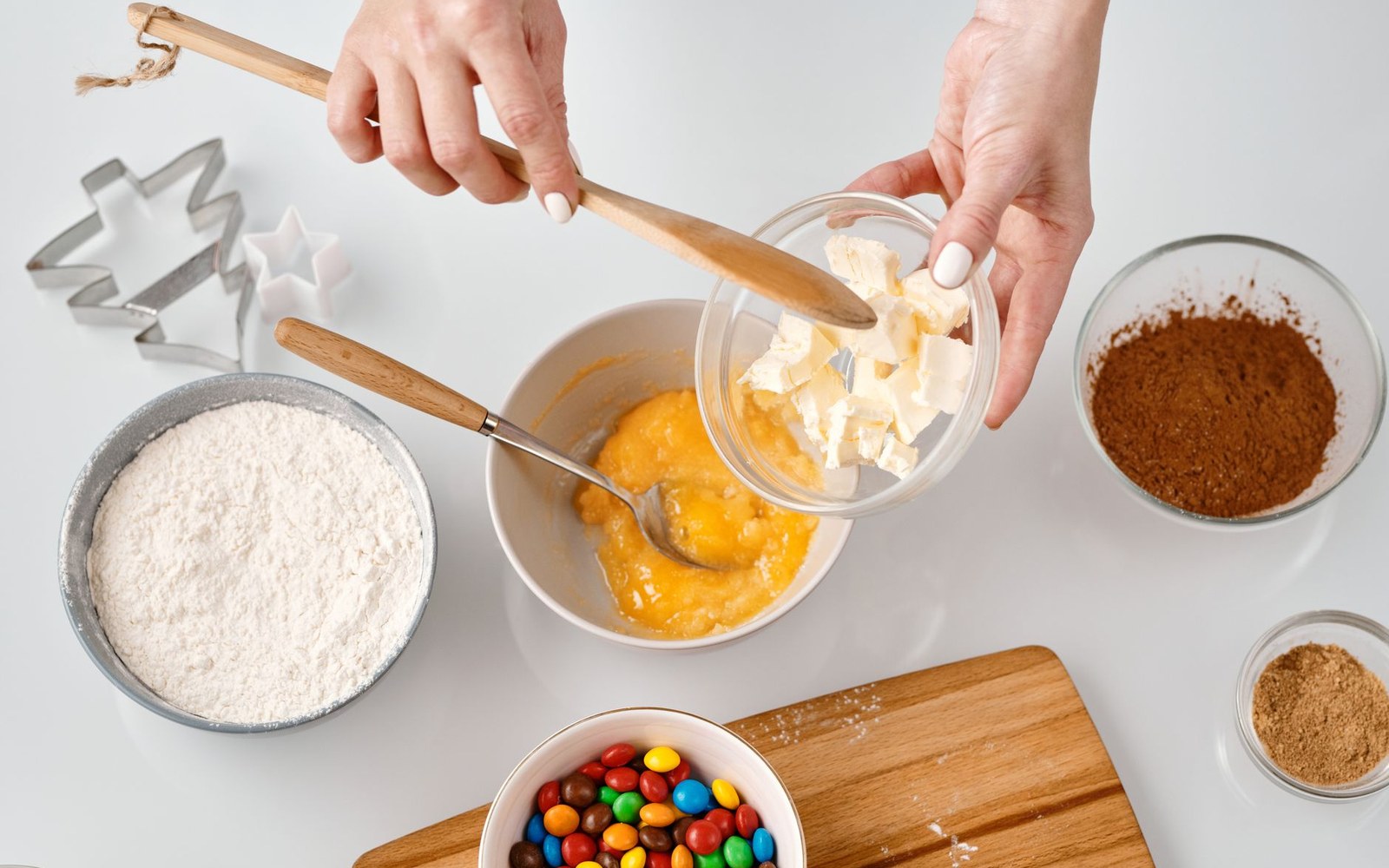 Plate 16
Which cocoa is in that bowl decides whether the raising agent beside it should be soda or powder.
Photo: Nicole Michalou / Pexels
Swap Dutch-process for natural in the wrong recipe and the leavening disappears. The label tells you which you have.
The alkalising step and what it changes
Natural cocoa powder is simply roasted, shelled, and pressed cacao — the fat removed, the solids ground fine. It retains the bean's native acidity, sitting at roughly pH 5 to 6. That acidity is not incidental: it carries the sharp, fruity top notes that define a classic American-style chocolate cake, and it reacts directly with baking soda.
Baking soda is pure sodium bicarbonate. It needs an acid to release carbon dioxide, and Dutch-process cocoa — treated with an alkalising agent, typically potassium carbonate, a process formalised by Coenraad Johannes van Houten in the early nineteenth century — has had that acidity deliberately neutralised. Dutch-process powder runs closer to pH 7 or above, sometimes considerably higher for the darkest "black" cocoas. The colour deepens, the flavour turns mild and rounded, and the sharpness that makes baking soda react is largely gone.
Why the substitution goes wrong
A recipe built around natural cocoa and baking soda is a balanced chemical system. The cocoa supplies the acid; the baking soda supplies the base; together they produce the lift. Pull out the natural cocoa and replace it with Dutch-process, and the acid half of that equation is missing. The baking soda still dissolves, but without sufficient acid it cannot release enough gas before the oven heat sets the crumb. The result is denser, flatter, and — because unneutralised sodium bicarbonate has a faintly soapy flavour — sometimes off-tasting.
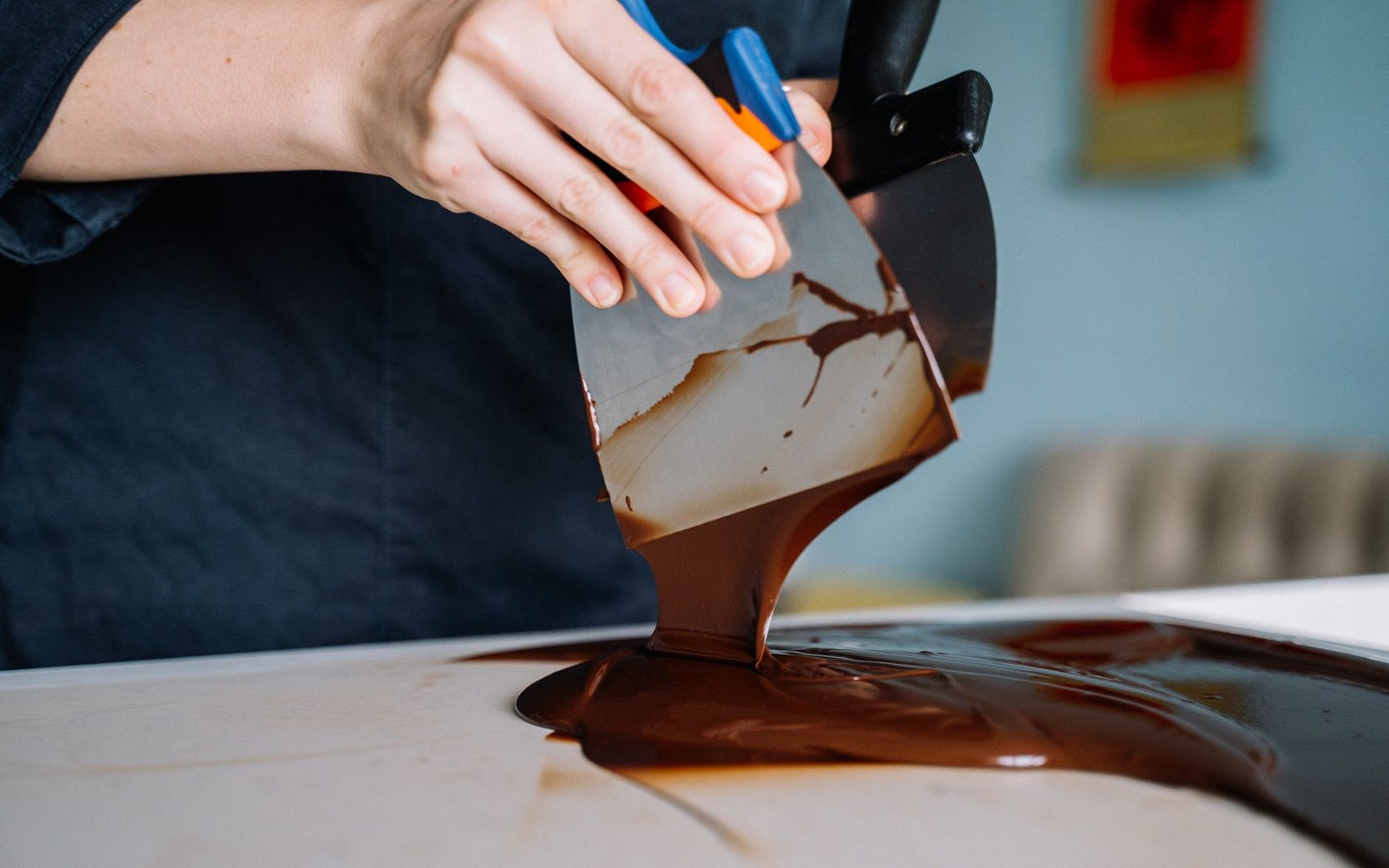
Tabling: the mass is worked across cold marble until it thickens, then returned to the bowl to bring the whole batch into temper.
Photo: Anna Tarazevich / Pexels
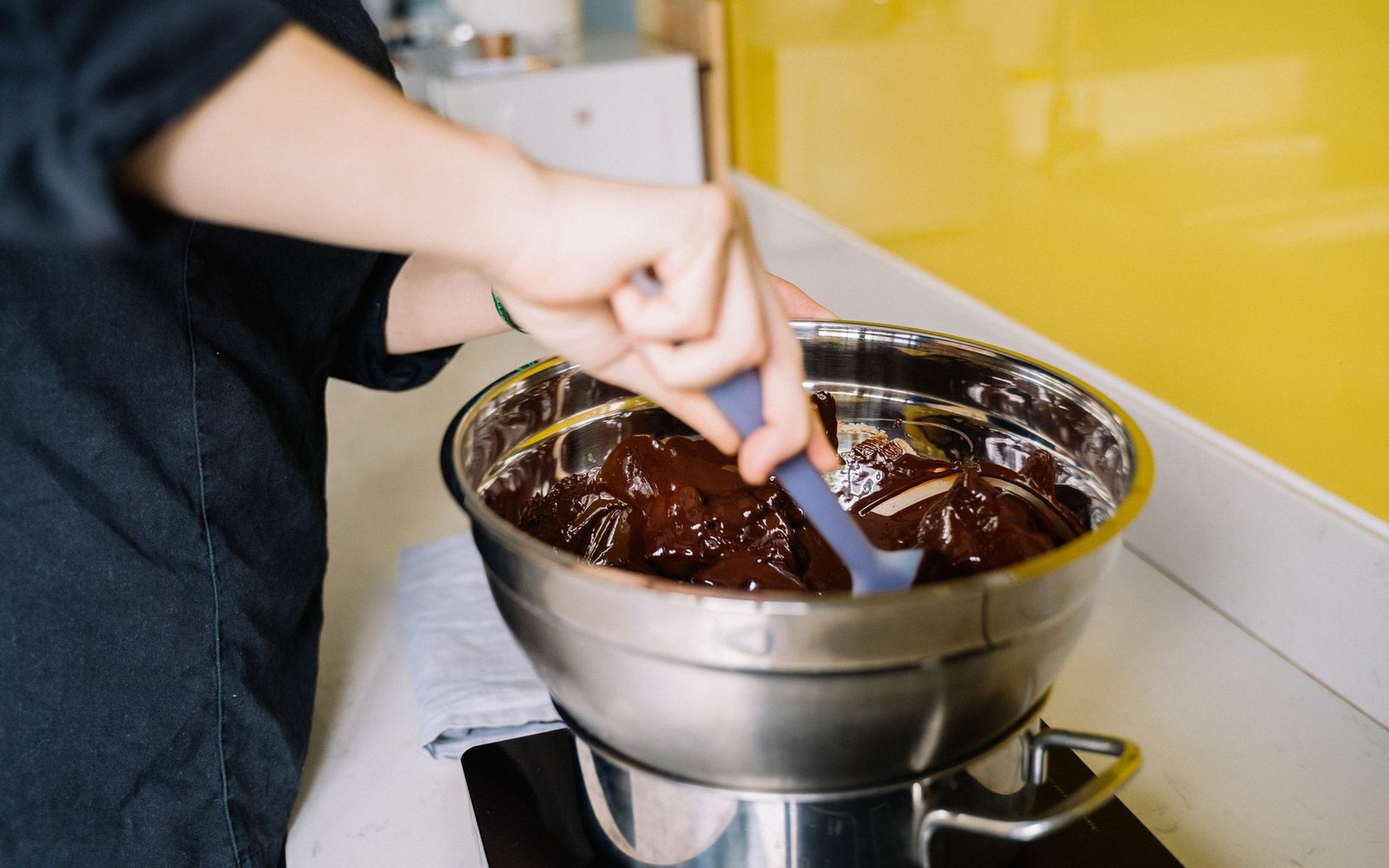
A spatula trail that holds its shape is what a formed emulsion looks like. If it slumps and runs greasy, the phases have separated.
Photo: Anna Tarazevich / Pexels
The reverse substitution is a different problem. Use natural cocoa in a recipe designed for Dutch-process, which typically calls for baking powder (a self-contained acid-base system that does not depend on the cocoa), and the extra acid tips the balance: the batter browns more slowly, the flavour turns harsher, and the crumb can tighten.
Reading the label before shopping is the practical fix. If the ingredient list includes potassium carbonate or any alkalising agent, it is Dutch-process. If the label says only "cocoa powder" or "natural cocoa," check which your recipe expects. The two powders are not interchangeable in most recipes ↗ without adjusting the leavening — and adjusting leavening means knowing the chemistry behind it.
More from At the Bench