At the Bench · Technique
One Drop of Water and the Whole Bowl Turns to Paste
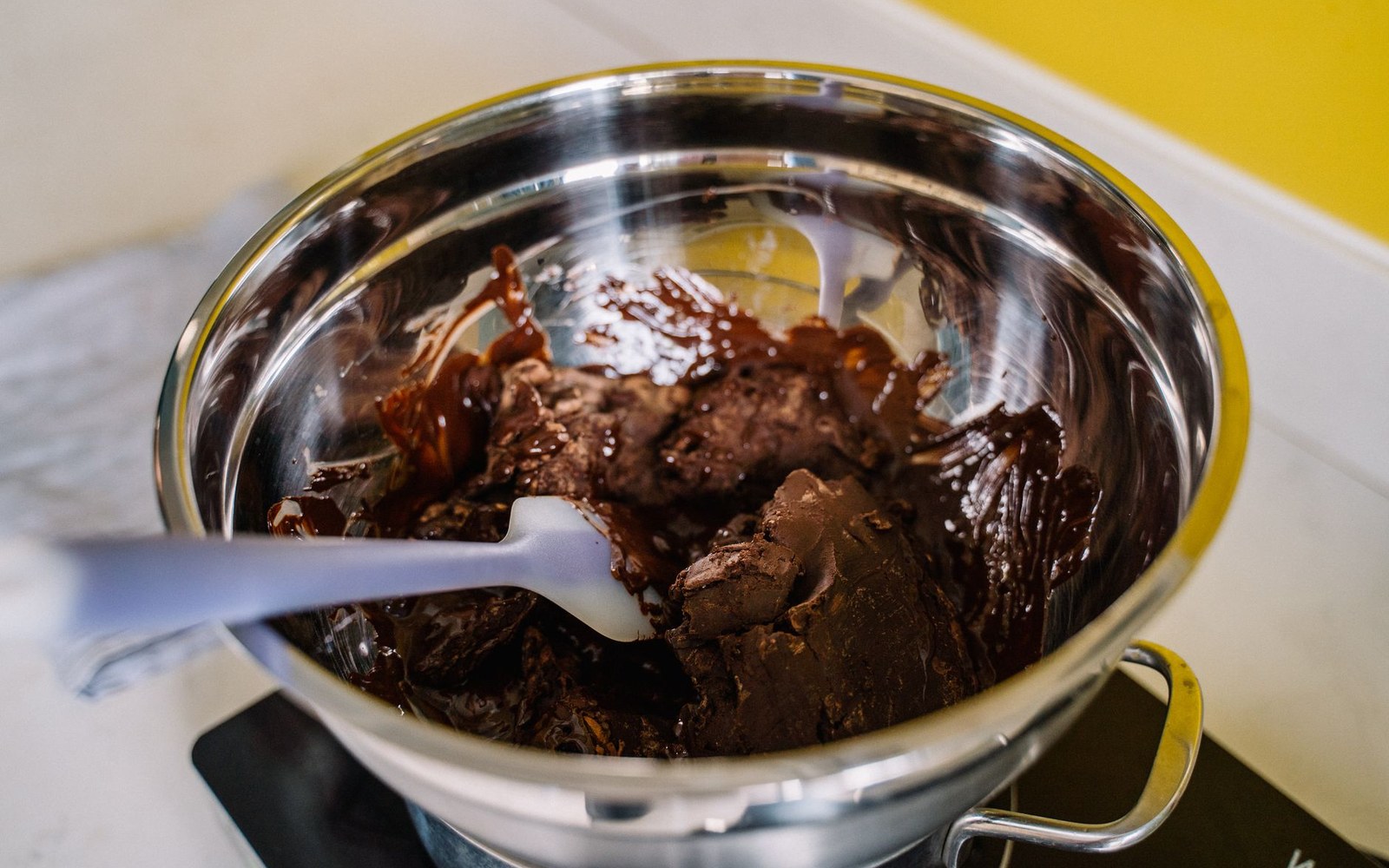 Plate 14
Thick and matt rather than fluid: the sugar has taken up water and bound the solids together into paste.
Photo: Anna Tarazevich / Pexels
A few grams of liquid destroys melted chocolate; a few tablespoons more liquid rescues it. The mechanism is the same in both cases.
Why it happens, and why more water fixes it
Melted chocolate is not a liquid in any simple sense. It is a suspension of fine solid particles — ground sugar, cocoa solids, milk powder if present — held in a continuous matrix of liquid cocoa butter. That system is stable precisely because there is no free water in it. Introduce a small amount, and those particles instantly absorb it. Sugar dissolves at the surface of each grain, creating a sticky syrup that glues particle to particle. The cocoa butter, being fat, takes no part in this: it simply watches while the solid phase clumps into a coarse, tight paste. The result is seizing — not burnt chocolate, not curdled cream, just particles that have found a new and very effective way to bind together.
The quantity of water is the critical variable. A few drops creates enough syrup to cement the particles but not enough to flood the spaces between them. The mixture seizes hard. Add the same chocolate to a full bowl of warm cream or even plain hot water, and nothing seizes, because now there is far more liquid than solid particles can absorb: the particles stay separated, suspended in the new continuous water phase, and a smooth ganache or drinking chocolate forms instead. The physics shifts from "particles glued together" to "particles floating apart."
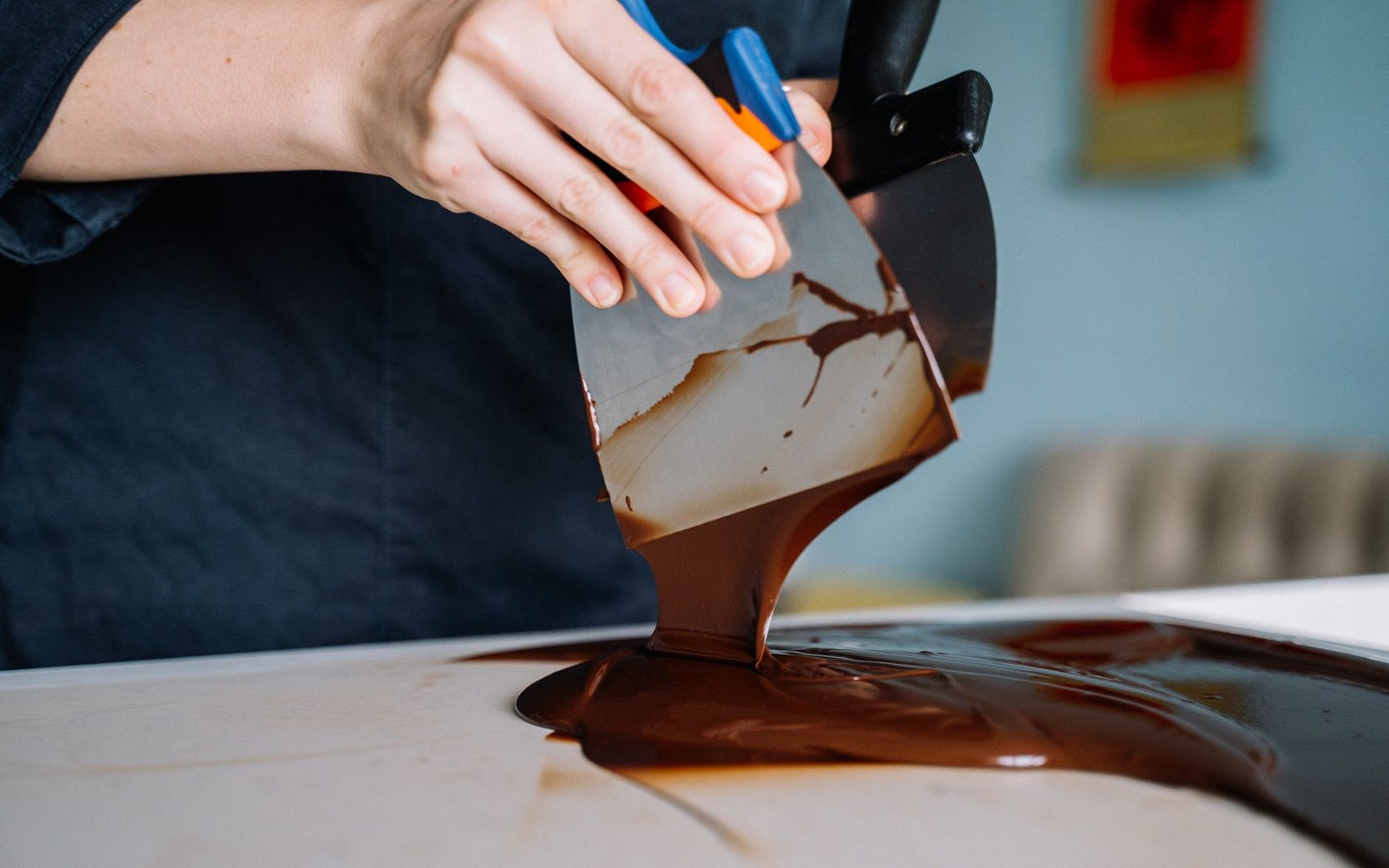
Tabling: the mass is worked across cold marble until it thickens, then returned to the bowl to bring the whole batch into temper.
Photo: Anna Tarazevich / Pexels
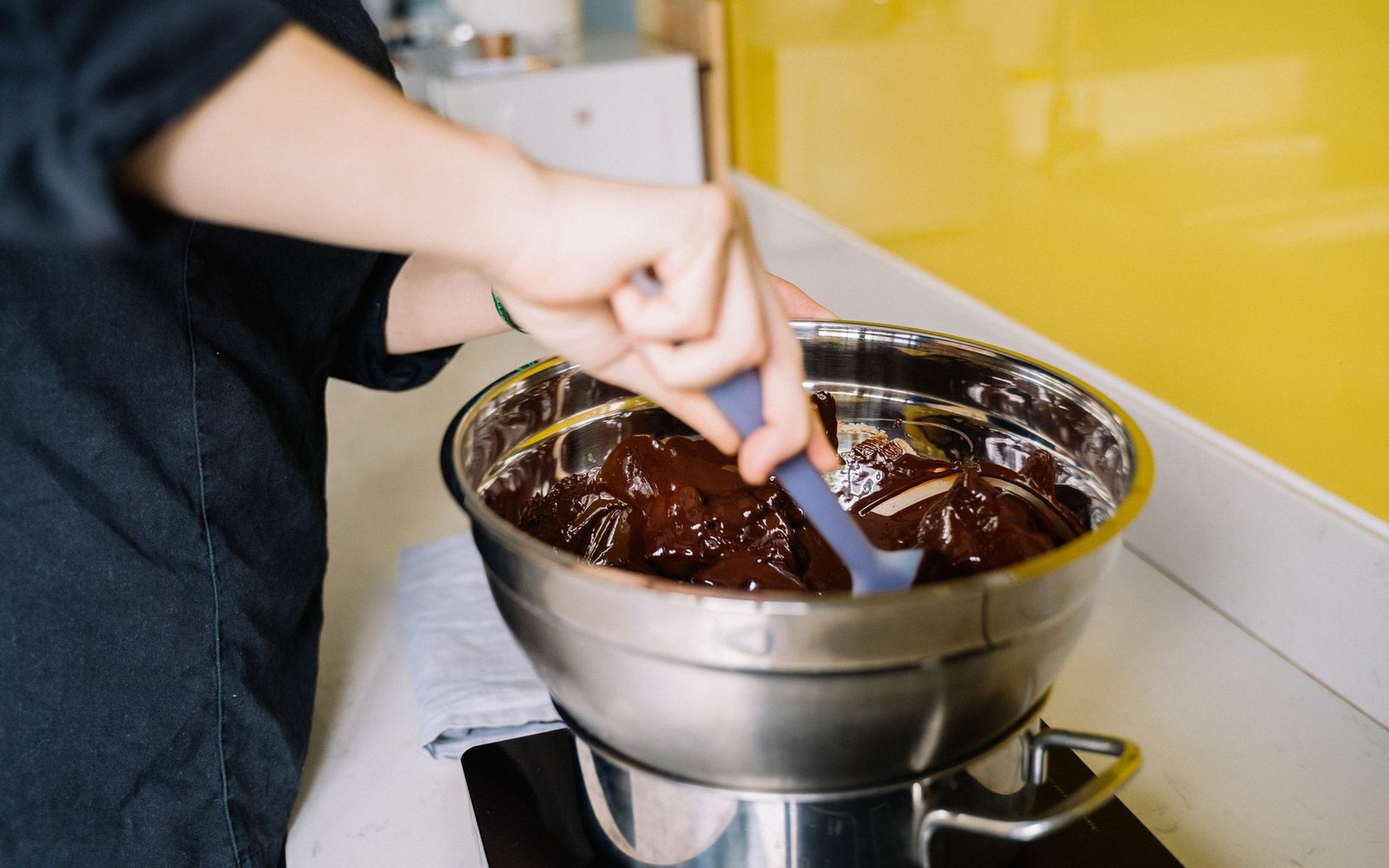
A spatula trail that holds its shape is what a formed emulsion looks like. If it slumps and runs greasy, the phases have separated.
Photo: Anna Tarazevich / Pexels
This is why recovery works. A seized bowl is not ruined. Warm the chocolate gently, then add liquid — cream, milk, or water — a tablespoon at a time, stirring steadily between each addition. The USDA's food safety database notes ↗ that water activity in chocolate is extremely low, typically below 0.5, which is part of why the fat matrix is so inhospitable to free water in the first place; once enough liquid is present to overwhelm that hostility, the system re-emulsifies. Three or four tablespoons usually turn a seized 200 g bowl into a glossy sauce. It will not re-temper — the Form V crystals are gone — but it pours, dips and bakes without fault.
Prevention is simpler than recovery: dry all bowls and utensils completely before they touch chocolate, and never cover melting chocolate with a lid that can drip condensation back in. Steam alone, rising from a bain-marie, is enough. One drop is genuinely enough.
More from At the Bench