At the Bench · Technique
Six Ways Cocoa Butter Can Solidify, and Why Only One of Them Snaps
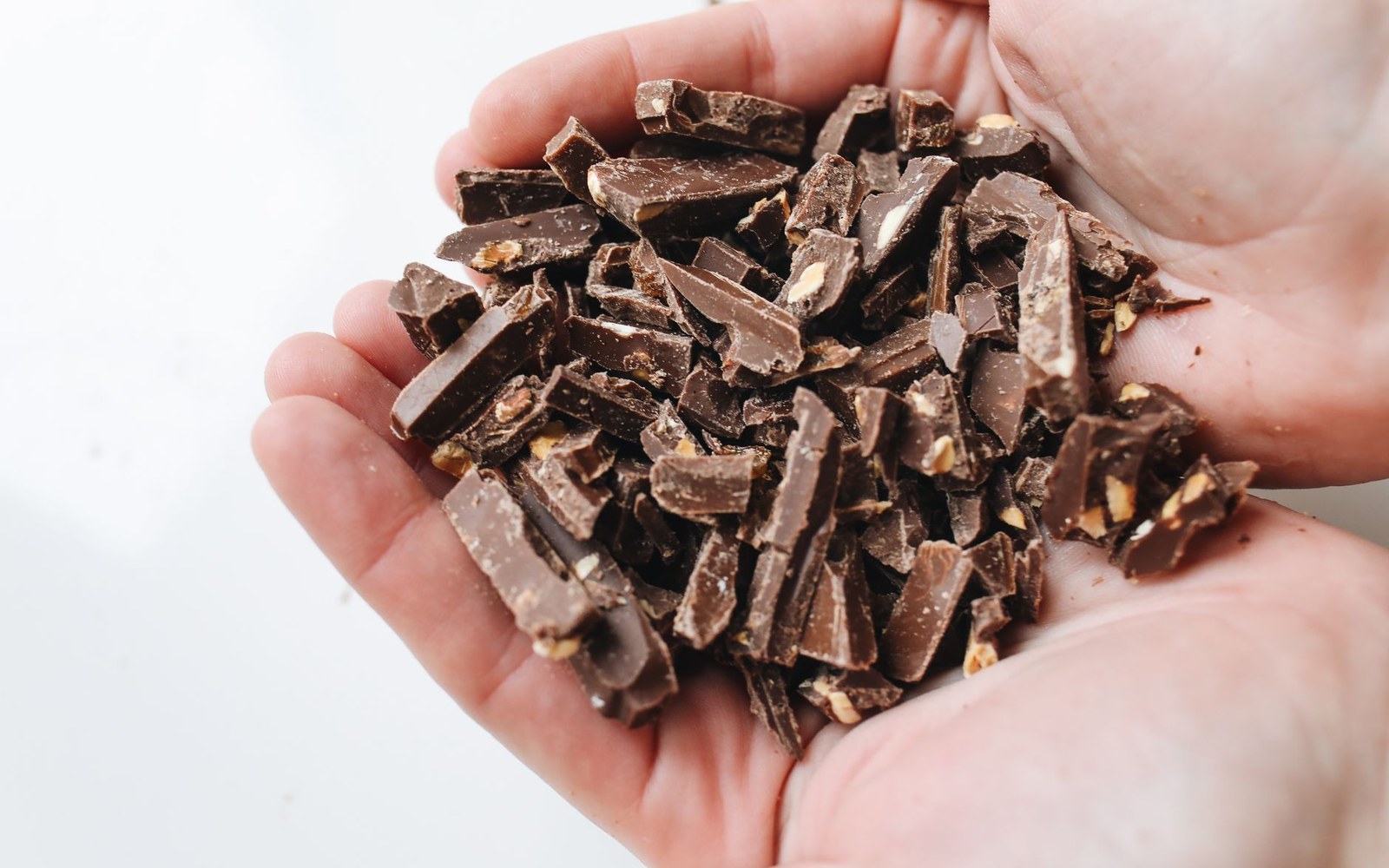 Plate 12
Chopped small so it melts evenly: every crystal in here is about to be melted out and rebuilt as one form.
Photo: Polina Tankilevitch / Pexels
Cocoa butter is polymorphic — it can crystallise into six distinct structures, and five of them are wrong.
The Six Forms
Cocoa butter is a fat composed of several triglycerides — glycerol molecules attached to three fatty acid chains — that happen to pack into solid crystals in more than one way depending on how they cool. This property, called polymorphism, is common in fats and entirely irrelevant in most of them. In chocolate it defines everything: snap, gloss, shelf life, and the precise sensation of melting just below body temperature.
Crystallographers label the six forms by Roman numeral, I through VI, in order of increasing stability. Each form has a different melting point, a different crystal density, and a different set of mechanical properties in finished chocolate.
Form I melts at roughly 17 °C — below room temperature in most kitchens — and is so unstable it converts to Form II within hours of forming. It appears when chocolate is cooled very rapidly, say in ice water, without any controlled seeding. The result is soft, dull, and almost instantly greasy.
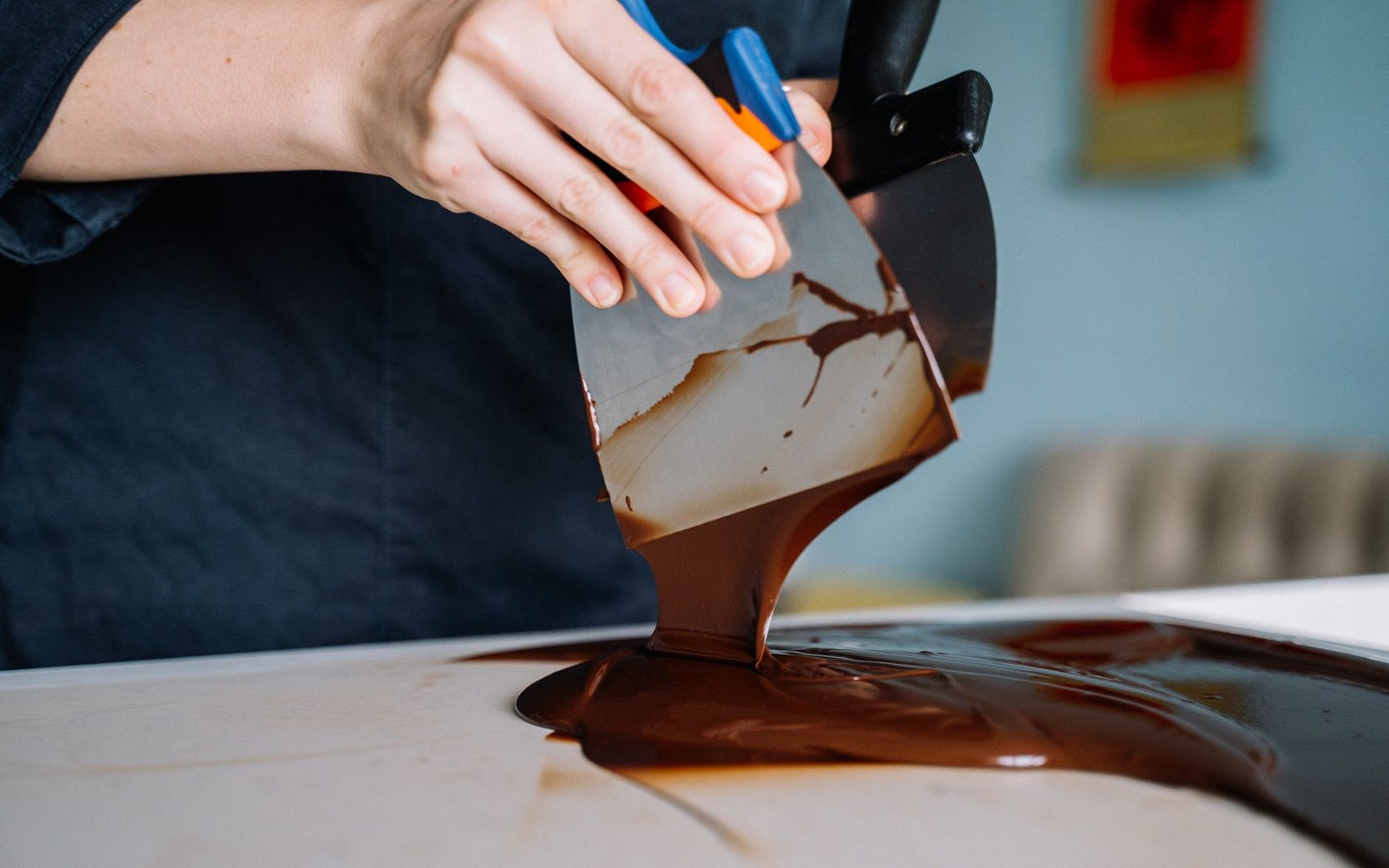
Tabling: the mass is worked across cold marble until it thickens, then returned to the bowl to bring the whole batch into temper.
Photo: Anna Tarazevich / Pexels
Form II melts at around 21 °C and is similarly short-lived. These two lowest forms share a common problem: they are less densely packed than the forms above them, so cocoa butter molecules continue rearranging upward toward stability almost immediately after solidification. Neither form persists long enough to be useful.
Form III holds a melting point near 26 °C — close to room temperature in a warm kitchen — and produces chocolate that is visibly soft and lacks any meaningful snap. It forms readily when melted chocolate is left to cool at ambient temperature without being worked or seeded. Home cooks who pour melted chocolate onto greaseproof paper and leave it on the counter are likely growing a mixture of Forms II, III, and IV, which is why the result streaks white within days.
Form IV melts at about 28 °C and is stable enough to persist but still insufficiently dense. Chocolate solidified in this form has a dull surface and some rigidity, but it snaps unevenly and feels waxy rather than clean. The distinction between Forms III and IV matters more to crystallographers than to cooks; both are tempered out in professional production.
Form V — the target — melts at approximately 33–34 °C, fractionally below normal body temperature of 37 °C. This is the form that tempering is designed to produce and maintain. Form V crystals pack more densely than their predecessors, and that density gives chocolate its characteristic sharp snap. The gloss comes from the same crystal regularity: a uniform surface scatters light uniformly. And because Form V melts just below body temperature, a square of well-tempered chocolate placed on the tongue releases its flavour in a single, clean event rather than sitting there or melting too fast. Form V is the crystal structure that chocolate makers aim for in couverture and moulded products, because it delivers the snap, gloss and clean melt that define good chocolate.
Form VI sits at the top of the scale, melting at around 36 °C. It is the most stable form, which sounds like it should be the best — in fact it is the most problematic for finished chocolate. Form VI crystals are so densely packed that the structure becomes hard and waxy, associated with the fat bloom that appears on old or improperly stored chocolate. Form VI does not form from melted chocolate directly; it develops when Form V chocolate is stored for an extended period, as the crystals very slowly continue to stabilise upward. This is one reason why even perfectly tempered chocolate has a shelf life, and why the cocoa-butter equivalent (CBE) fats used in compound coatings behave differently — their triglyceride composition does not progress through the same polymorphic sequence.
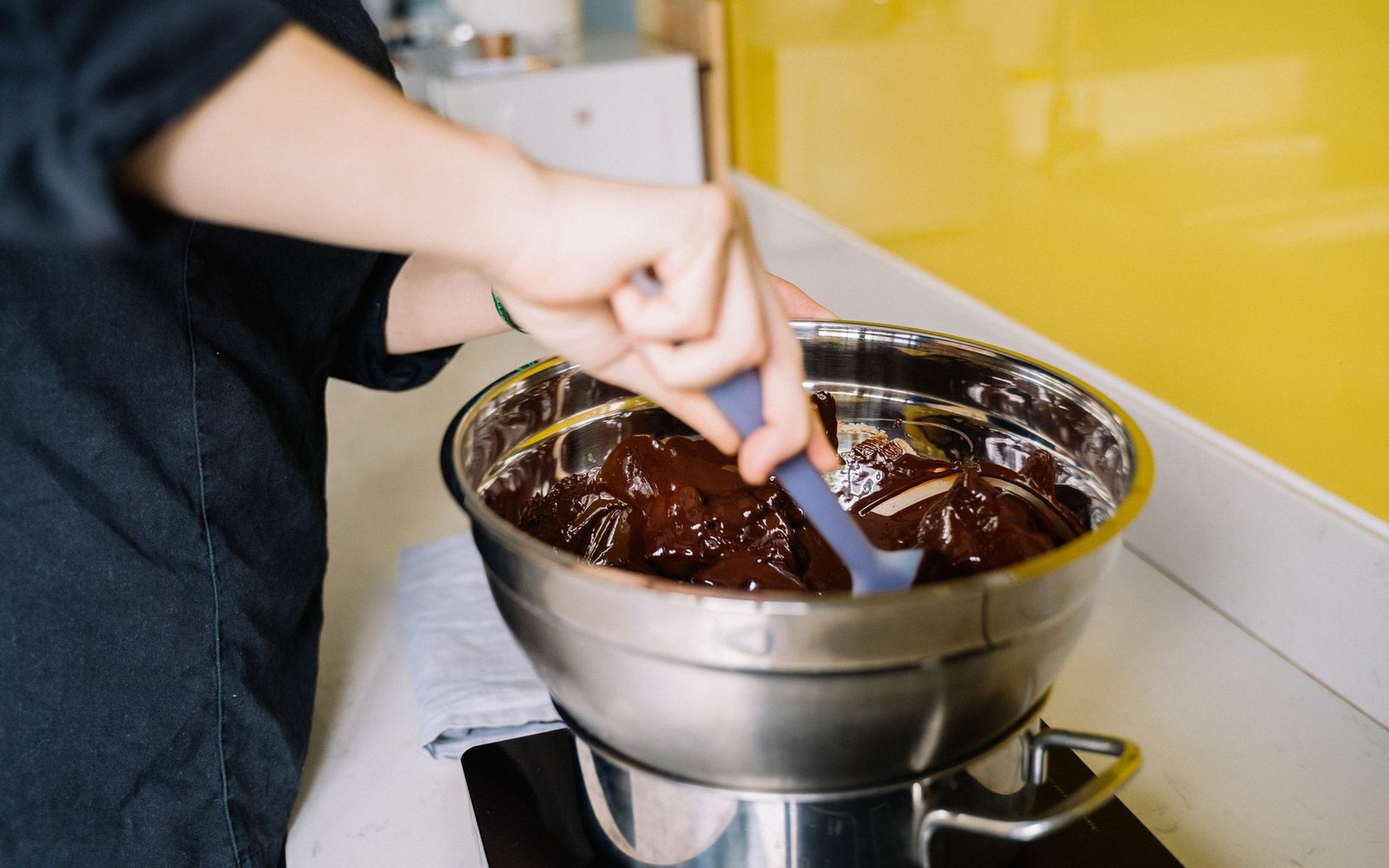
A spatula trail that holds its shape is what a formed emulsion looks like. If it slumps and runs greasy, the phases have separated.
Photo: Anna Tarazevich / Pexels
Why Tempering Targets Form V Specifically
Tempering is not, at its core, about temperature for its own sake. It is about giving Form V crystals the conditions — 31–32 °C in dark chocolate, slightly lower for milk — in which they nucleate preferentially while the other five forms remain melted or are worked out. Pre-crystallised chocolate, whether seeded with grated couverture or worked on marble by tabling, introduces enough existing Form V structure to propagate through the whole mass. Heat the mixture above 34 °C and those seed crystals dissolve; cool it too fast below 27 °C and Forms III and IV appear alongside.
The six-form sequence makes one thing plain: chocolate is not a substance that solidifies so much as a substance that crystallises, and the cook is choosing — whether they know it or not — which of the six structures they are handing to whoever eats it.
More from At the Bench