At the Bench · Technique
Bloom Is Not Mould — and the Two Kinds Are Different Problems
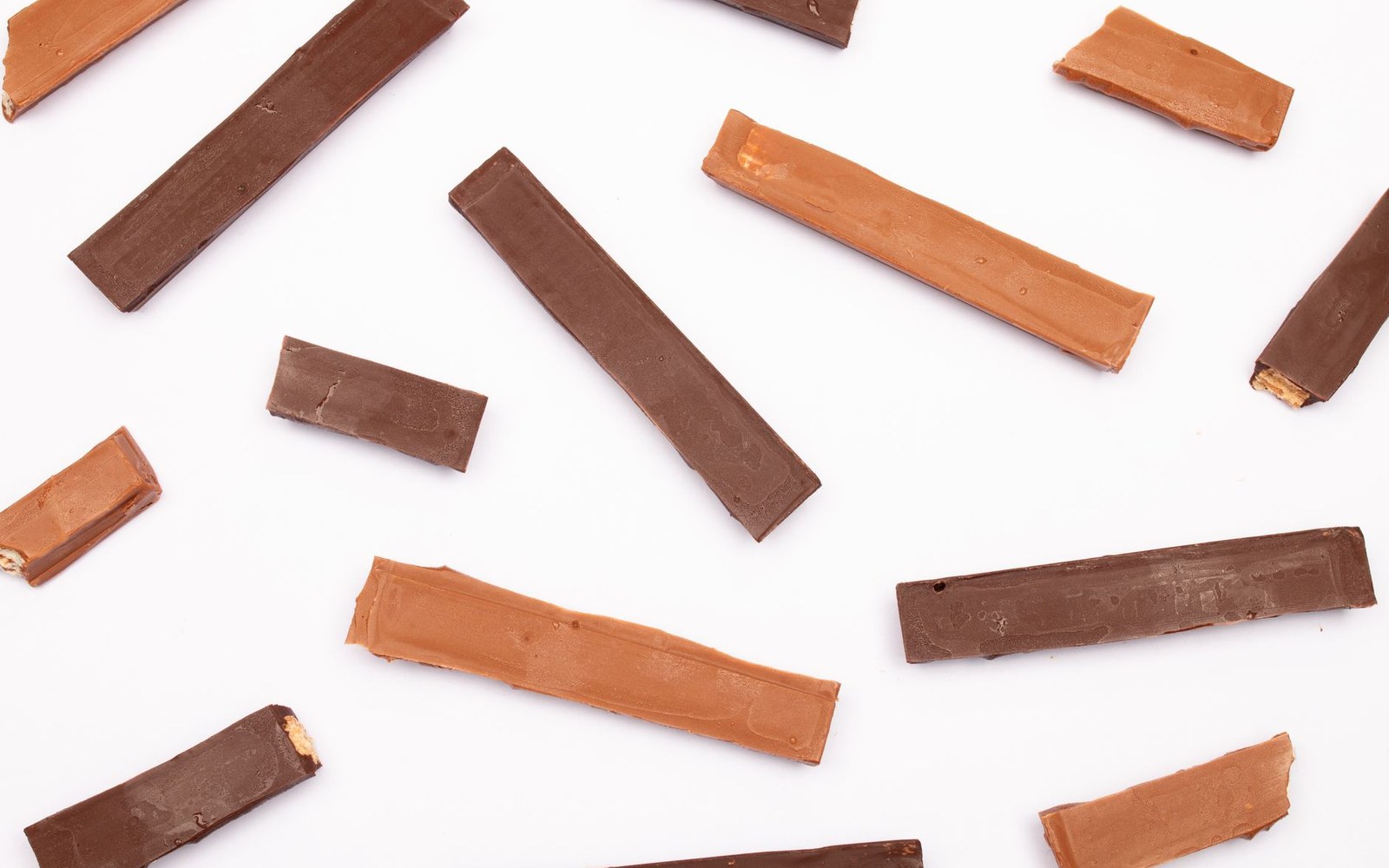 Plate 13
Pale patches like these are a crystal or a moisture fault, not mould, and only one of the two feels gritty.
Photo: Tamanna Rumee / Pexels
A white haze on your chocolate bar is not spoilage. It is one of two distinct physical failures, each with a different cause and a different fix.
Reading the Surface
Fat bloom appears as a dull, grey-white film or soft streaks — sometimes slightly waxy to the touch. It happens when cocoa-butter crystals in the chocolate are unstable: instead of locking into the Form V crystal that gives good chocolate its gloss and snap, the fat migrates slowly to the surface and recrystallises there in looser, less ordered forms. Storage at fluctuating temperatures accelerates it dramatically, as does chocolate that was never properly tempered in the first place. The bar may look dusty or almost frosted; press a finger to it and the film usually smears slightly.
Sugar bloom looks and feels different. The surface is rough, speckled, even granular — moisture condensing on the chocolate dissolves the sugar at the surface, and when that moisture evaporates the sugar recrystallises into visible, irregular crystals. This is the bloom you get when a cold bar is brought suddenly into a warm humid room, or when chocolate is stored near a steam source. The texture is more abrasive than the soft haze of fat bloom; under strong light the crystals can look like fine white grit.
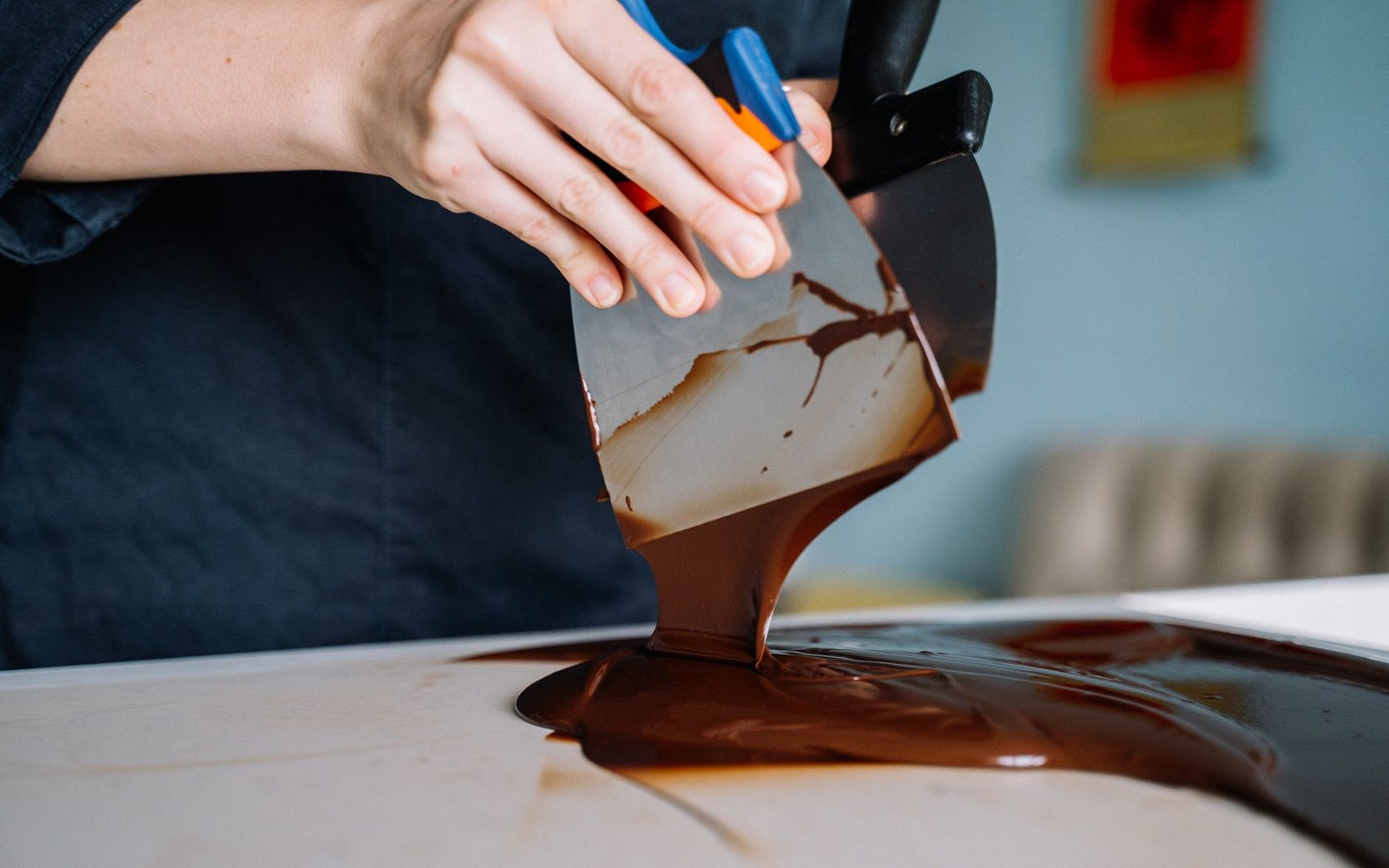
Tabling: the mass is worked across cold marble until it thickens, then returned to the bowl to bring the whole batch into temper.
Photo: Anna Tarazevich / Pexels
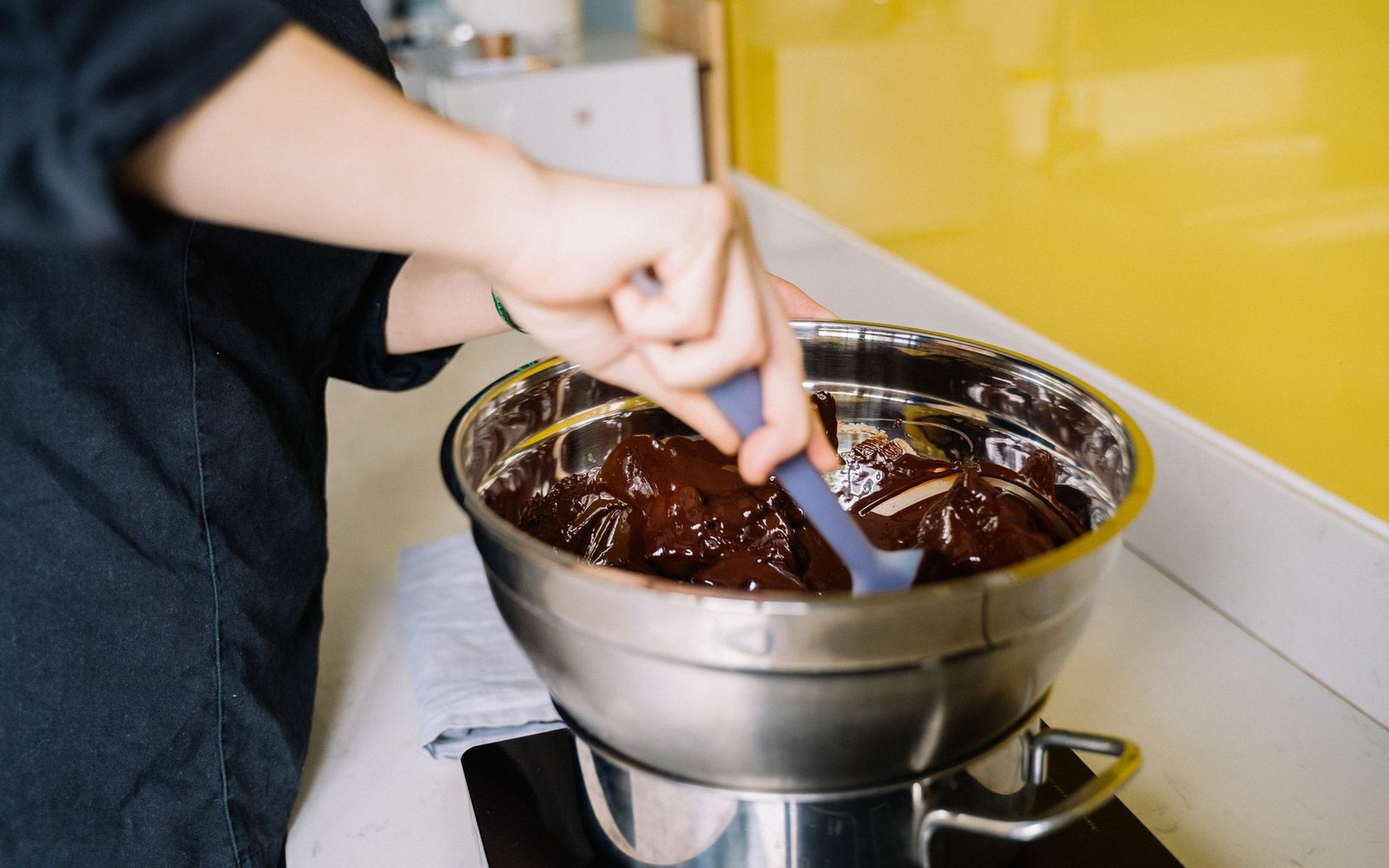
A spatula trail that holds its shape is what a formed emulsion looks like. If it slumps and runs greasy, the phases have separated.
Photo: Anna Tarazevich / Pexels
Both kinds are completely safe to eat. Bloom is a textural and cosmetic failure, not a sign of bacterial growth or contamination. Chocolate's very low water activity — typically below 0.4 — means it does not support the microbial growth that characterises actual mould. Mould on chocolate is genuinely rare, and when it occurs it looks nothing like bloom: it is fuzzy, localised, and often coloured.
For cooking purposes, a bloomed bar is entirely usable. Melt it into a ganache, a brownie batter or a sauce and the bloom is irrelevant — the crystal structure resets on melting. If the goal is tempered chocolate — for moulding or dipping — treat the bloomed bar like any other couverture and re-temper it from scratch. The bloom does not degrade the cocoa butter itself; it only tells you the bar was stored badly or never in proper temper to begin with. Fix the process and the surface comes back right.
More from At the Bench