Recipes · Method
Mousse au Chocolat: Why It Sets and Why It Does Not
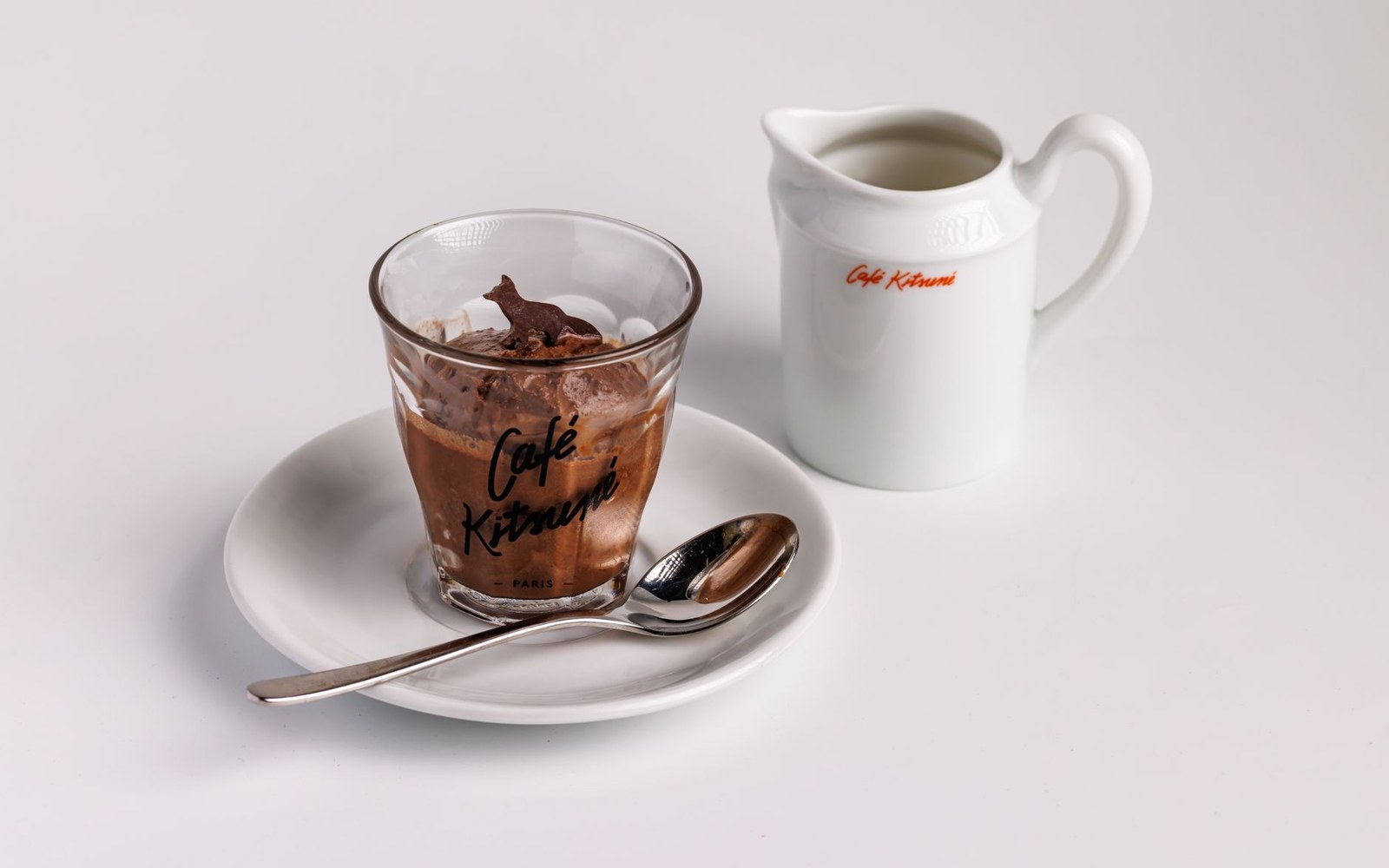 Plate 04
Aerated by egg, not cream — which is why it holds this height in a glass and why it falls if the whites go too far.
Photo: Swarup Sarkar / Pexels
The classic French mousse is a study in structural precision — three components, each doing one job, and two failure points that undo them both.
The Recipe and What Each Part Does
Start with 200 g of dark chocolate, minimum 60% cocoa solids, broken into pieces and melted gently over a bain-marie — a bowl set above barely simmering water, not touching it. The moment the chocolate is smooth, remove it from the heat and let it cool to around 40 °C. Too hot, and the eggs will scramble; too cool, and the mixture will seize before everything combines.
Separate four eggs. Beat the yolks into the warm chocolate one at a time, stirring after each addition until the mixture is glossy and unified. This is not decoration: the yolks carry fat and emulsifying lecithin, and they thicken the chocolate base by partial protein coagulation as they warm. The result is a dense, rich ganache-like core with enough body to hold aerated whites without collapsing under their weight.
The whites are the architecture. Whisk four egg whites to firm — not stiff — peaks. Add a small pinch of salt before you start; it disrupts the protein bonds slightly and speeds foaming. Firm peaks means the foam holds its shape when you lift the whisk but the tip curls over rather than standing rigid. Stiff peaks will make the mousse harder to fold and produce a drier, grainier texture once set.
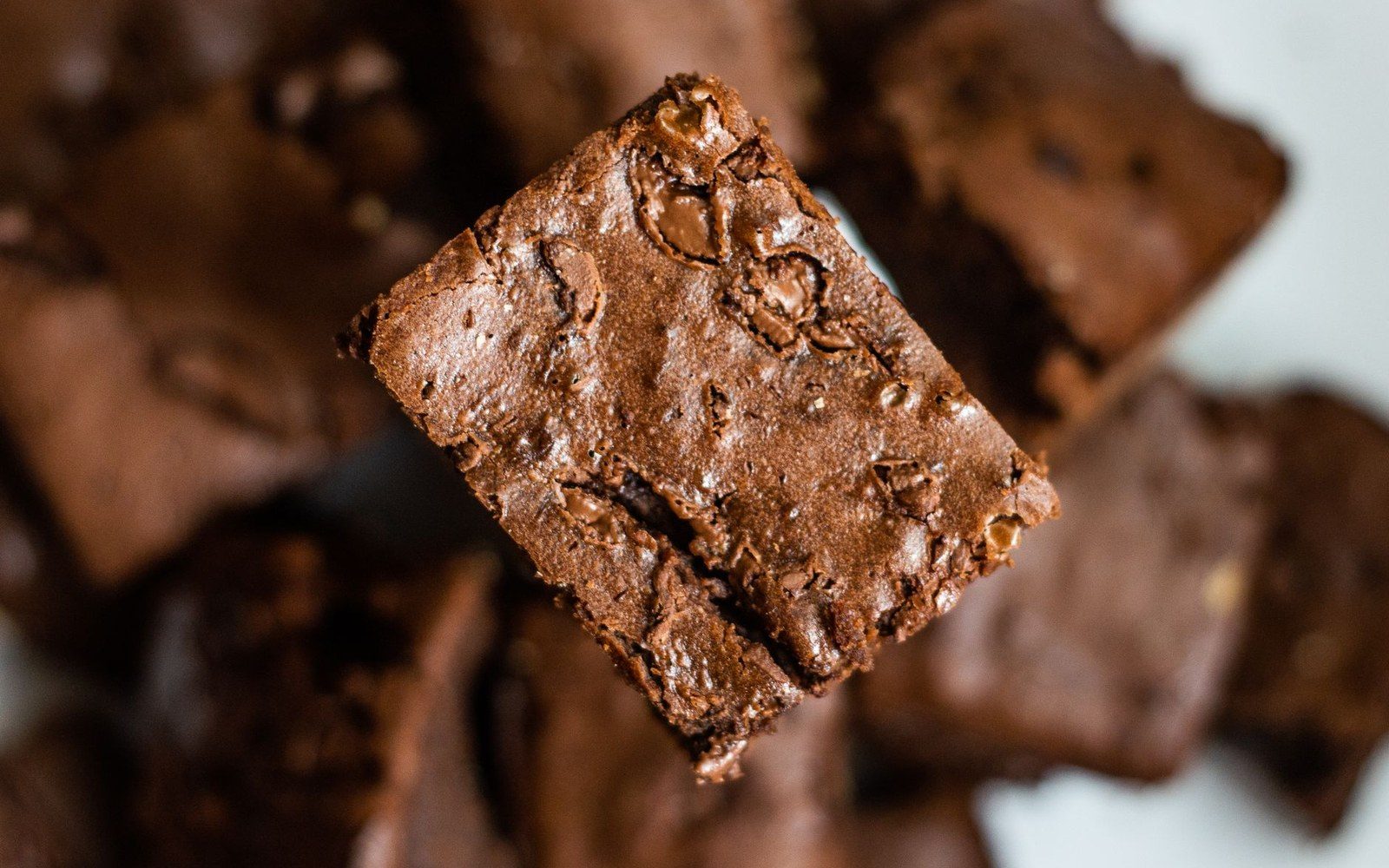
Cut cold, with a long knife wiped between cuts. Warm brownies tear, and the crust that makes the edge is barely a millimetre thick.
Photo: Raúl T / Pexels
No cream, no gelatine. The classic French version relies entirely on the aerated whites for lift and the fat in the chocolate and yolks for body. Cream-based mousses set differently and are more forgiving; this one rewards precision.
Add roughly a quarter of the whites to the chocolate mixture first and stir it in firmly — this is the liaison, sacrificed to loosen the dense base so the rest folds in without resistance. Then add the remaining whites in two stages, cutting down through the centre of the bowl with a large spatula, sweeping under and folding up. Rotate the bowl a quarter turn with each fold. Count strokes rather than time: around twenty deliberate folds per addition is usually enough. Stop the moment no white streaks remain. Over-folding drives out the air you have just built in; under-folding leaves cold pockets of chocolate that will not set uniformly.
Pour or spoon into six individual glasses or ramekins, cover with cling film without letting it touch the surface, and refrigerate for a minimum of four hours. Overnight is better.
Why It Collapses — and How to Stop It
Two things destroy mousse au chocolat: overheated chocolate and fat in the whites.
The first is chocolate that is too hot when the yolks and whites meet it. Above roughly 65 °C, egg proteins begin to set irreversibly ↗; whites folded into overheated chocolate will partially cook, and instead of a foam you will have rubbery white flecks suspended in a dense paste. The mixture will appear to set but will never be light. A thermometer is not optional in this recipe — it is the tool that makes it repeatable. The six polymorphs of cocoa butter are not at stake here, since the mousse is not tempered, but the cooling step is still the one that determines whether everything else works.
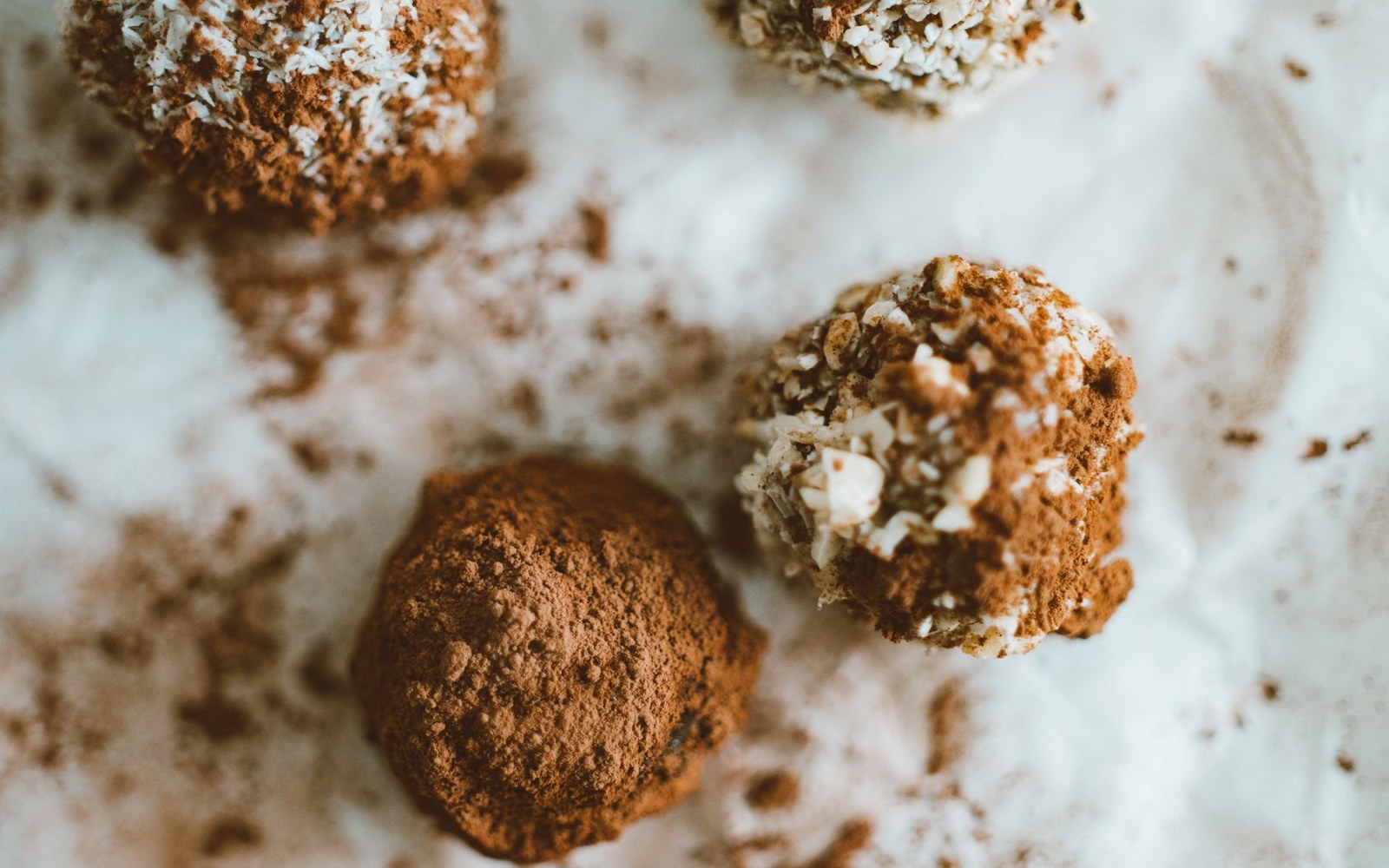
Rolled from a 2:1 ganache. Cocoa powder is the finish that needs no tempered shell — and it hides nothing.
Photo: ROMAN ODINTSOV / Pexels
The second failure is whisking whites in a bowl or with a whisk carrying any trace of fat — a film of yolk, a smear of oil, a wet beater. Fat interferes with the protein network that gives egg foam its stability, and as little as a single drop of yolk can prevent whites from reaching firm peaks at all. Wash equipment in hot water, dry thoroughly, and separate eggs one at a time into a small bowl before adding each white to the mixing bowl, so a broken yolk ruins one egg rather than the whole batch.
Beyond those two, the physics of the set are simple and stable: fat from the chocolate and yolks surrounds the air bubbles provided by the whites, the egg proteins give the foam its walls, and the fat firms as it chills, and the cocoa solids contribute structure. What you serve is a foam stabilised by fat and cold. Disturb the fat ratio or the temperature, and the foam deflates. Respect both, and the mousse holds its shape for the better part of two days in the refrigerator — long enough to make it ahead, which is, quietly, the whole point of the recipe.
More from Recipes