Recipes · Method
Fudgy or Cakey Is One Number, and It Is the Flour
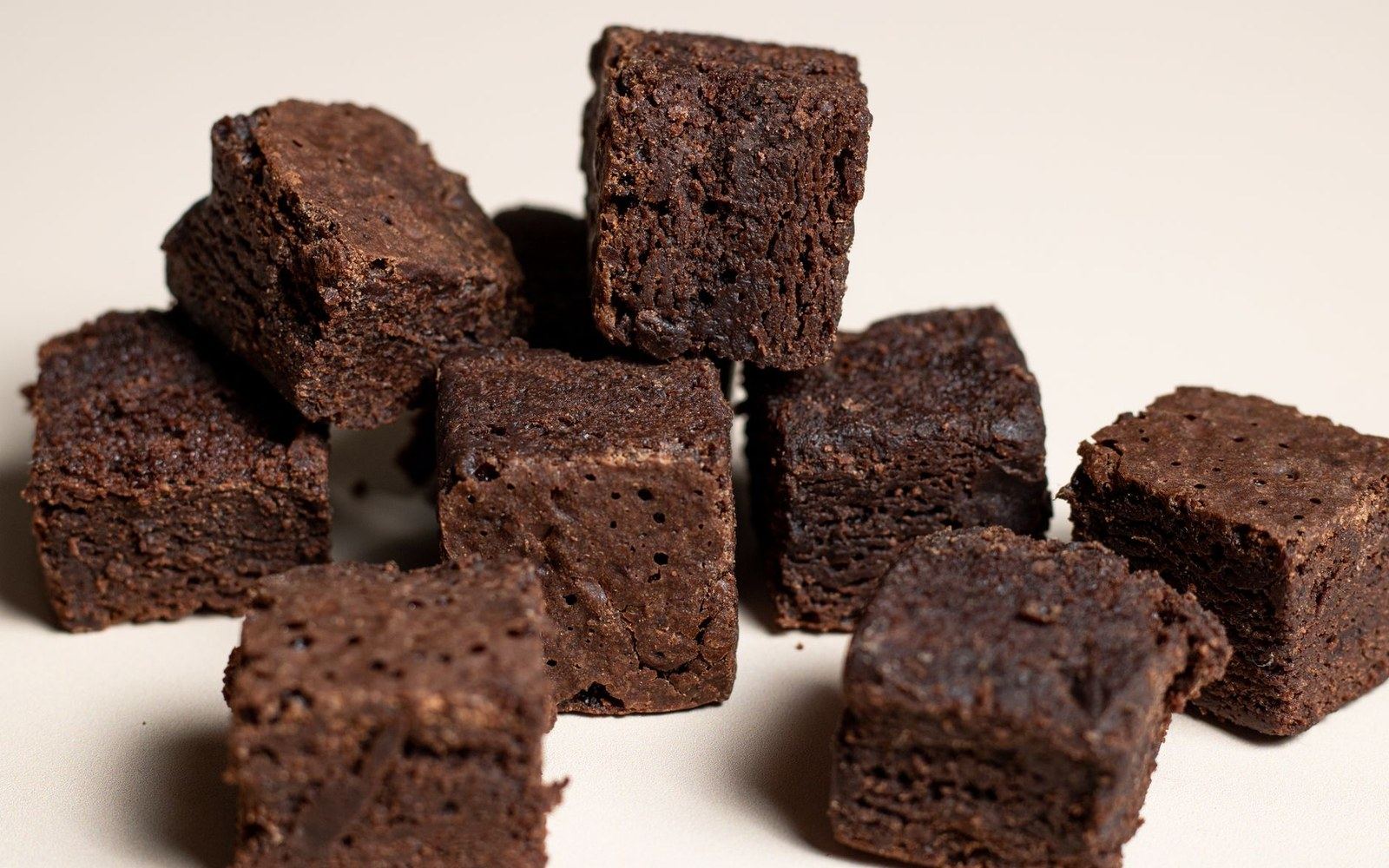 Plate 02
Dense right through, with no dome and no open crumb. That is the 90 g tray, not the 150 g one.
Photo: Bethany Hicks / Pexels
Two complete brownie recipes live inside one batter — and a 40-gram difference in flour weight is the only fork in the road.
What the Batter Is Actually Doing
A brownie batter is not quite a cake batter and not quite a ganache, but it borrows physics from both. The fat comes overwhelmingly from butter and chocolate, not from emulsified oil and eggs the way a sponge does. The structure comes from egg proteins setting in the oven and from whatever gluten the flour develops. Sugar — and there is a lot of it — stays partly dissolved in the liquid egg phase and partly crystallises on cooling, pulling the crumb toward the dense, glossy interior that defines a fudgy brownie when conditions are right.
The single variable that tips the balance is flour weight. Everything else in the two versions below is identical: same chocolate, same butter, same eggs, same sugar, same tin, same temperature. What changes is 40 grams of plain flour. That one number alters the ratio of gluten-forming protein to fat, changes how much starch is available to absorb free moisture, and shifts the dominant texture from a yielding, almost creamy interior to a tight, springy crumb that holds a clean edge when you lift it from the tin.
This is worth understanding structurally before mixing anything. Gluten forms when glutenin and gliadin proteins in wheat flour hydrate and are worked together. A brownie batter is high in fat, and fat coats flour particles, limiting hydration and gluten development. With 60 grams of flour, the fat overwhelms the gluten network almost entirely — what sets the brownie is largely the egg protein, and the result is dense and fudgy. Add 100 grams of the same flour and the balance shifts: there is now enough gluten to build a genuine scaffold, enough starch to absorb more free water, and the baked result has lift, crumb, and the unmistakable quality of a small, very rich cake. Neither is a compromise. They are different things.
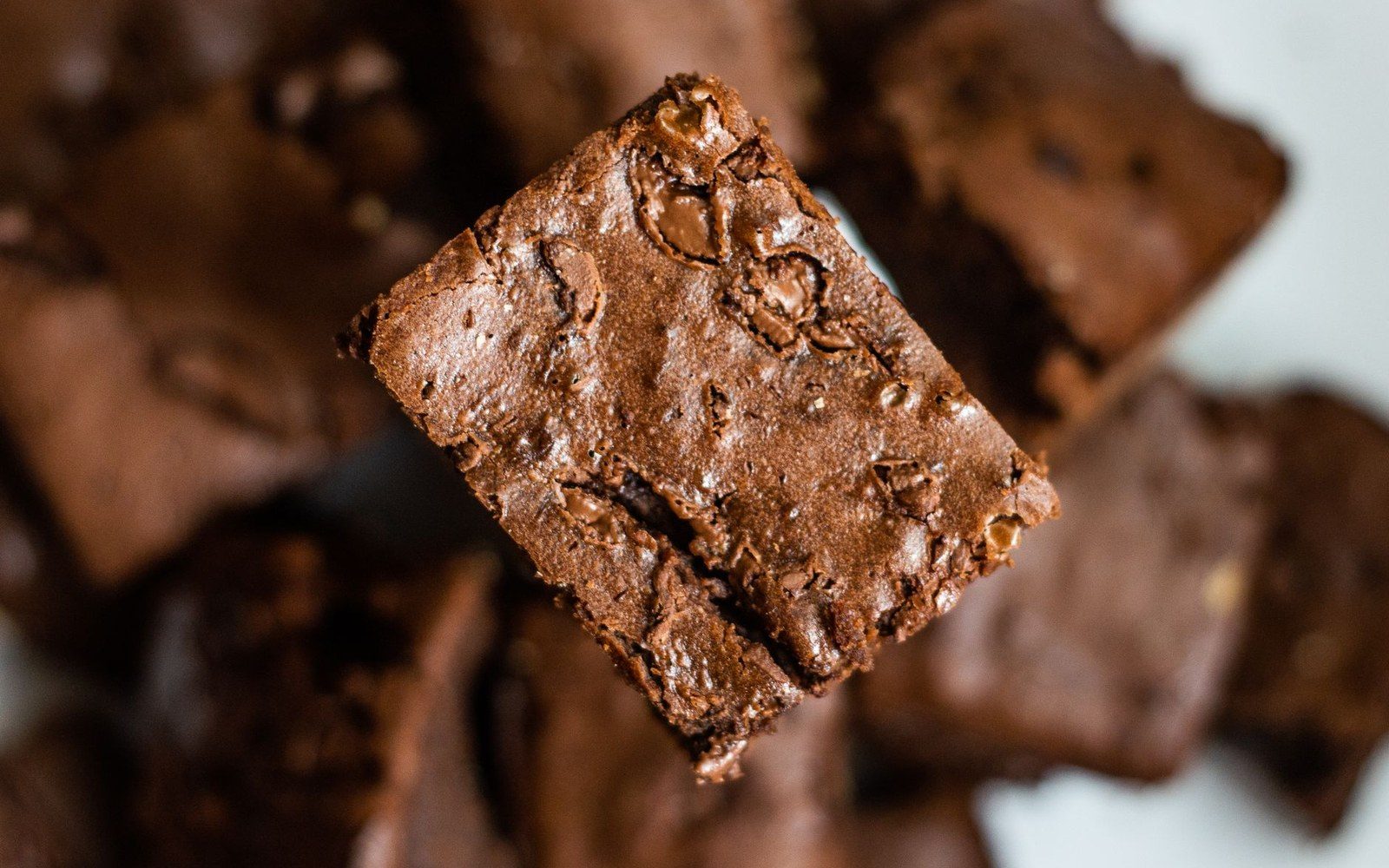
Cut cold, with a long knife wiped between cuts. Warm brownies tear, and the crust that makes the edge is barely a millimetre thick.
Photo: Raúl T / Pexels
The Two Recipes
What is common to both versions:
- 200 g dark chocolate, 70% cocoa solids (chopped or callets)
- 170 g unsalted butter, cut into pieces
- 250 g caster sugar
- 3 large eggs, room temperature
- 1 tsp vanilla extract
- ½ tsp fine salt
- 20 cm × 20 cm square tin, lined with baking parchment and lightly buttered
Use a chocolate with a clearly stated cocoa-solid percentage. The cocoa-butter content in a couverture-grade chocolate will vary from a standard baking chocolate, and cocoa butter is fat — it directly affects the fat-to-flour ratio you are calibrating. A 70% dark from Barry Callebaut ↗ or a supermarket own-label at the same percentage will both work; just keep the percentage consistent if you make the recipe more than once.
Fudgy version: 60 g plain flour
Preheat the oven to 170 °C fan. Melt the chocolate and butter together over a bain-marie (a heatproof bowl set over barely simmering water, the base not touching the water) until smooth, then remove from heat and let cool for five minutes. Whisk the sugar, eggs, vanilla and salt together in a large bowl until the mixture is pale and slightly thickened — about two minutes by hand or one minute with an electric whisk. This step matters: dissolved sugar in the egg phase contributes to the fudgy, almost lacquered top crust as it bakes. Fold the chocolate mixture into the egg mixture until combined. Sift in 60 g of plain flour and fold with a spatula — no more than fifteen strokes, stopping the moment no dry flour is visible. Over-mixing now develops the very gluten you want to suppress. Pour into the prepared tin, tap once on the work surface to level, and bake for 22–24 minutes. The centre should look set but with a slight tremor when the tin is nudged. A skewer inserted 3 cm from the edge should come out with moist crumbs; the centre may still look underdone. It is not. Pull it out, let it cool completely in the tin — at least 90 minutes — before cutting. Cutting warm means the structure has not set and the interior will smear.
Cakey version: 100 g plain flour
The method is identical through every step until the flour. Sift in 100 g of plain flour and fold until just combined — the batter will be slightly thicker and more matte than the fudgy version. Bake at the same temperature for 24–26 minutes. Here, a skewer inserted into the centre should come out with a few moist crumbs but no wet batter. The surface will dome slightly during baking and settle flat on cooling. Rest in the tin for 30 minutes before cutting — less time is needed because the gluten scaffold holds the structure without extended cooling.
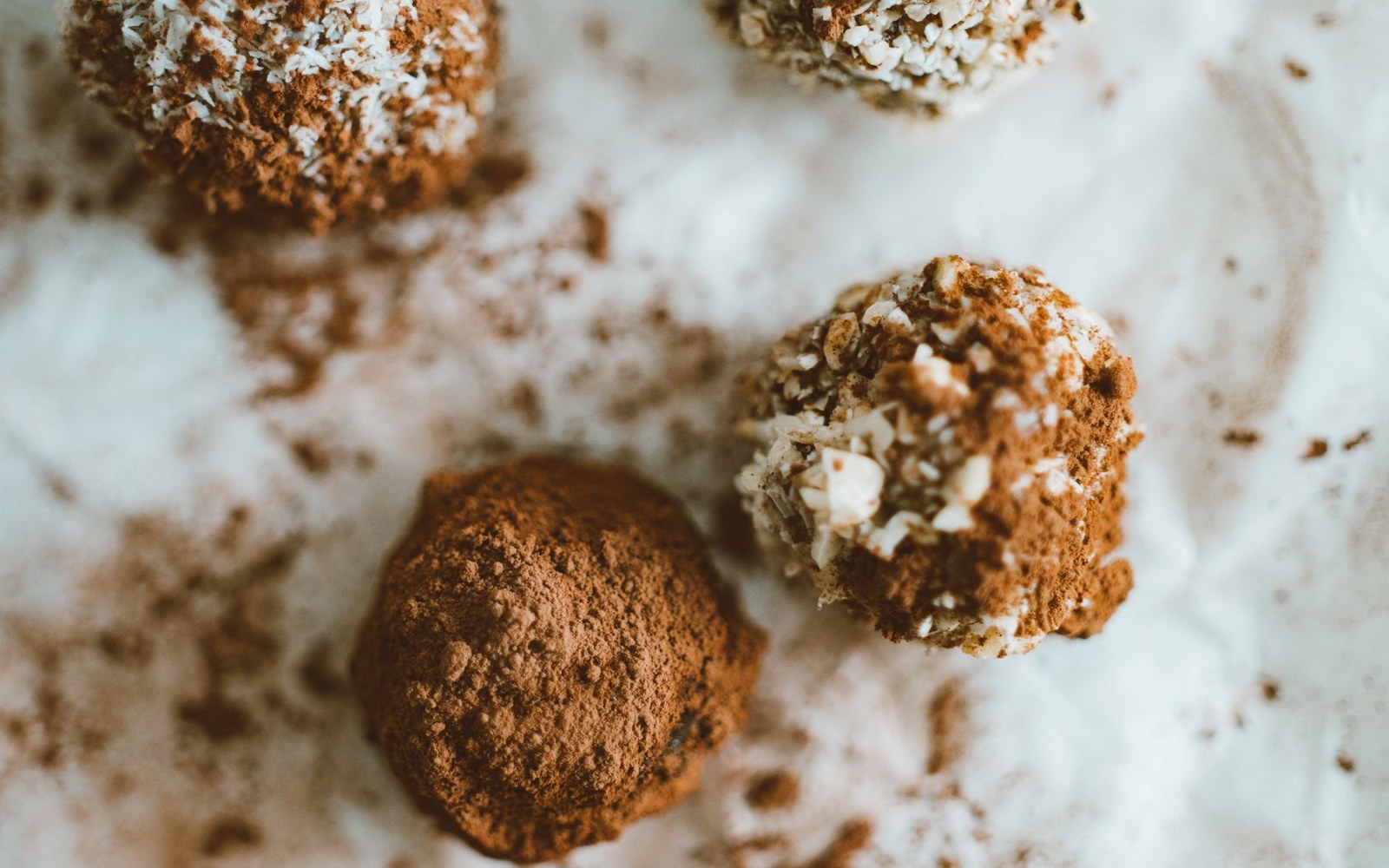
Rolled from a 2:1 ganache. Cocoa powder is the finish that needs no tempered shell — and it hides nothing.
Photo: ROMAN ODINTSOV / Pexels
On cocoa powder: Neither version uses Dutch-process or natural cocoa. If you want to add it — as some brownie recipes do for depth of colour — Dutch-process cocoa will not interfere with chemical leavening in either recipe above, since there is none. But it adds dry mass, which changes the flour ratio, and is a separate variable. Keep it out of the first bake.
What to Watch, and Why It Goes Wrong
The most common failure with fudgy brownies is pulling them from the oven too early and then also cutting them too early. The two errors compound. The interior, still liquid from underbaking, smears into the knife and the whole thing looks raw. It is not underbaked in most cases; it is simply unset, and unset fats and egg proteins need time and lower temperature to firm. The 90-minute rest is not optional.
The most common failure with cakey brownies is over-baking, which is easy because the visual cues — a domed, dry-looking top — can read as done when there is still residual moisture in the crumb. Pull the tin at the low end of the time range and let carryover heat do the last work.
Eggs are the third variable worth controlling. Room-temperature eggs emulsify more easily into the fat-rich chocolate mixture than cold ones. Cold eggs added directly to warm melted chocolate can cause the fat to seize into greasy lumps. Seizing in a brownie batter from cold eggs is not as dramatic as water hitting melted chocolate, but the fat will grain, and the baked texture will be uneven. Take the eggs out of the refrigerator at least 30 minutes before baking.
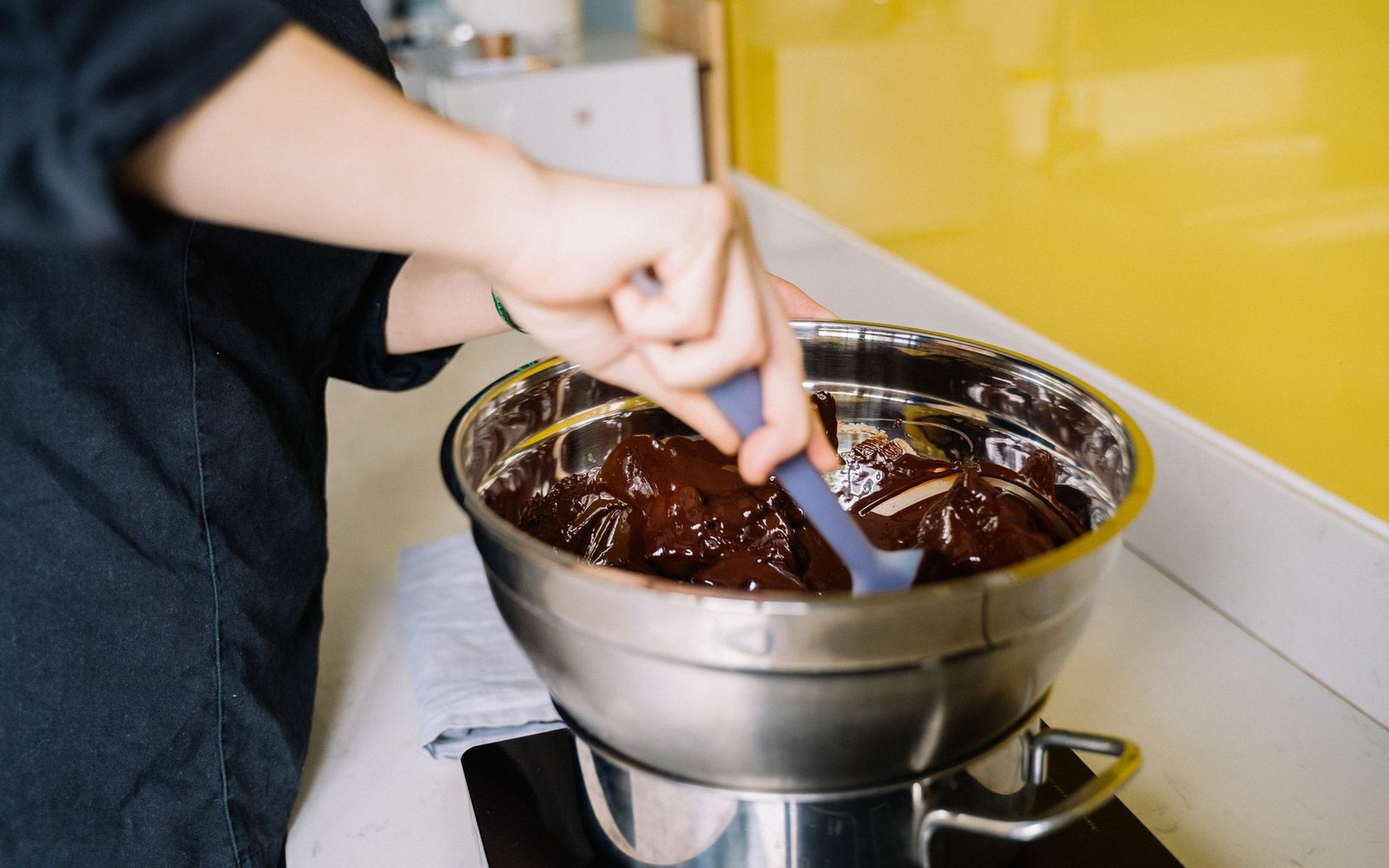
A spatula trail that holds its shape is what a formed emulsion looks like. If it slumps and runs greasy, the phases have separated.
Photo: Anna Tarazevich / Pexels
Sugar variety is worth a note. Caster sugar dissolves faster than granulated and produces a slightly more even crumb in both versions. Brown sugar — either light muscovado or light soft brown — can substitute for up to half the caster sugar weight in either recipe; it introduces molasses, which adds hygroscopic quality (it holds onto water), pulling the fudgy version even further toward moist and the cakey version back toward dense. That is a legitimate variation, not a fix for a failed bake. Cocoa prices through 2024 and into 2025 ↗ have made quality dark chocolate considerably more expensive than it was two years ago, which is a real reason to understand exactly what each ingredient does before buying it.
The two recipes are not competitors. Make both on the same day, in the same tin size, and the difference in texture is immediately obvious and immediately instructive. Flour weight is the variable. Everything else is noise.
More from Recipes