Cocoa · Market
Cocoa Passed $10,000 a Tonne in 2024, and the Shelf Has Been Catching Up Since
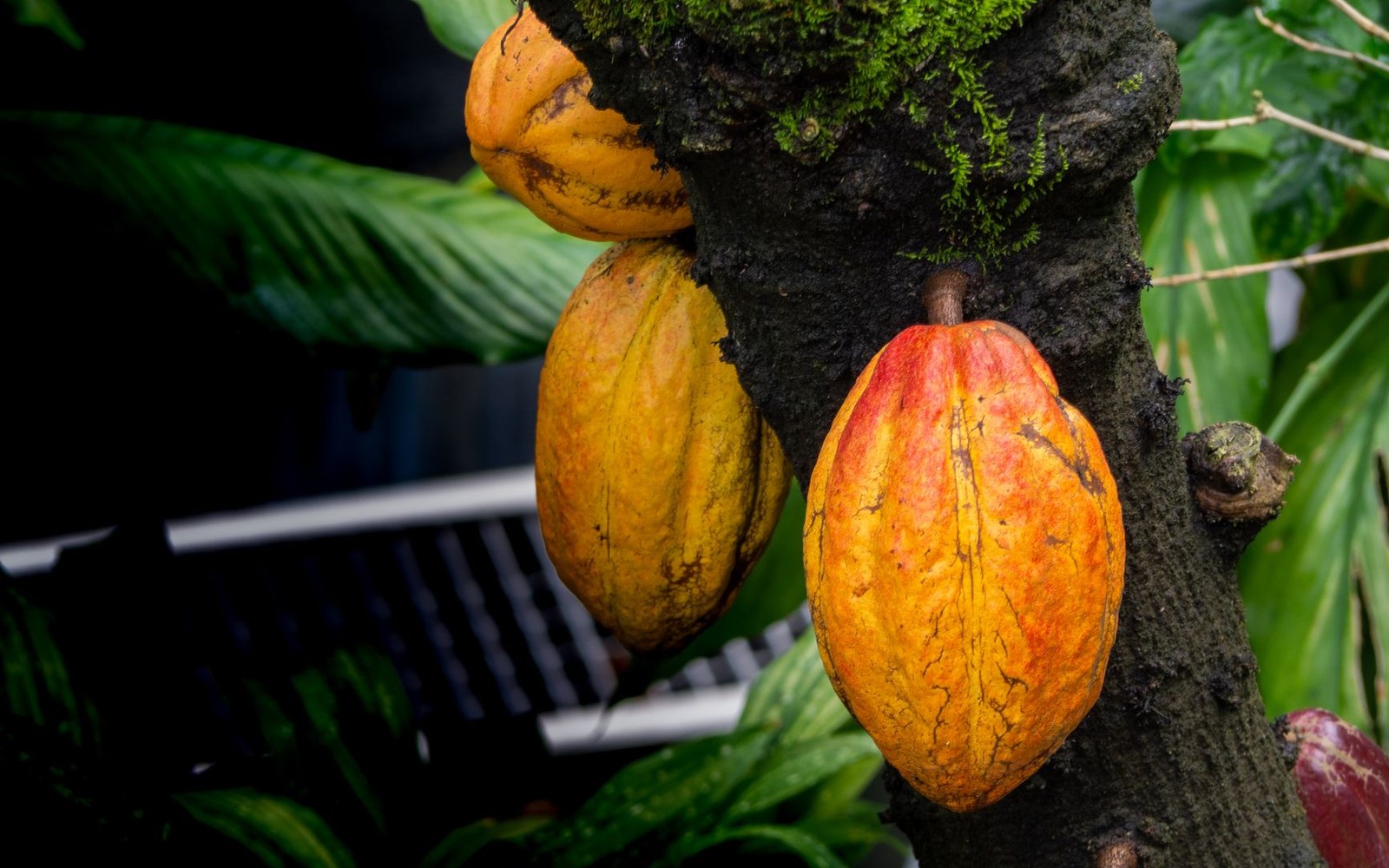 Plate 18
Pods grow on the trunk and are cut by hand, which is why supply cannot be turned up in a bad year.
Photo: KLT Dinusha / Pexels
The numbers behind the spike are real, the harvest failures are documented, and the multinationals have already told their investors exactly how they responded.
How the Price Got There
Cocoa futures on ICE Futures in New York breached $10,000 per metric tonne in March 2024 — the first time the benchmark had crossed that threshold in the roughly half-century of modern price recording. By mid-April 2024 it had pushed beyond $12,000. The International Cocoa Organization, which publishes a daily composite price drawing on both the London and New York futures markets, confirmed the sustained elevation in its quarterly bulletins: ICCO average prices for the 2023–24 crop year ↗ ran at more than double the prior season's average. For most of a decade before 2023, the market had traded in a broad band between roughly $2,000 and $3,500 per tonne. The move from there to $12,000 in eighteen months was not speculation alone — it was supply.
The proximate cause was consecutive harvest failure in West Africa, which supplies roughly 70 percent of the world's cocoa. Côte d'Ivoire and Ghana together account for the bulk of that share, and both main-crop harvests — 2022–23 and 2023–24 — came in well below expectations. The ICCO estimated a global supply deficit of around 374,000 tonnes for the 2023–24 season, following a deficit the season before. Two successive years of drawing down physical stocks is the kind of event that transforms a tight market into a disorderly one. The immediate drivers were climatic: the El Niño pattern that intensified through late 2023 brought drier-than-normal conditions to the Gulf of Guinea at exactly the wrong moment in the growing calendar. On top of that, a fungal disease called swollen shoot — spread by mealybugs and endemic in the region — had been quietly devastating tree stocks across Côte d'Ivoire for years. Old trees, under-maintained and poorly replaced, produced less and were more vulnerable when the weather turned.
Farmgate prices in both countries are administered rather than freely floated. In Côte d'Ivoire, the Conseil du Café-Cacao sets a minimum farmgate price each season. In Ghana, the Ghana Cocoa Board — COCOBOD — performs the equivalent function. Both institutions were slow to transmit the futures spike to farmers in full, meaning that the margin between what the world market paid and what producers received widened sharply. Ghana had also introduced a Living Income Differential ↗ — a premium above the market price, agreed jointly with Côte d'Ivoire — but the instrument was designed for a different market environment and provided only partial insulation from a sustained supply crunch.
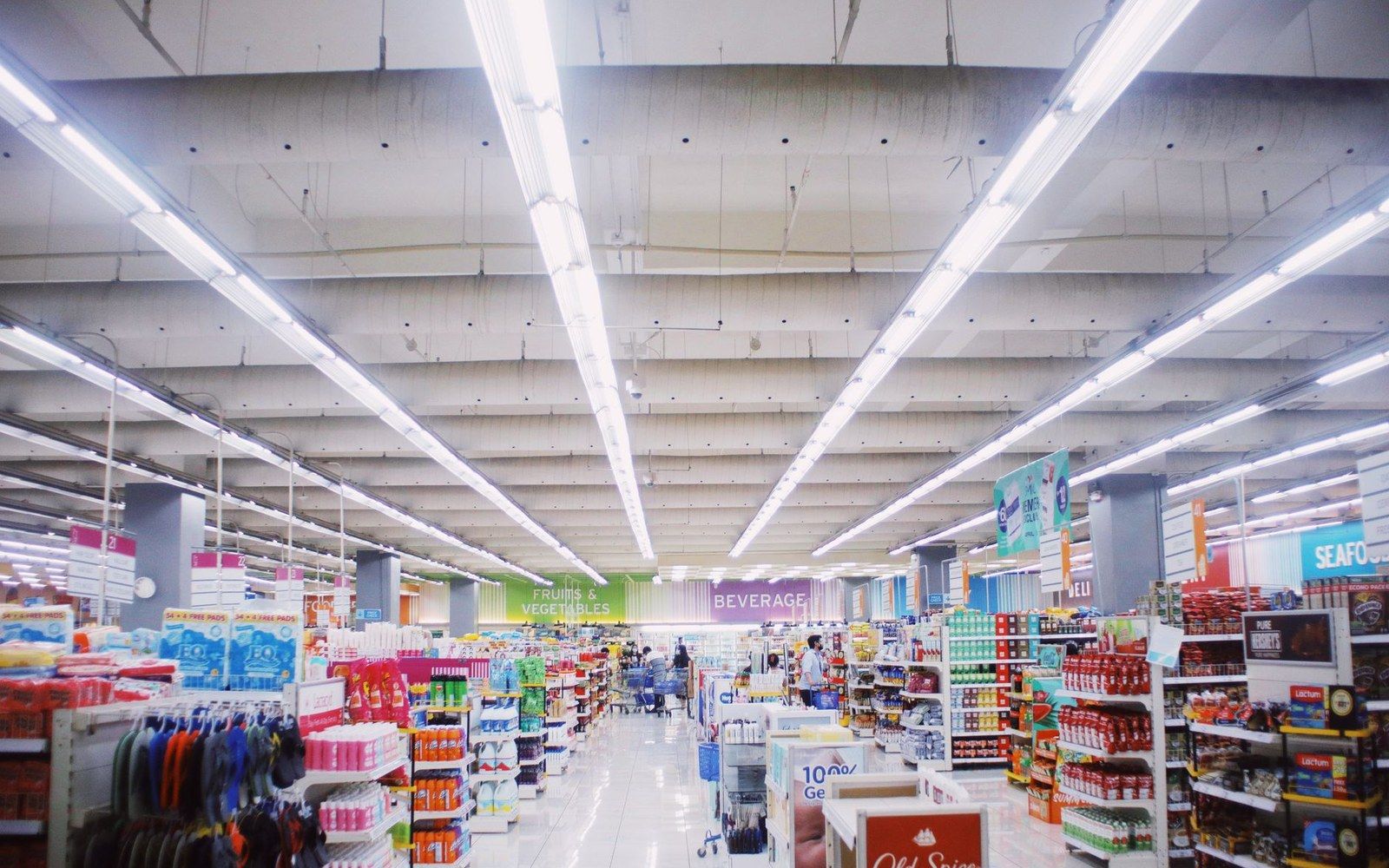
Where the spike became visible: the same shelf and the same brands, with less weight behind the price label.
Photo: Nothing Ahead / Pexels
What the Companies Said
The six major chocolate and confectionery multinationals that are most exposed to cocoa costs have all disclosed their responses, in terms that range from euphemistic to frank.
Mondelēz International, whose portfolio includes Cadbury and Toblerone, flagged cocoa cost pressure explicitly in its 2023 annual report and continued to do so through 2024 earnings calls, citing it as a primary driver of gross margin compression. The company indicated it would pursue a combination of pricing action — passing cost increases to retailers — and what it called "revenue growth management," which in practice includes pack-size reduction. Hershey, heavily exposed because its product mix is chocolate-dominant and its procurement skews toward cocoa-derived inputs, reported that cocoa and sugar were its two largest commodity cost headwinds in 2024 filings; the company stated it had forward-purchased a portion of its cocoa needs but that cover would not insulate it indefinitely at sustained elevated prices.
Mars, which is privately held and does not publish the same level of financial disclosure, nonetheless confirmed in public statements that cocoa cost inflation was real and that pricing adjustments were being made across markets. Ferrero, also private and characteristically guarded, acknowledged price pressure without providing detail. Nestlé, whose chocolate exposure is significant but proportionally smaller than its total food-and-beverage revenue, cited cocoa among its key commodity headwinds in its 2024 half-year results and noted it had taken pricing in its confectionery category across several European and emerging markets.
Lindt & Sprüngli is the most instructive case. The company occupies the premium end of the market, where consumers are somewhat less price-elastic, and it has historically maintained longer forward-purchasing windows than mass-market peers. In its 2024 half-year report, Lindt acknowledged that cocoa bean prices had reached extraordinary levels and stated that its hedging programme had provided partial protection but that higher input costs would progressively flow through. The company raised retail prices in multiple markets. Unlike Mondelēz or Hershey, Lindt has been more reluctant to reduce product weights — protecting the physical integrity of its bars is part of the brand proposition — but the cost pass-through via ticket price was explicit.
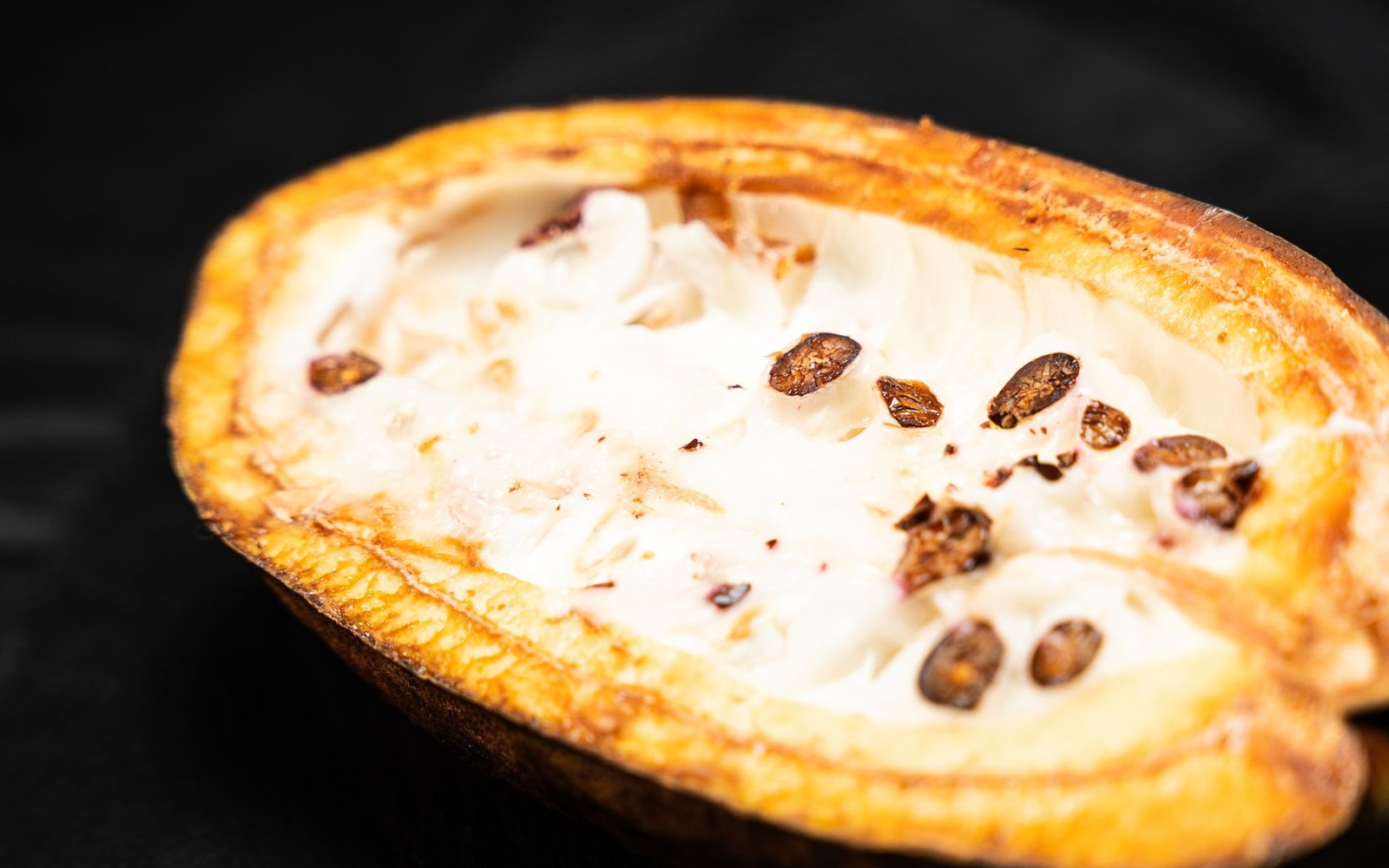
The seeds taste of almost nothing at this stage. Four days of fermentation in that white pulp is what makes them taste of chocolate.
Photo: Aaron H Ch / Pexels
The mechanisms of consumer impact fall into two categories. The first is straightforward: the same product costs more at the register. The second is shrinkflation and cocoa-butter substitution — a quieter adjustment in which bars become lighter or the formulation shifts toward cocoa-butter equivalents and compound coatings. The distinction matters to a cook: couverture, with its legally defined cocoa-butter minimum, is the professional standard for tempering and moulding, and any substitution of CBEs changes the crystallisation behaviour at the bench.
Where the Market Stood by Early 2025
ICE Futures cocoa prices came off their April 2024 peak through the middle of the year as some forward-selling by producers and a reassessment of demand destruction entered the market. By late 2024 and into early 2025, the composite price had moderated from its extreme but remained historically high — well above the pre-crisis range and still sufficient to keep procurement costs elevated for any company buying spot or rolling short-dated hedges. The ICCO's projections for the 2024–25 season were cautiously more optimistic about supply from Côte d'Ivoire, following better mid-crop performance, but analysts warned that tree damage from the prior two seasons meant full recovery would take time: cocoa trees take three to five years from planting to first significant yield, and the old-tree problem in West Africa is structural rather than seasonal.
The EU's deforestation regulation — Regulation (EU) 2023/1115, which requires cocoa importers to demonstrate that product is not linked to deforestation — added a compliance layer to an already stressed supply chain. The regulation's full enforcement for large operators ↗ was deferred by the European Commission, acknowledging that producer countries needed more time to build traceability infrastructure. But the administrative cost is real and falls, ultimately, on the price of cocoa that reaches a European buyer.
For a home cook buying a bar of 70 percent dark chocolate or a bag of couverture callets, the chain from Côte d'Ivoire to kitchen counter now runs through two years of documented harvest failure, a historic futures spike, and a series of corporate hedging and pricing decisions that have all pointed in the same direction. The shelf has been catching up, and it is not finished.
More from Cocoa