Cocoa · Market
Côte d'Ivoire and Ghana: Two Bad Harvests and a Farmgate Price That Did Not Follow
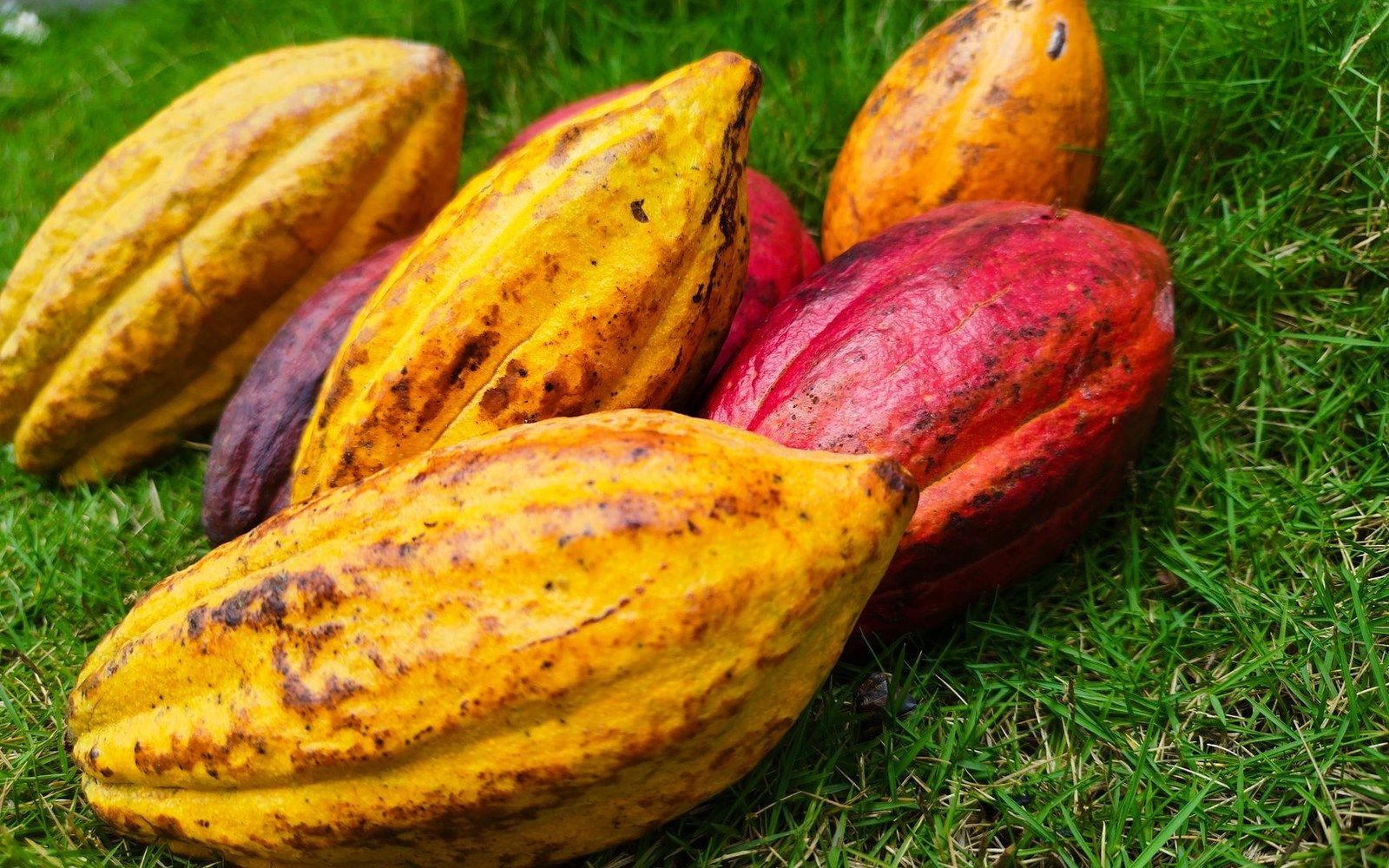 Plate 19
A season's work, cut by hand. What it earns is set in advance by a state board, not by the exchange price.
Photo: JESÚS RODRÍGUEZ / Pexels
Two consecutive crop failures in West Africa drove cocoa futures above $10,000 a tonne. The farmers who grew it saw almost none of that gain.
What Went Wrong in the Fields
Côte d'Ivoire and Ghana together account for roughly 60 percent of global cocoa supply, a concentration that means any disruption on the two countries' farms becomes a disruption in every chocolate factory on earth. In 2023 and again in 2024, disruption arrived in force.
The main-crop harvest runs from October through March. The 2023–24 main crop in both countries was damaged by an unusually wet start followed by the damp, humid conditions that favour the spread of black pod disease, caused by Phytophthora megakarya. Black pod can destroy a significant proportion of a pod cluster within days once established, and aging farm stock — the average cocoa tree in Côte d'Ivoire is well past its peak productive years — offered little resilience. The International Cocoa Organization ↗ reported a global supply deficit for the 2023–24 season that was among the largest recorded in recent decades, with production falling well short of grinding demand.
The 2024–25 mid-crop, which should partially offset a weak main crop, offered little relief. Erratic rainfall associated with a shifting El Niño pattern continued to stress trees already carrying the burden of two difficult seasons. Both the ICCO and trade sources tracking shipments from Abidjan and Tema noted subdued volumes.
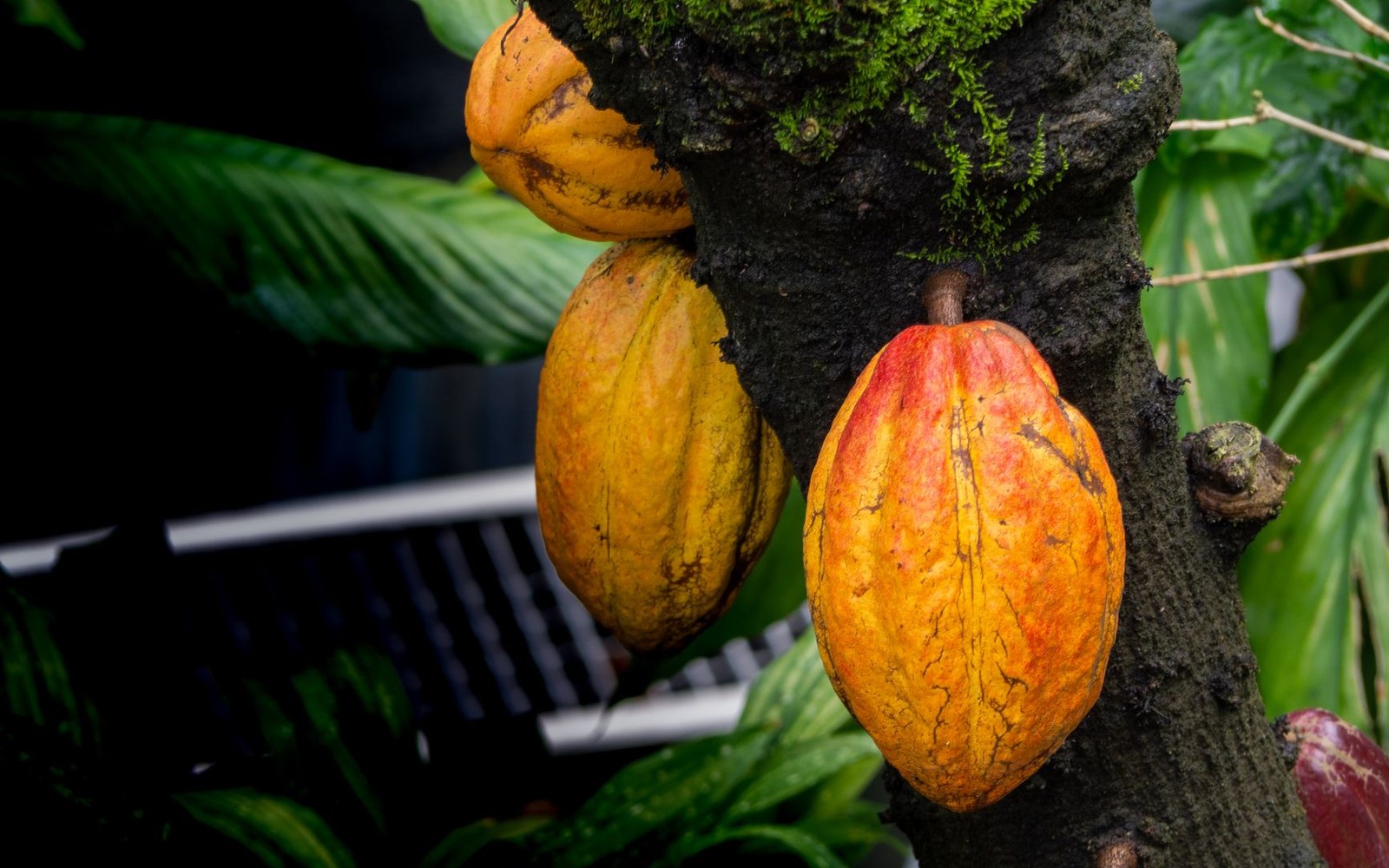
Pods grow on the trunk and are cut by hand, which is why supply cannot be turned up in a bad year.
Photo: KLT Dinusha / Pexels
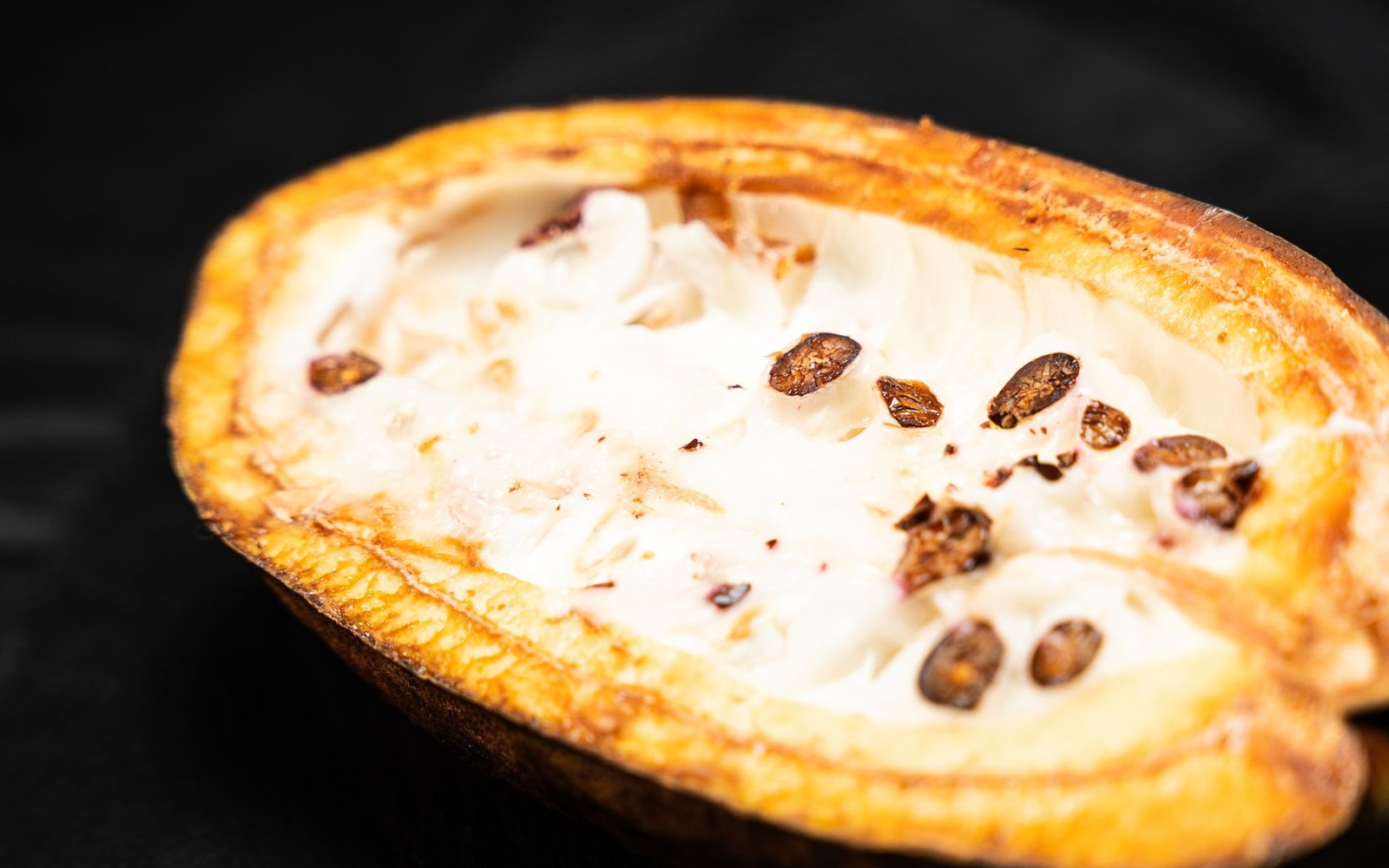
The seeds taste of almost nothing at this stage. Four days of fermentation in that white pulp is what makes them taste of chocolate.
Photo: Aaron H Ch / Pexels
The Price That Did Not Reach the Farm
On ICE Futures in New York, cocoa passed $10,000 per metric tonne in April 2024 — a price not seen in the market's history. The logical inference is that the farmers at the origin of the crisis would have shared in that extraordinary price. They did not, for structural reasons that are specific to how both countries manage their cocoa sectors.
Ghana's cocoa is sold through the Ghana Cocoa Board, known as COCOBOD, which sets the farmgate price in advance of the season and bears the price risk centrally. Côte d'Ivoire runs a comparable forward-sale system through its Conseil du Café-Cacao, selling a large portion of the expected harvest forward before the crop is picked. Both systems are designed to give farmers income stability — shielding them from crashes — but the same mechanism prevents them from capturing a sudden spike. When futures moved vertically in late 2023 and into 2024, the contracts were already written and the farmgate rates were already fixed.
The Living Income Differential — a premium above the world price paid to farmers in both countries under an agreement established in 2019 — was in principle designed to close the gap between what farmers earn and what a living income requires. In practice, the Cocoa Barometer has documented repeatedly that even with the LID in place, the typical smallholder income in Côte d'Ivoire and Ghana remains well below living income benchmarks. When the futures price exploded, the fixed-price and forward-sale architecture meant the LID's proportional benefit did not scale with the market move. The gap, far from closing, widened in real terms during the spike.
There is a secondary layer to this: sustained high futures prices eventually feed back into the farmgate in the following season's price-setting round, and both COCOBOD and the Conseil du Café-Cacao did announce higher producer prices for 2024–25. Whether those revised prices, set against the continuing cost of inputs — fertiliser, fungicide, labour — translate to genuinely improved margins for smallholders is a question the next Cocoa Barometer assessment will begin to answer.
What the two consecutive harvests made unmistakably clear is that supply concentration plus ageing farm stock plus climate variability plus fixed-price architecture is a combination that can simultaneously punish consumers through price and fail farmers through structure. Fixing one without addressing the others has not worked so far.
Côte d’Ivoire and Ghana at their real coordinates, with the neighbouring origins named in this section. The two shaded countries grow roughly 60% of the world crop, and both failed harvests were theirs.
Geometry: project map kit
More from Cocoa