Reference · Reference
Ruby Chocolate Was Announced in 2017, and the Berry Flavour Is Not Added
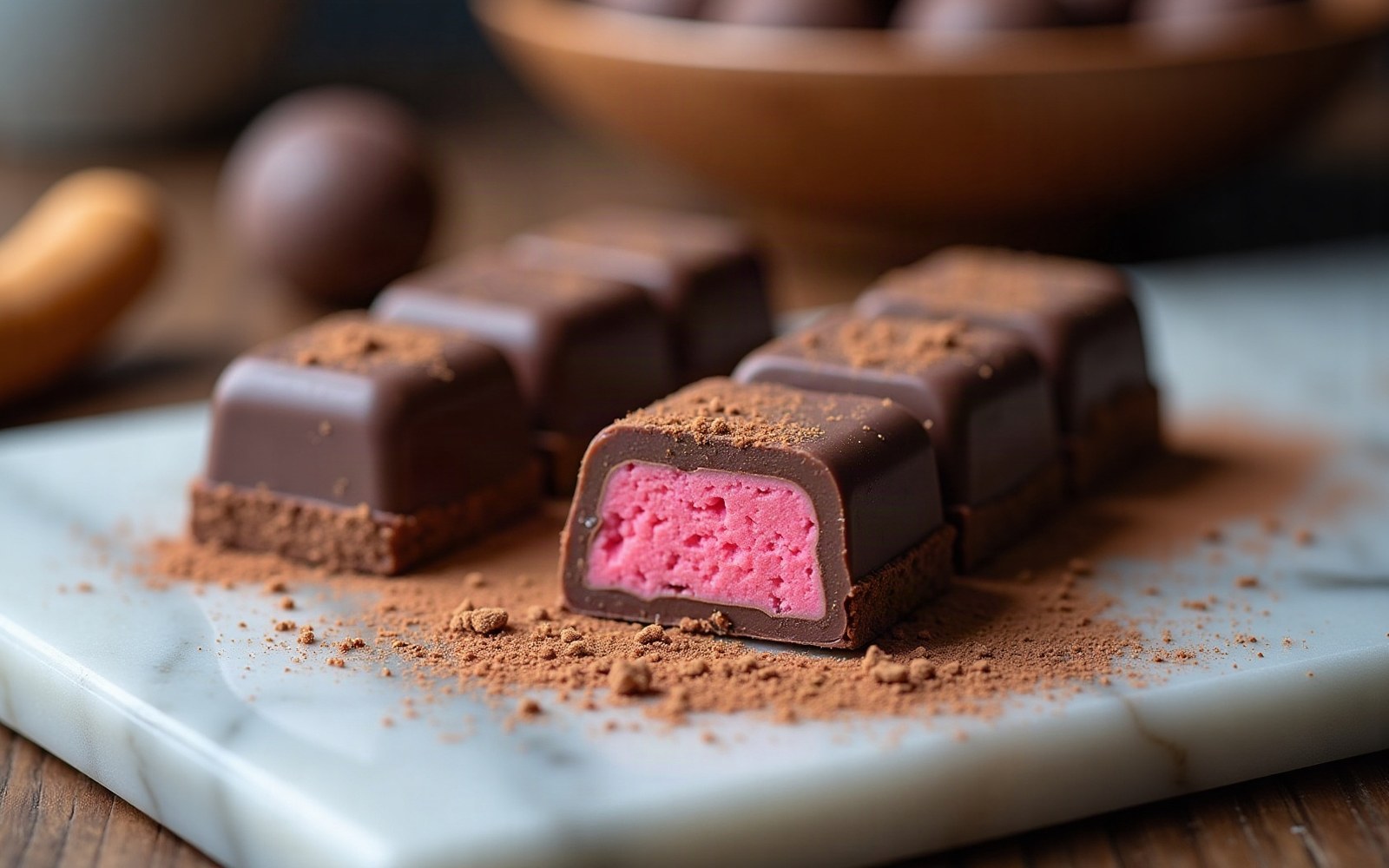 Plate 24
Positioned as a fourth category beside dark, milk and white, on the strength of a colour and a note that come out of the bean.
Barry Callebaut unveiled ruby chocolate in Shanghai on 5 September 2017 — the first new commercial chocolate category in over eighty years, and one where the pink colour and berry-like taste come entirely from the bean.
What RB1 Processing Does
Ruby chocolate is made from cocoa beans that Barry Callebaut designates RB1 — beans that retain unusually high levels of specific precursor compounds, in particular a class of polyphenols that are normally destroyed or converted during standard fermentation and roasting. The company's core patent, filed under the World Intellectual Property Organization as WO2012/045175 and published in 2012 before the public launch, describes a processing route that keeps fermentation shorter and temperatures lower than conventional practice. That controlled reduction in fermentation time preserves the precursors responsible for the characteristic pink-red pigmentation; standard, fully fermented beans lose it almost entirely.
The roasting step is similarly moderated. Where dark and milk chocolate roasting typically develops Maillard browning across the whole bean, the RB1 route is designed to protect the colour compounds rather than develop deeper roasted notes. The resulting cocoa mass, when combined with sugar and milk solids but without added colouring or berry flavouring of any kind, produces the dusty-pink hue and a flavour profile that tasters consistently describe as fruity and slightly tart. Barry Callebaut's own press material from the 2017 Shanghai launch ↗ confirmed no flavourings, no fruit extracts, no colourants.
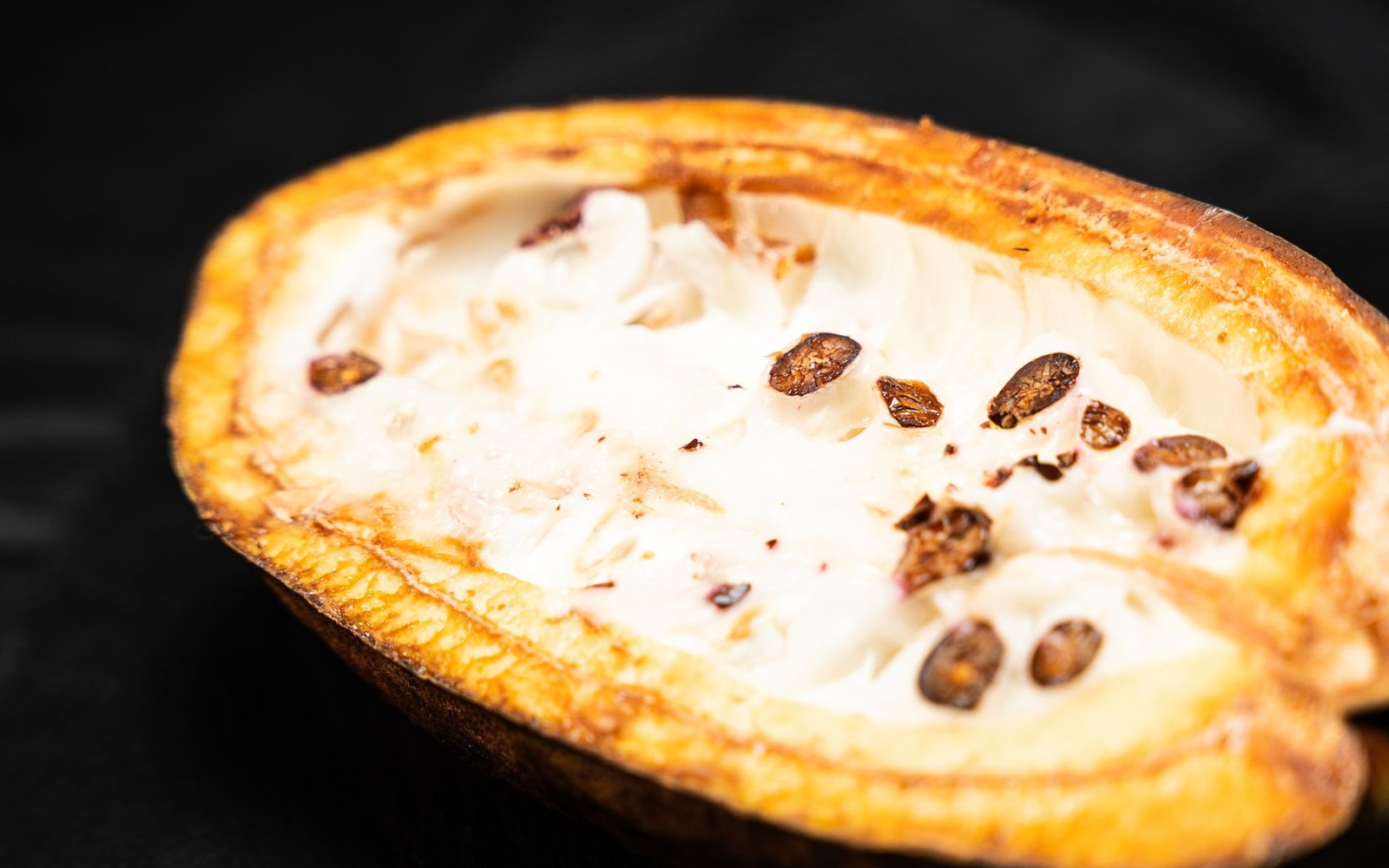
The seeds taste of almost nothing at this stage. Four days of fermentation in that white pulp is what makes them taste of chocolate.
Photo: Aaron H Ch / Pexels
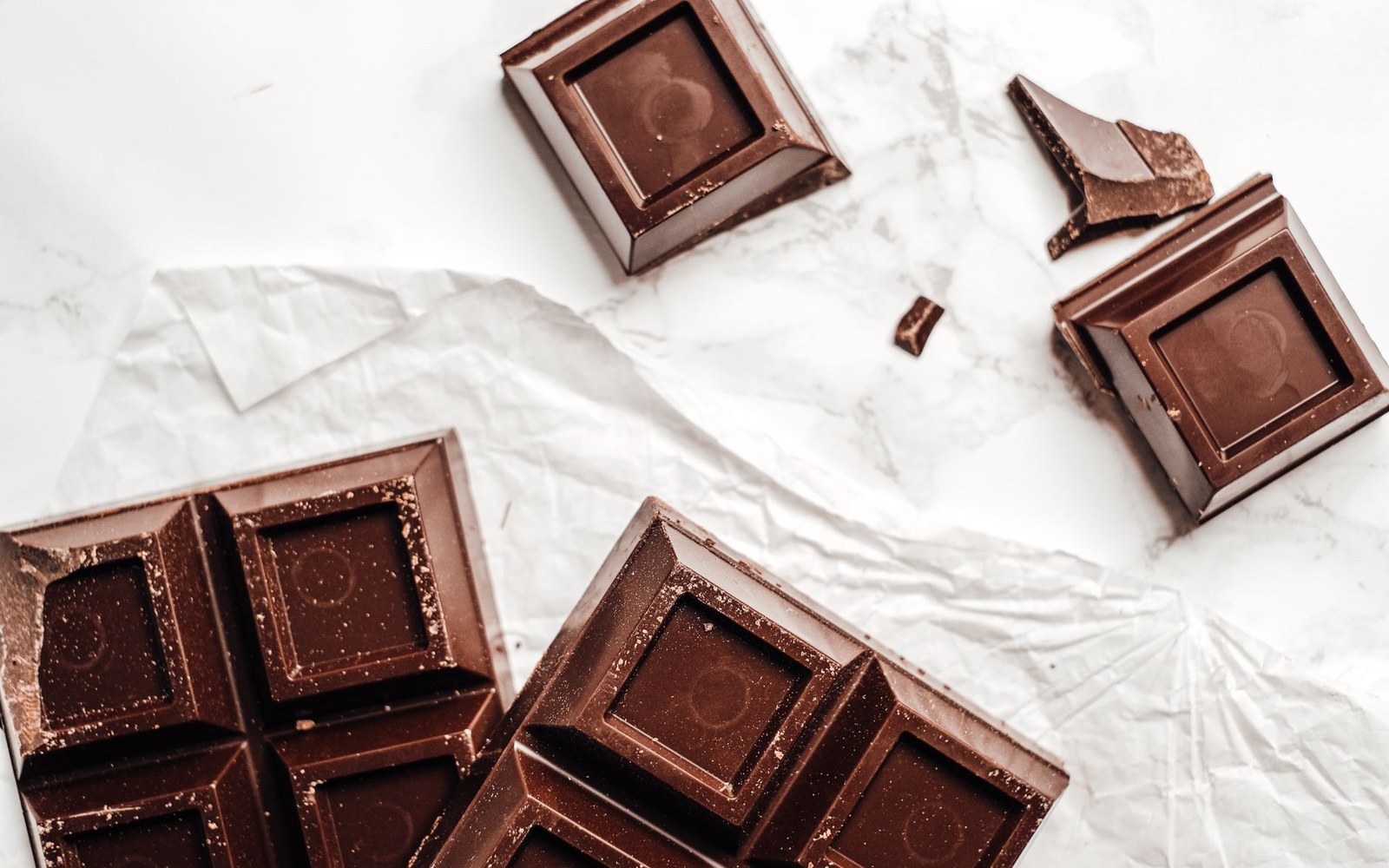
Fat bloom: cocoa butter that recrystallised out of Form V. Harmless, still edible, and the bar can be melted and tempered again.
Photo: Vie Studio / Pexels
The Fourth Category Claim
Barry Callebaut markets ruby as a fourth type of chocolate, alongside dark, milk, and white. The positioning rests on a genuinely distinct sensory profile: unlike white chocolate, it has a slight acidity; unlike milk, it has no roasted or caramel depth; unlike dark, it carries no bitterness. Whether regulators recognise it as a distinct category is a separate question. The United States Food and Drug Administration has a standard of identity for white chocolate ↗ but currently no equivalent for ruby. In practice, products using Barry Callebaut's ruby couverture are labelled under existing chocolate definitions with the ruby designation as a brand or descriptor.
The cocoa-bean sourcing is deliberately kept vague in public materials — Barry Callebaut has not committed publicly to a single origin, and the RB1 designation refers to the processing specification, not a fixed geography. Price positioning sits above milk chocolate and closer to premium single-origin dark, reflecting both the specialised processing and Barry Callebaut's position as essentially the sole supplier of the category it invented.
More from Reference