Reference · Reference
Two Logos on the Wrapper, Two Different Promises
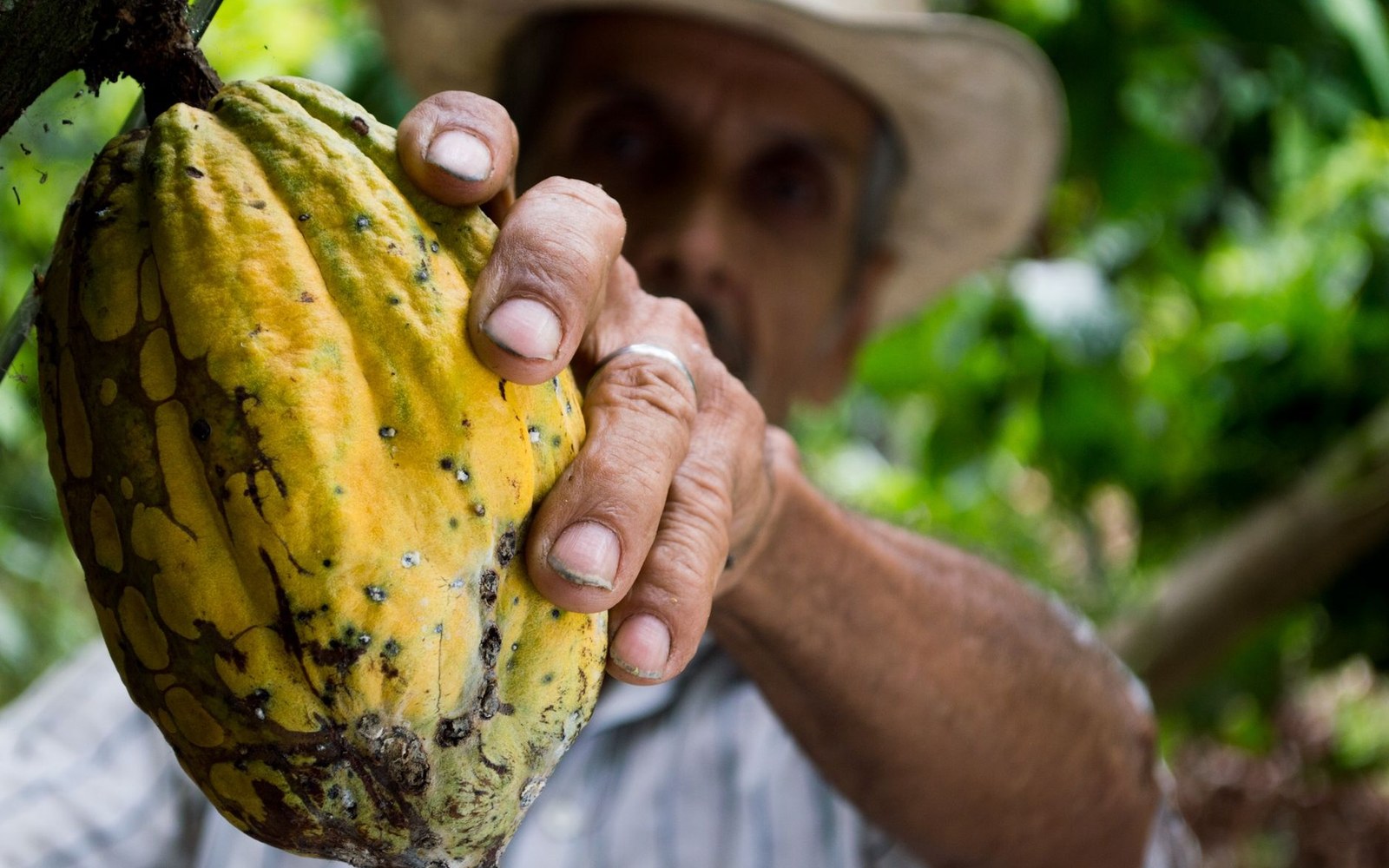 Plate 25
Both schemes are measured at this end of the chain, which is where the premium either arrives or does not.
Photo: Pixabay / Pexels
Fairtrade and Rainforest Alliance both appear on chocolate bars. They are not the same promise.
What each mark actually certifies
Fairtrade International sets a floor price — a minimum that a buyer must pay for certified cocoa regardless of market movements — plus a fixed social premium, currently USD 240 per tonne above the transaction price ↗, that goes directly to a farmer cooperative to spend on collective needs: school buildings, medical care, equipment. The cooperative, not the individual farmer, controls that premium. Membership of a certified cooperative is the gateway to both the floor price and the premium, which means smallholders working alone are excluded by design. The model trades breadth of reach for financial predictability at the farm-gate.
Rainforest Alliance certification, redesigned in 2020 after the merger of the old Rainforest Alliance with UTZ Certified, works differently. Its standard is primarily environmental and social: biodiversity protection, reduced agrochemical use, living wage indicators, and traceability requirements. There is a price premium mechanism — a Rainforest Alliance Cocoa Premium, paid by buyers to farmers or cooperatives — but the amount is negotiated between buyer and seller, not fixed by the scheme itself. What the certification guarantees is that a farm has been audited against a detailed set of sustainability criteria; it does not guarantee a specific price above market.
What the Cocoa Barometer found
The Cocoa Barometer, an independent civil-society report published every two years, has consistently noted that neither scheme has closed the gap between what farmers receive and a genuine living income. The 2022 edition found that even certified Fairtrade farmers in Côte d'Ivoire and Ghana remained well below living income thresholds. During the 2023–24 cocoa price spike — when ICE Futures front-month contracts passed USD 10,000 per tonne — the floor-price mechanism that Fairtrade uses became largely moot, because world prices exceeded it. The premium still applied, but the structural advantage of a price floor disappeared precisely when market volatility was highest.

The seeds taste of almost nothing at this stage. Four days of fermentation in that white pulp is what makes them taste of chocolate.
Photo: Aaron H Ch / Pexels

Fat bloom: cocoa butter that recrystallised out of Form V. Harmless, still edible, and the bar can be melted and tempered again.
Photo: Vie Studio / Pexels
Rainforest Alliance certification, in that same period, offered no price guarantee at all. Its value to farmers during the spike depended entirely on individual contracts — some of which reportedly captured higher prices, some of which did not.
Neither logo on a wrapper is false advertising. Each certifies something real. The difference is what that something is: Fairtrade certifies a price structure; Rainforest Alliance certifies a farming and environmental standard. A consumer reading the label carefully would want to know which of those two things they are looking at.
More from Reference